
Why we Build Knives
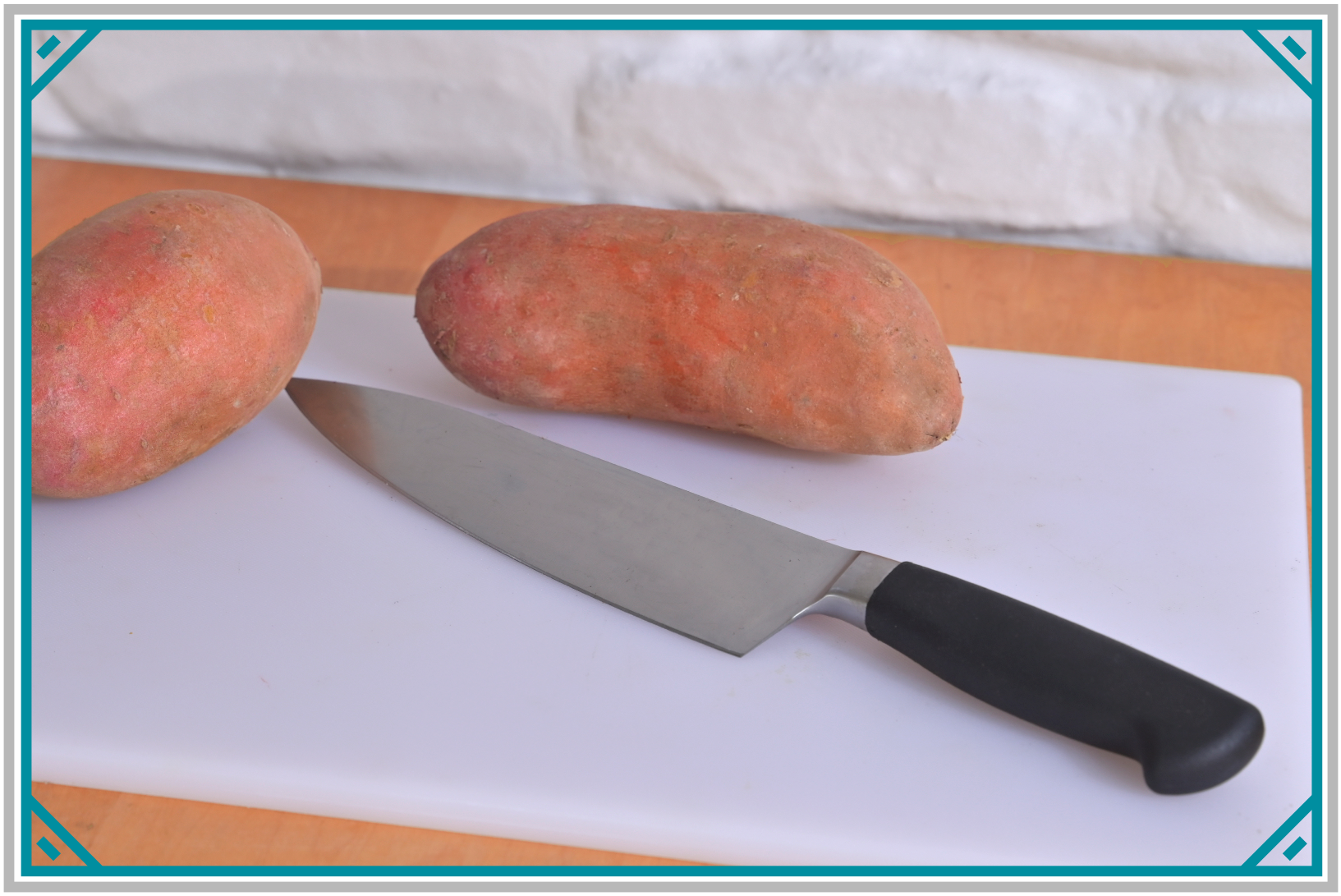
DBx Knives began with sweet potatoes.
Not industrial food processing. Not a professional kitchen. Two sweet potatoes a day — a dietary staple — prepared with standard chef knives over time.
The question that followed was equally straightforward: if this damage threshold can be reached preparing food for one person, what is happening daily to the professional chefs, food inspectors, and culinary workers preparing food for hundreds?
That engineering is what DBx delivers. It began as a personal necessity. The science made it universally relevant.
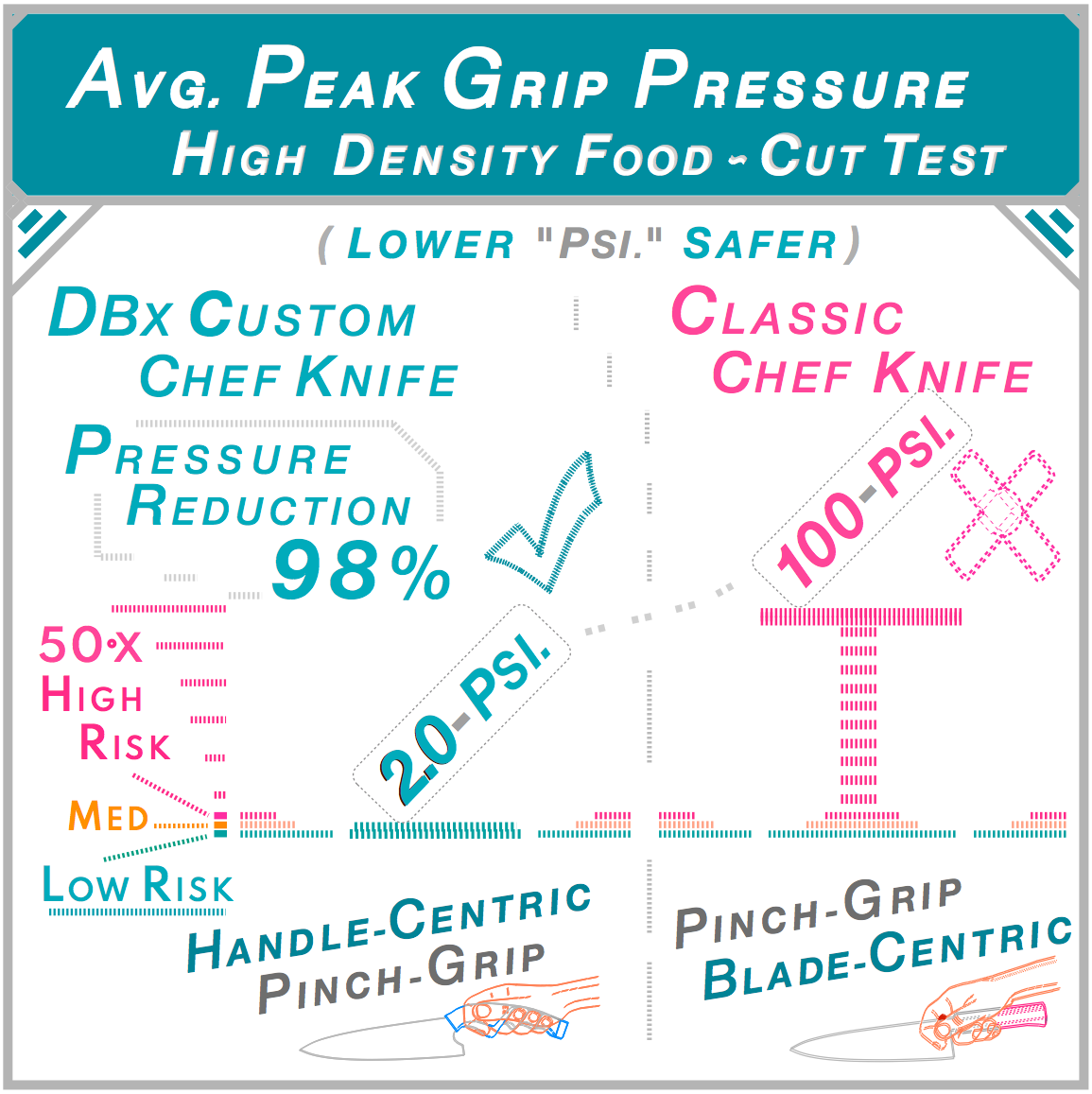
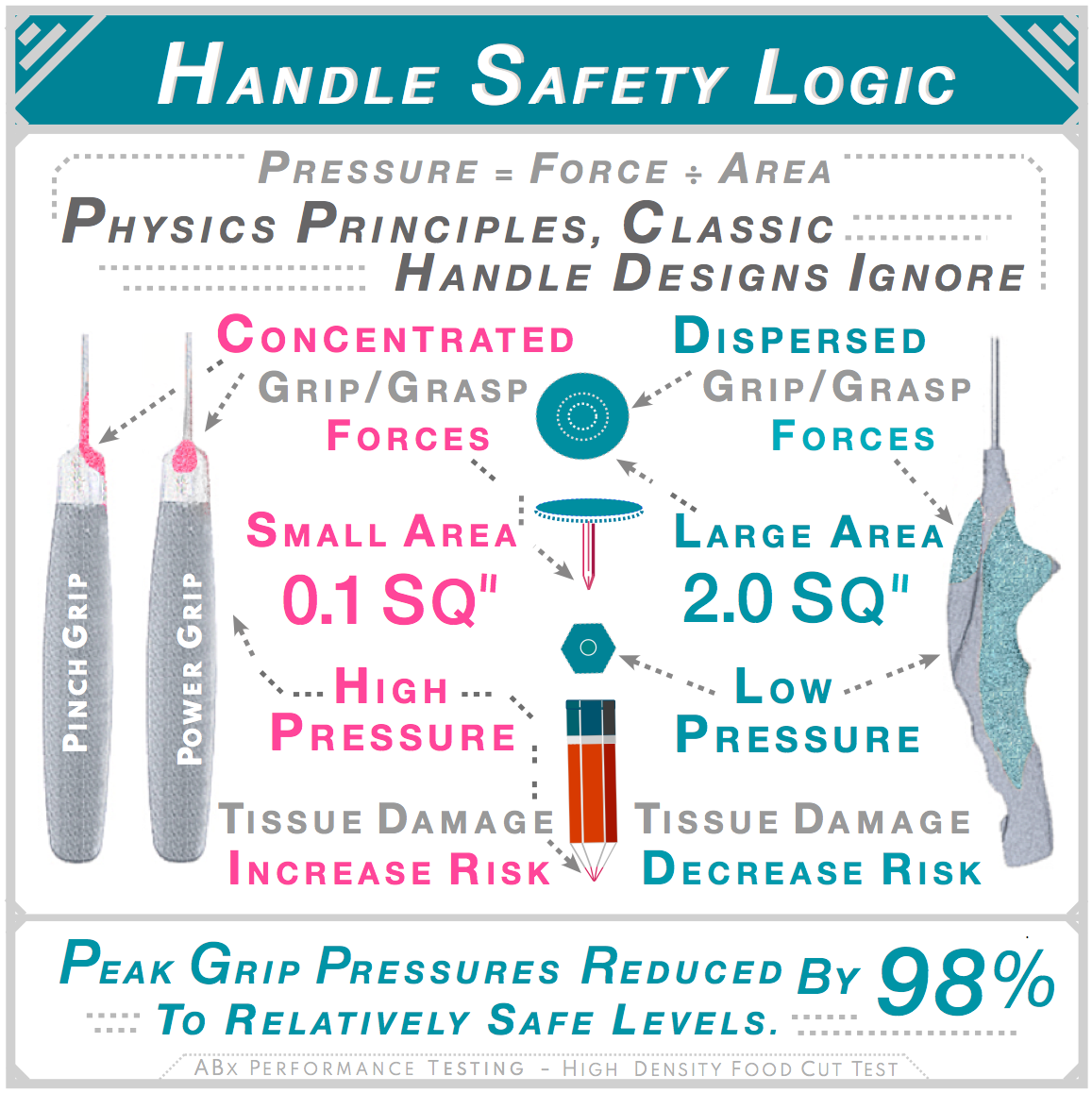
Traditional chef knives concentrate cutting forces through tiny contact points — often less than 0.1 square inches
— creating grip pressures that exceed 100 PSI.
That's 40 times above relatively safe biological thresholds. Over time, this causes numbness, fatigue, chronic pain, and cumulative injuries that many users assume are just part of cooking.
They're not. They're engineering failures built into knife handle and blade designs.
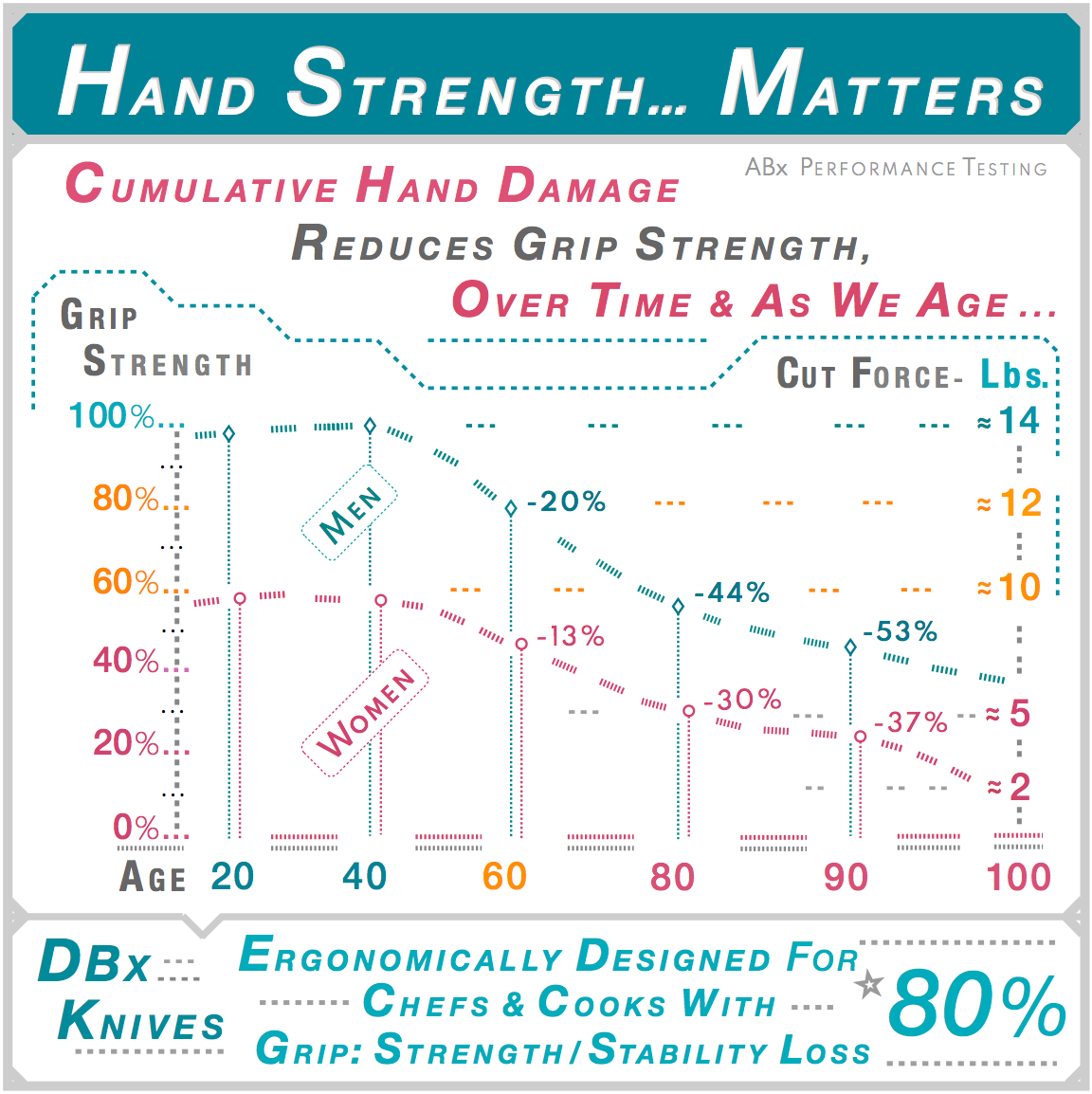
I started designing custom knives because I needed a safer tool for my own kitchen. But the more I tested and measured, the more I understood the scope of the problem — and who it affects most:
— People with arthritis— Aging hands losing grip strength— Professional chefs whose careers depend on hand health— Left-handed cooks forced to adapt to tools never designed for them
— Anyone who's been told "just sharpen your knife more often" and discovered that doesn't stop the pain.
With no pre-existing hand conditions and a diet designed to maximize daily recovery, accumulating hand damage still developed.
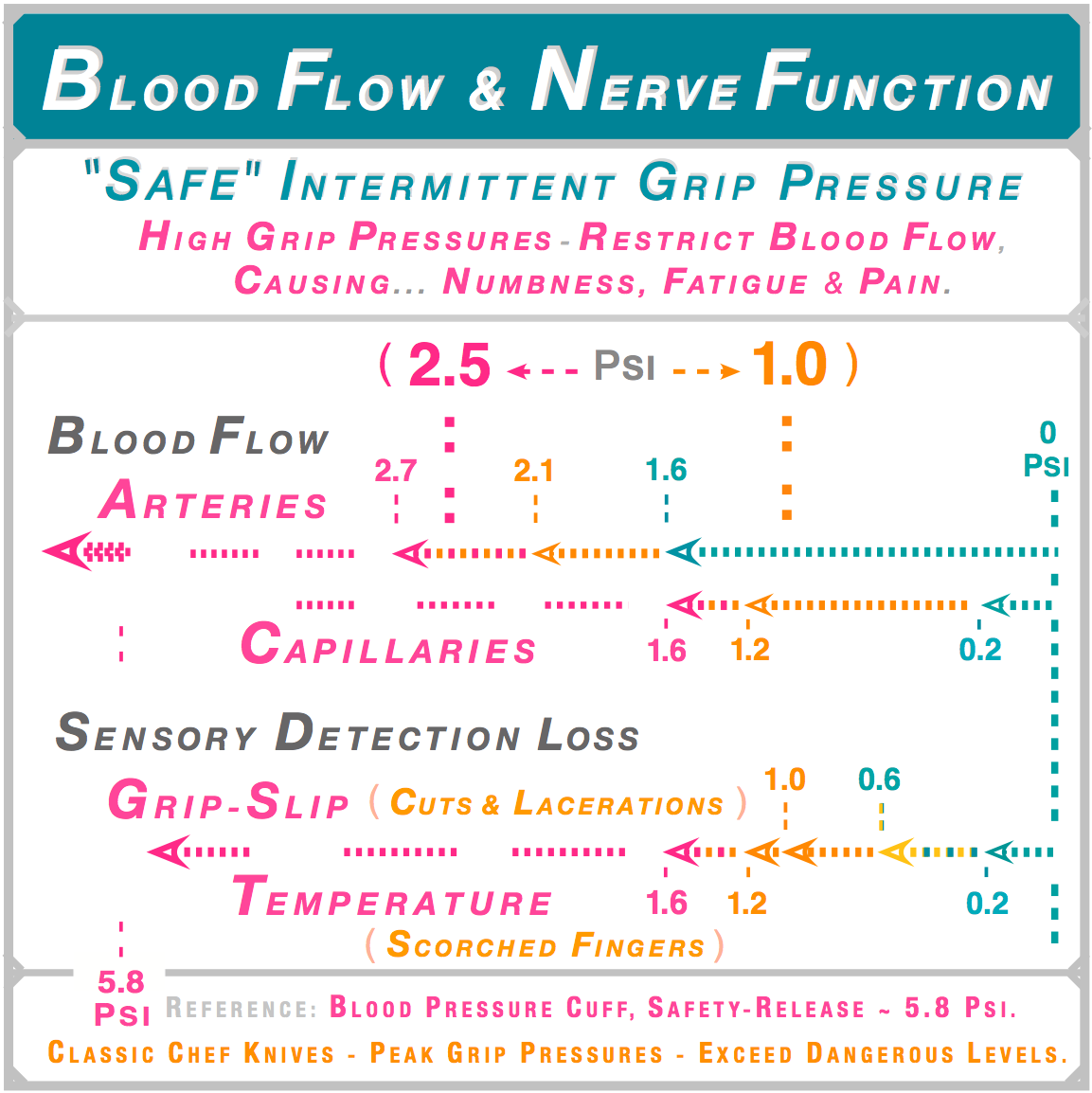
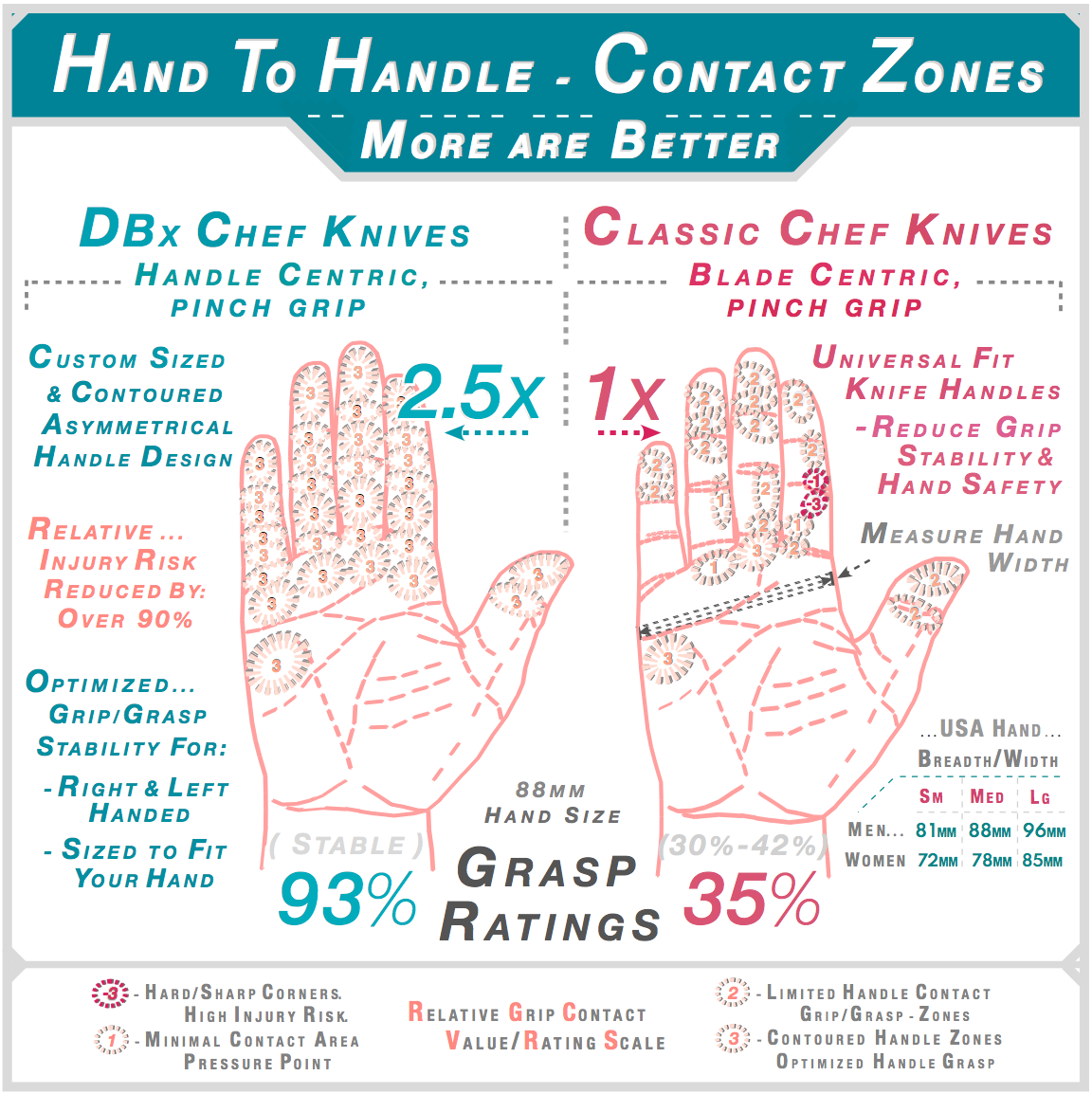
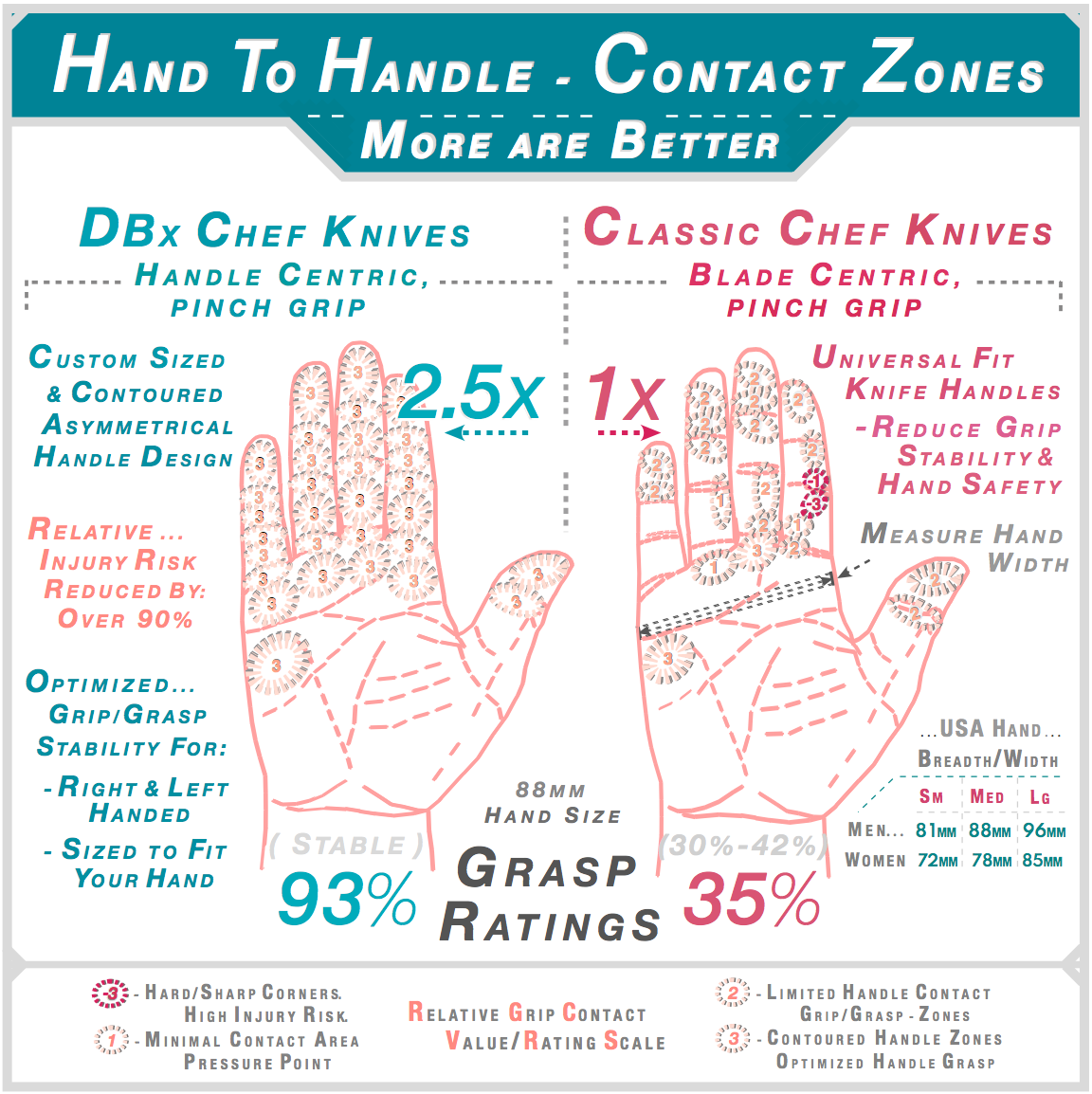
The engineering reason was straightforward once identified: standard knife handles concentrate grip force on the index finger and thumb at pressures averaging 99 PSI — far exceeding the biomechanically safe threshold of 1.0 to 2.5 PSI.
The answer required a different kind of engineering. Not softer handles or cushioned grips
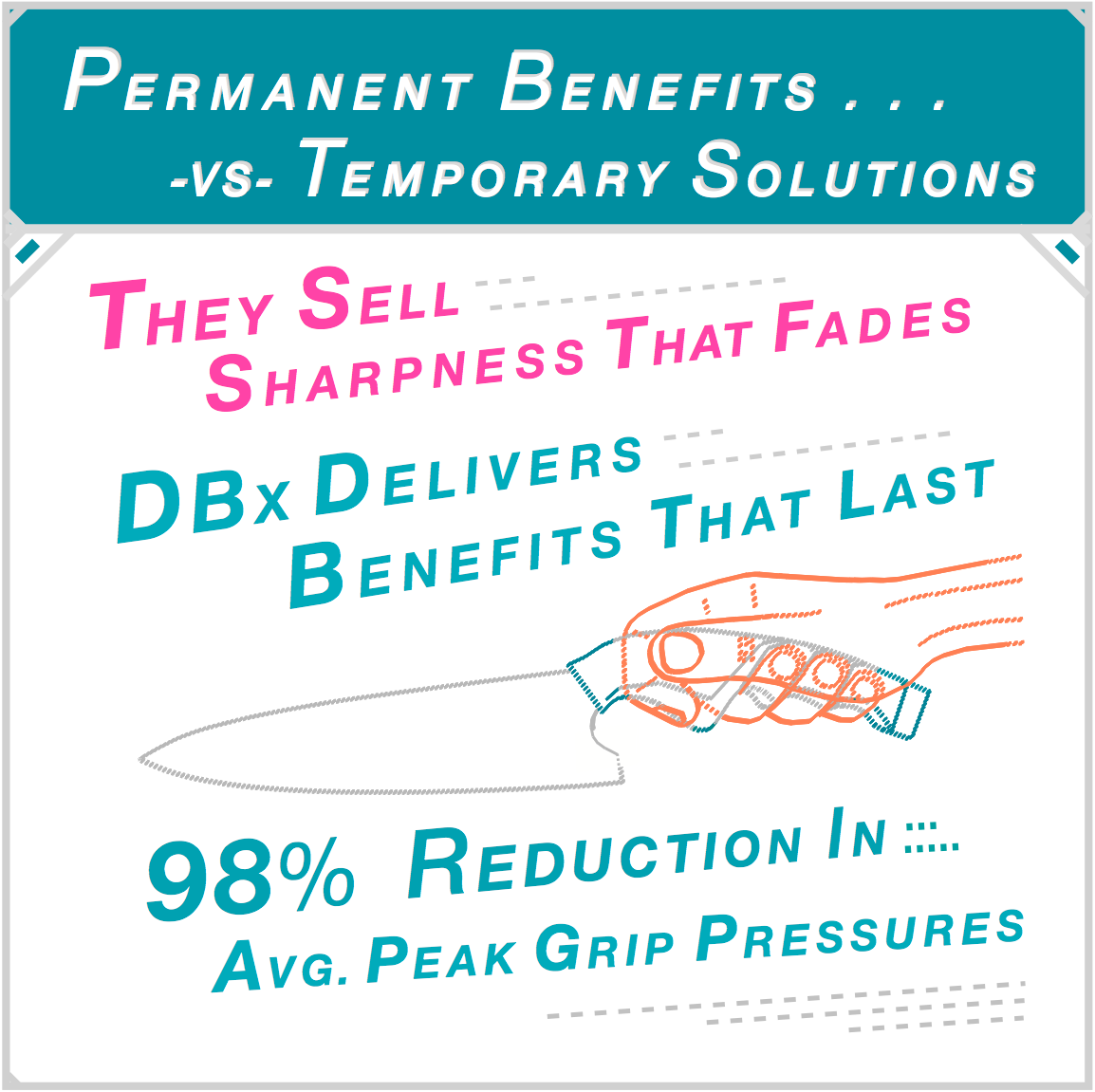
— but quantitative biomechanical design that distributes grip force across the full hand contact surface, reducing peak grip pressure by 98% to within safe intermittent ranges.
About the Knife Maker

Daniel Bottner grew up on a tobacco farm in Southern Maryland, where his father and grandfather crafted custom tools in their own metal and woodworking shops. He learned to work with hand and machine tools before he learned to drive.
That foundation — old-world craftsmanship rooted in precision and purpose — shaped everything that followed.
Daniel spent his career developing world-class products across industries where failure was not an option:
**Competition Motorsports** — engines and drivetrains engineered for extreme performance under extreme conditions.
**Computers, Electronics & Digital Imaging** — systems demanding precision at microscopic tolerances.
**Aerospace & Medical Devices** — components where safety-critical design isn't a marketing claim, it's a regulatory requirement.
Every one of these fields demanded the same discipline: measure precisely, test rigorously, and never assume something works — prove it.

His approach was to start from the hand itself: optimize every contact point in the handle to the individual user's hand size, and validate every knife design decision with instrumented testing.
The result is a knife engineered specifically for your hand
— safer, more comfortable, and measurably more controlled than anything designed for the mass market.
When Daniel turned that discipline toward kitchen knives, he found an industry that had been selling the same fundamental handle design for centuries
— and no one had bothered to ask whether it was actually safe for the human hand.
How We Design,
Test & Build.
DBx knives aren't designed by intuition.
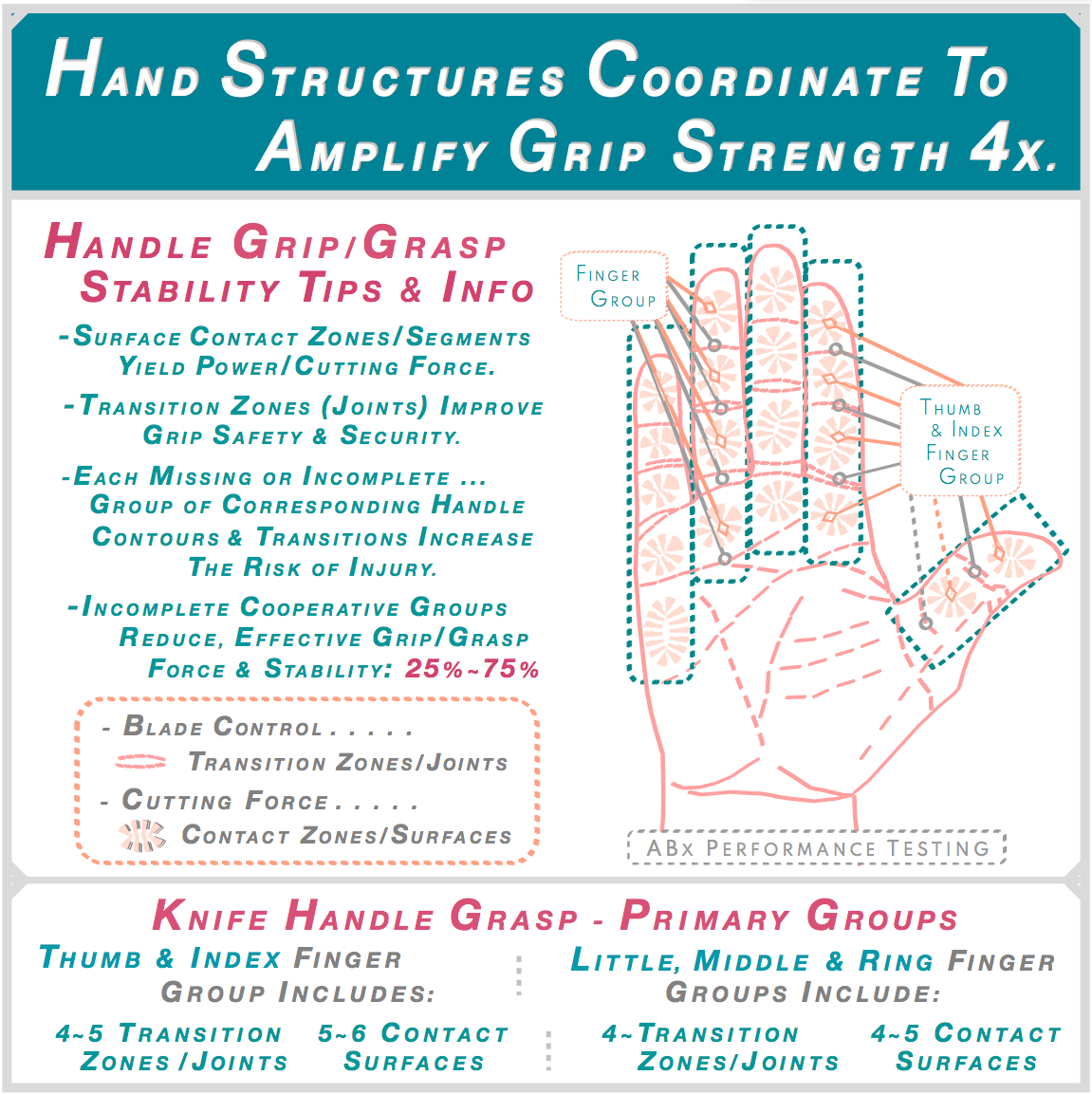
They're engineered & contoured to reduce cut force requirements & peak pressure levels in the hand.
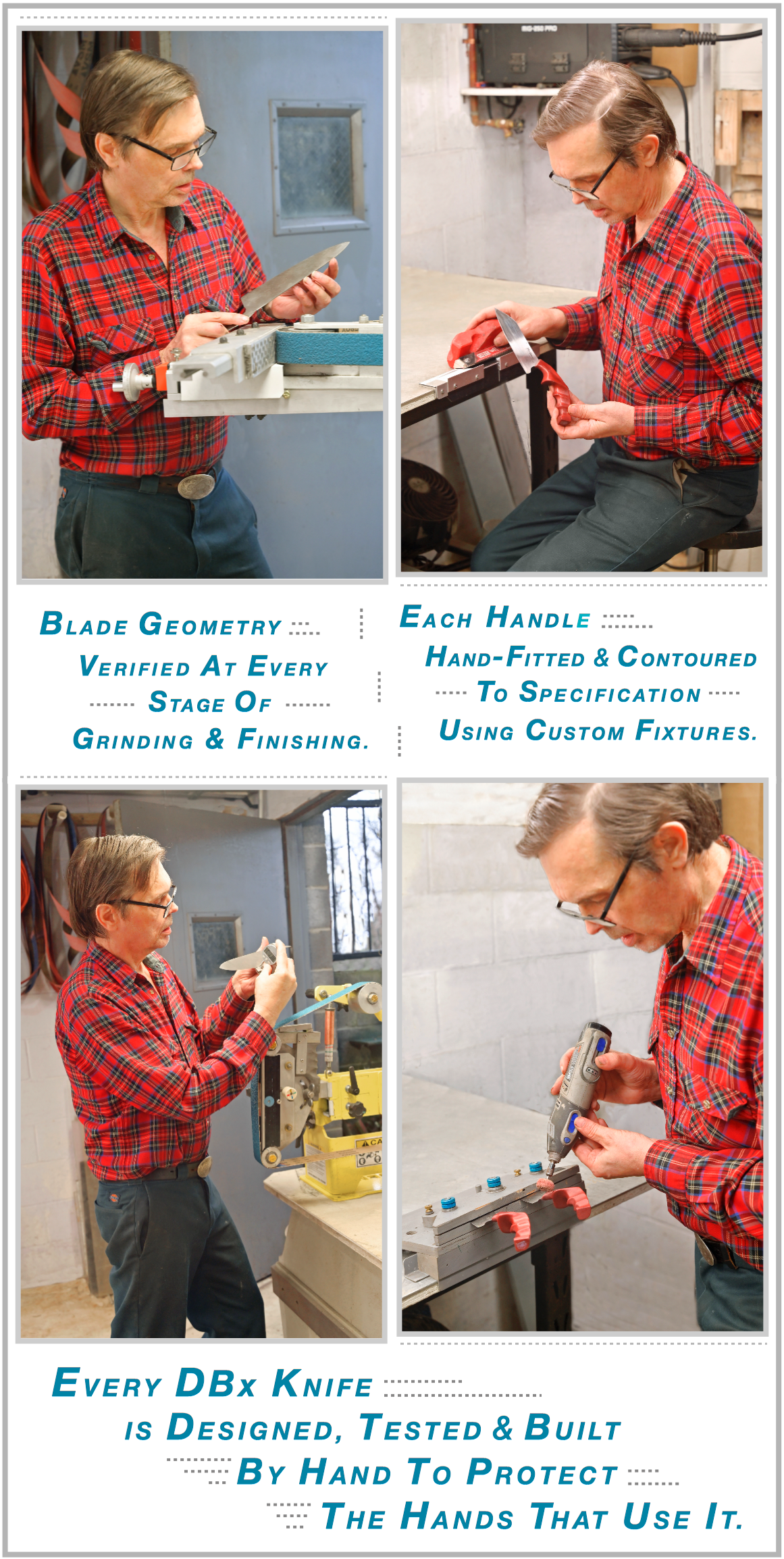
This isn't a garage operation borrowing someone else's test data. We built the tools to build the tools to craft & test & the knives.
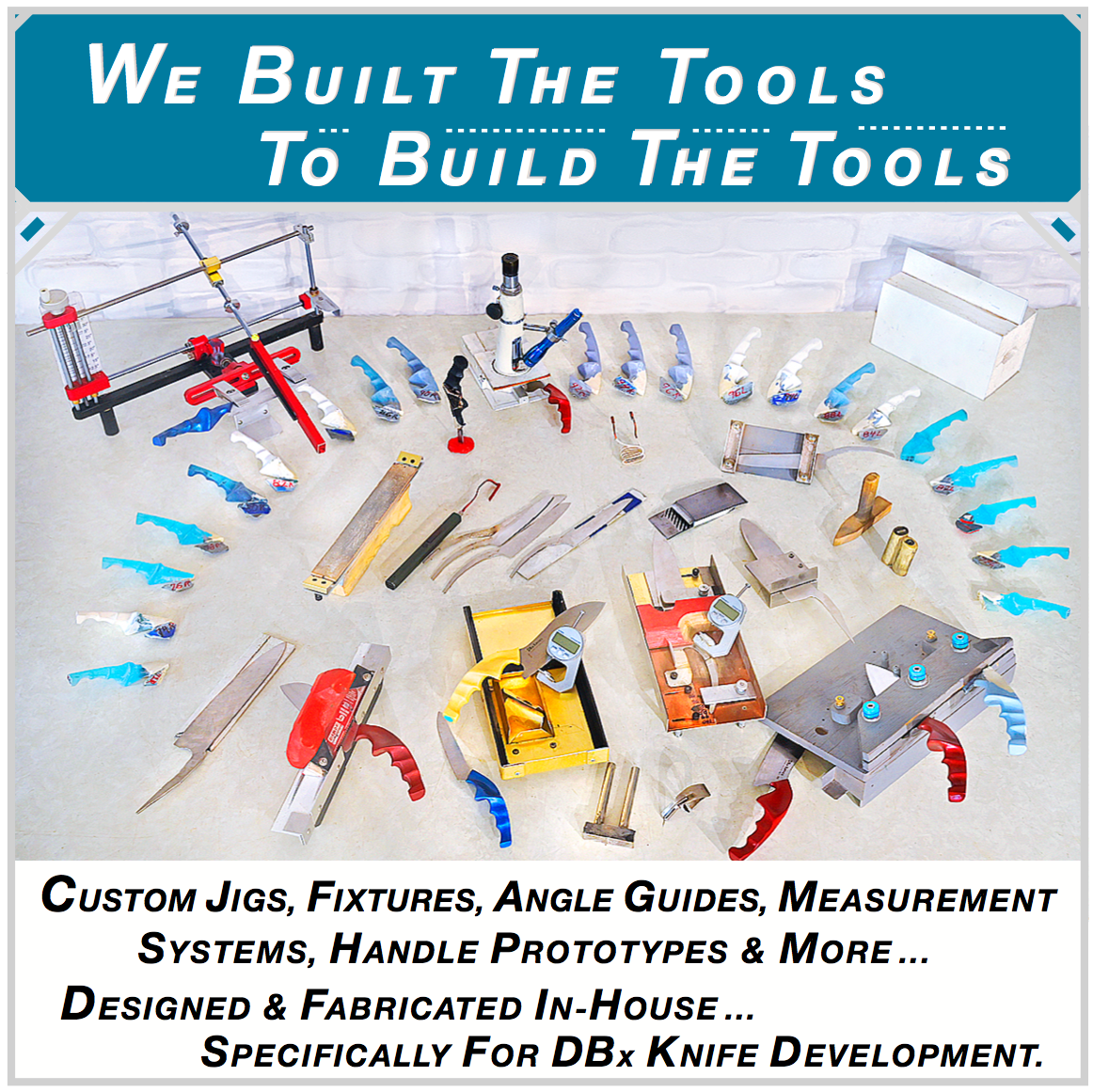
Combined with a full array of custom knife-making tooling — from precision grinding fixtures to contouring jigs
— every DBx knife is handcrafted with raw materials to finished product in a single workshop.
**Old-world craftsmanship** learned in childhood workshops.
**Modern materials** — high-tech composites and German steel.
**Custom instrumented testing** — every claim backed by measured data.
**Computer-aided design** — precision profiles for 14 individual handle sizes.
The result: a handmade kitchen knife that performs at a level mass production can't replicate, validated by testing methods, which expose engineering flaws in traditional knife designs.
Our three primary test systems & protocols measure cutting force requirements, grip pressure distribution, and knife grip stability under real-world cutting conditions using high-density foods.

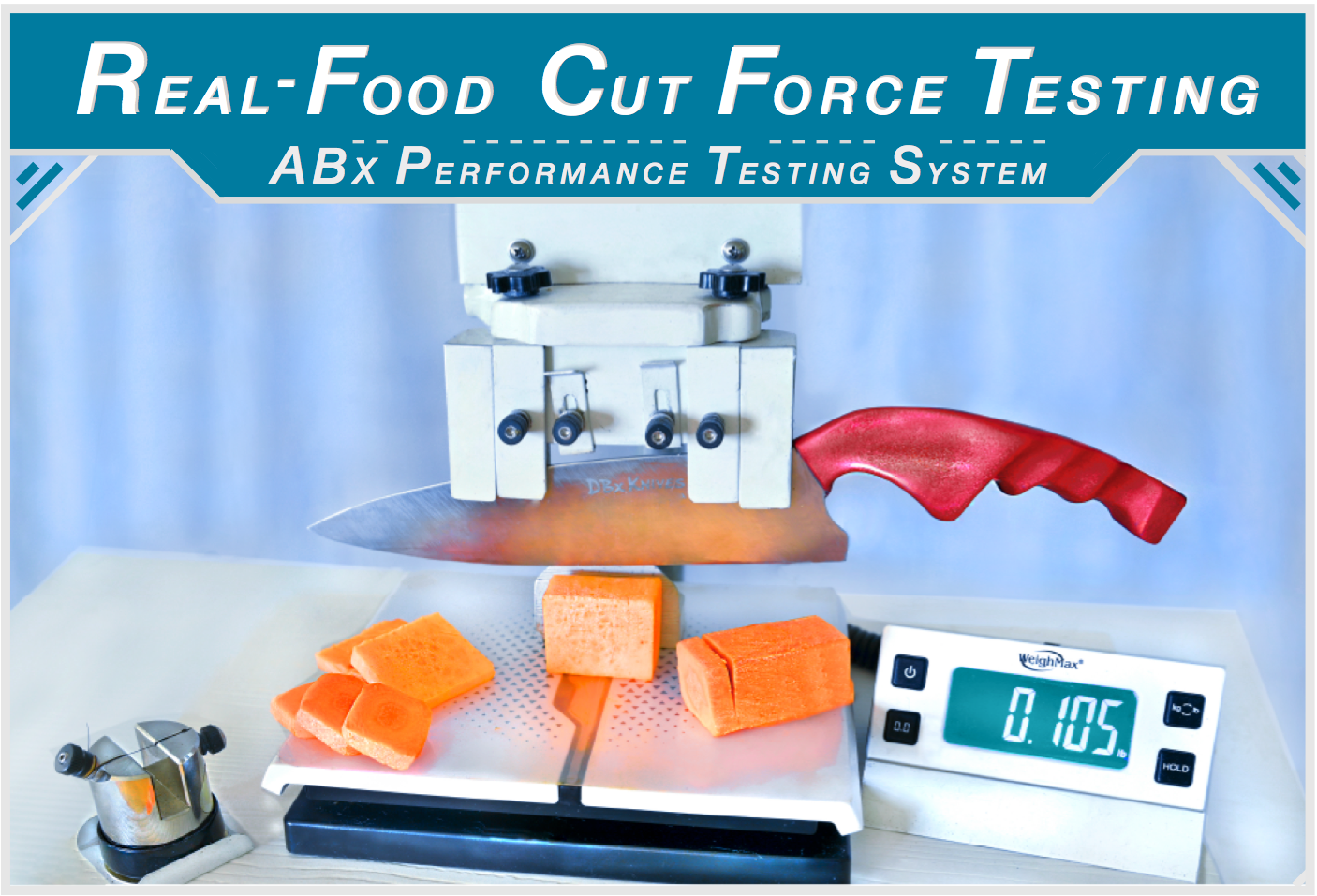
Handle profiles, blade geometries, and performance claims are validated using custom-built instrumented testing equipment — designed and fabricated in-house specifically for this purpose
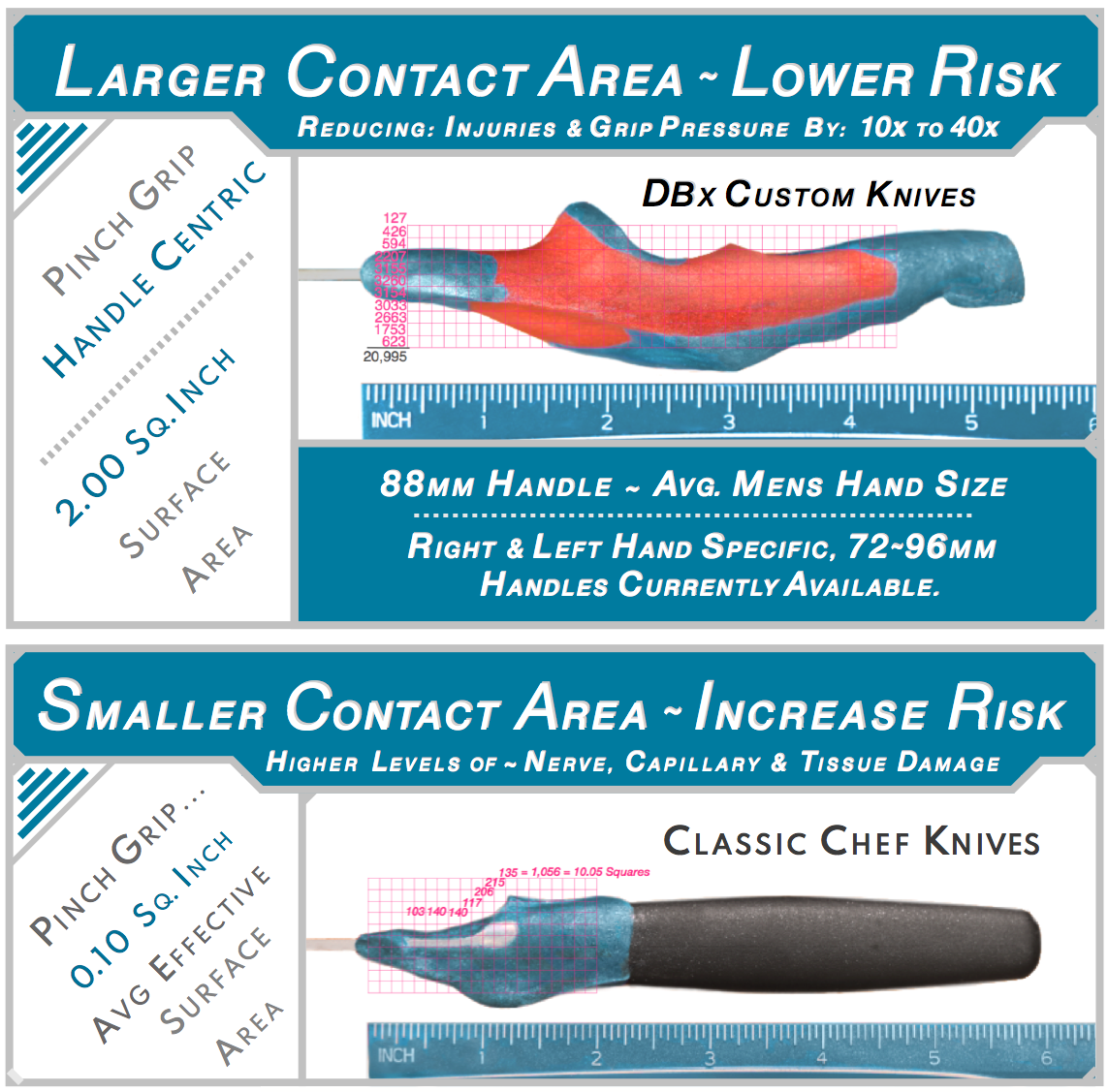
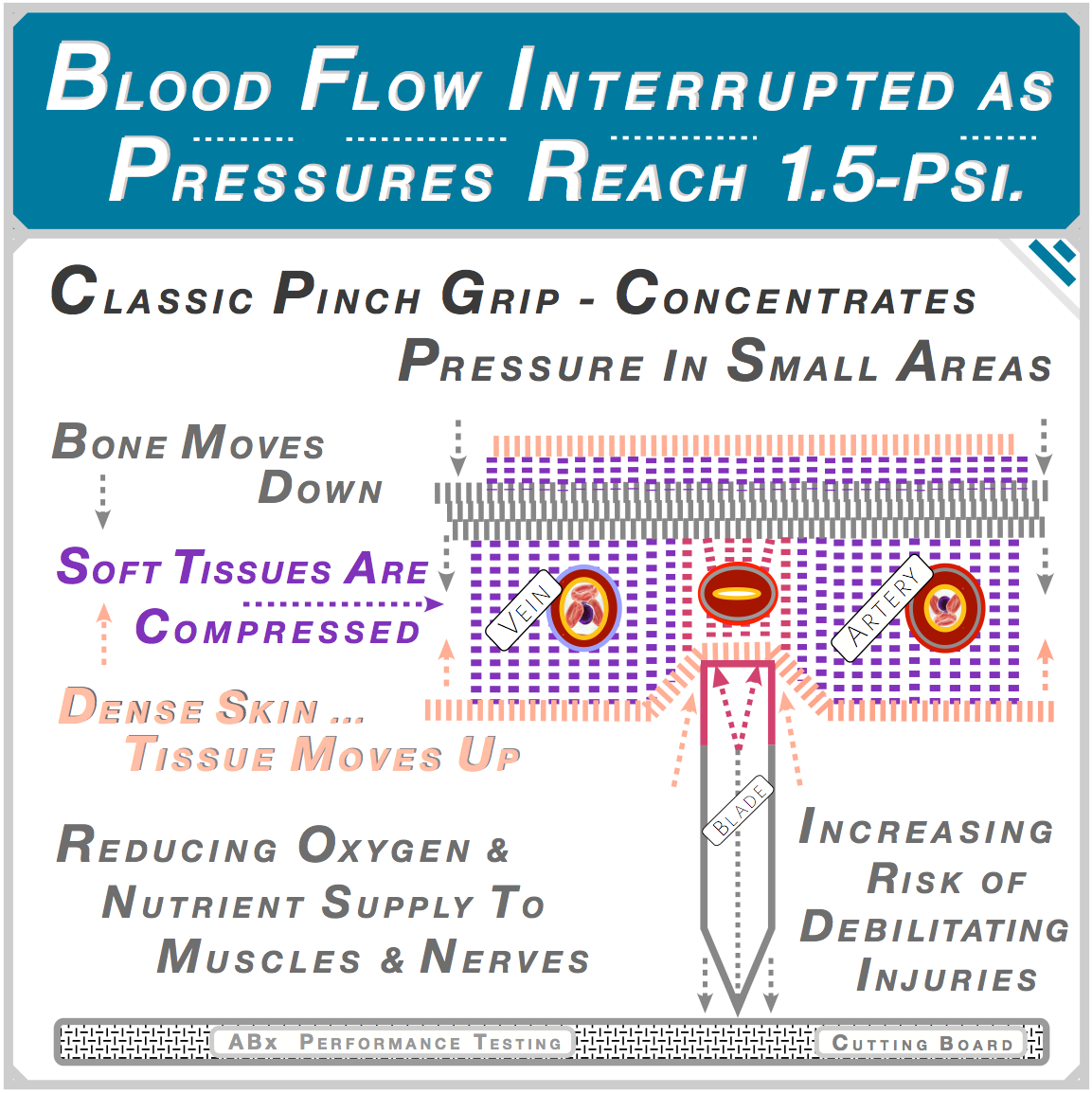
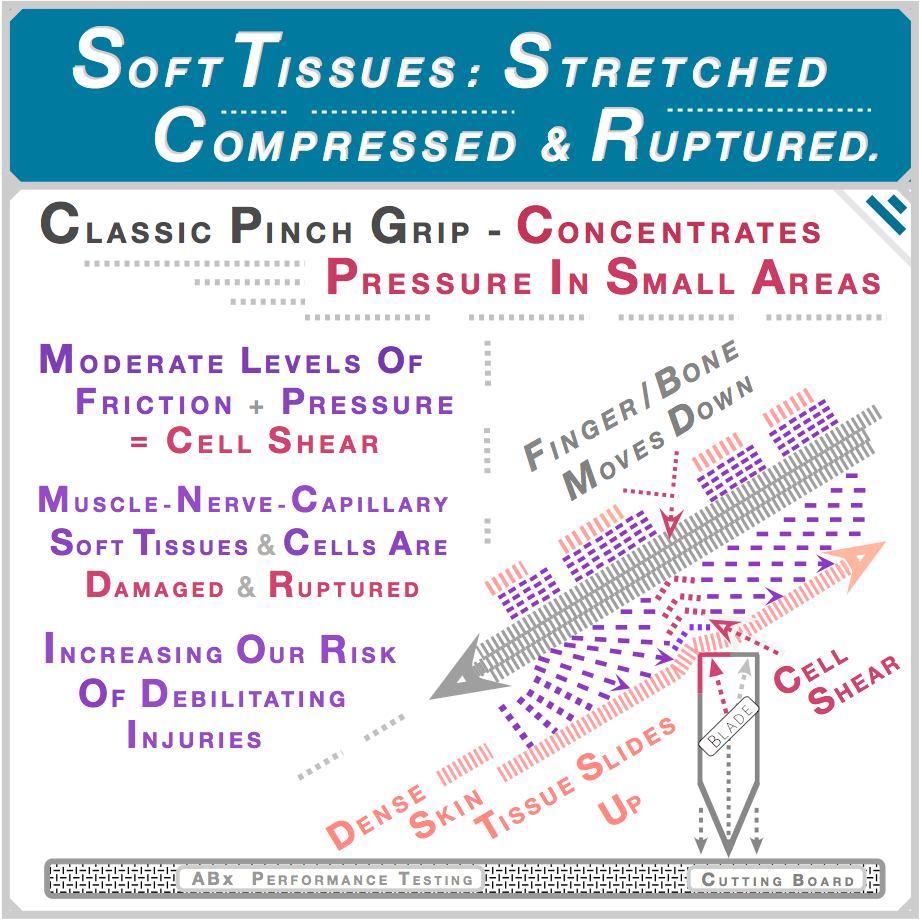
The biomechanical mechanisms illustrated here
— vascular compression and cell shear from concentrated pressure
— are well documented in medical literature addressing pressure ulcers, trigger finger, carpal tunnel syndrome and repetitive stress injuries.
DBx handle geometry is specifically engineered to eliminate the conditions that produce both injury pathways.
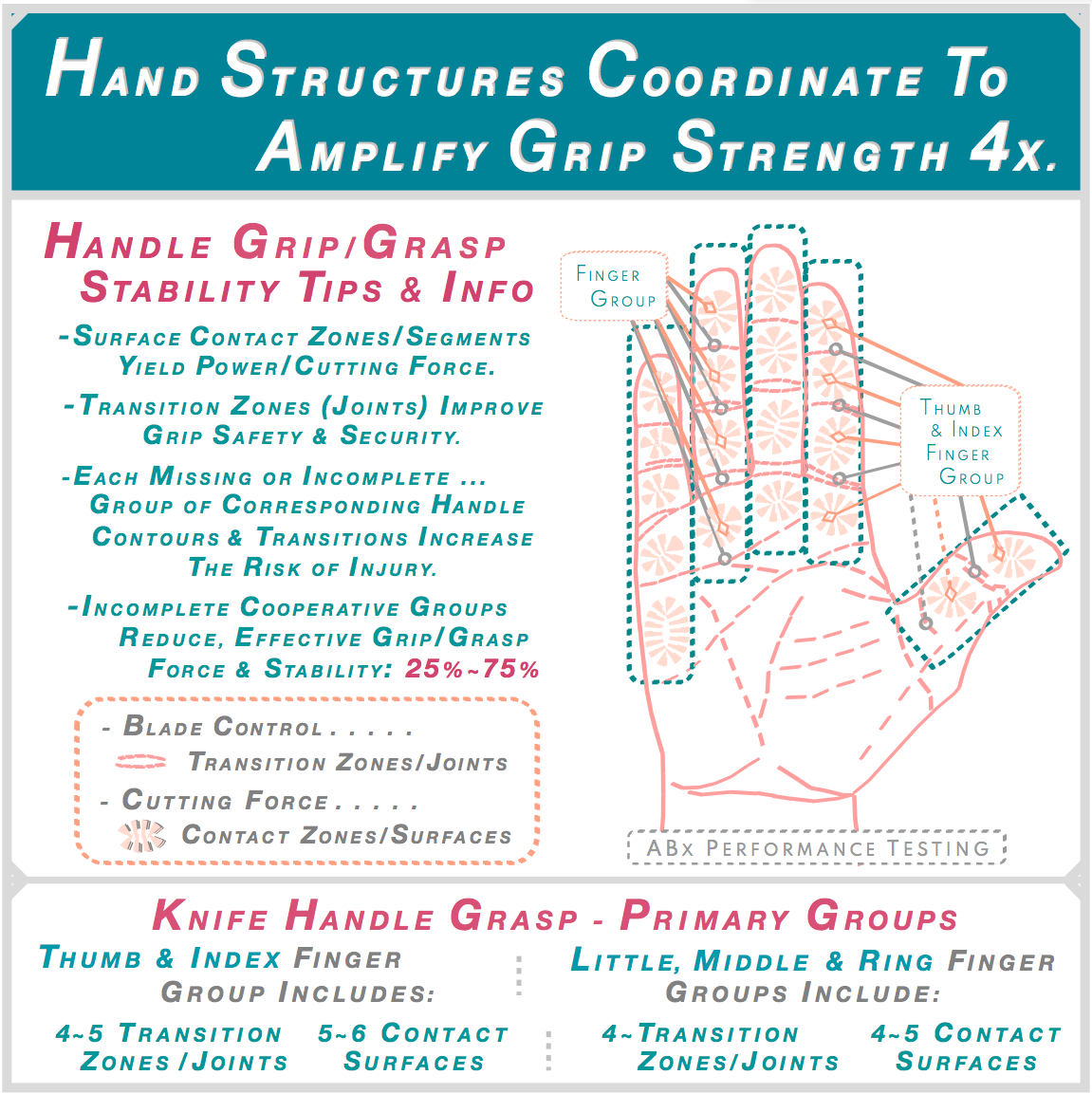
The Hand's Neurovascular Structures Are Primary Design Considerations, Not An Afterthought.
When classic pinch-grip handles concentrate cutting forces through small contact areas, bone and soft tissue compress together
collapsing veins and arteries as pressures rise above 1.0 PSI.
This interrupts oxygen and nutrient supply to the muscles and nerves of the hand, creating the conditions for cumulative debilitating injuries.
Every DBx handle geometry decision starts from a basic principle of mechanical engineering: distributing force reduces pressure.
In this case, that means pressure on the soft tissue, nerves, tendons, and blood vessels beneath the skin. That relationship shapes every contour before it's cut.
We place the highest value on functionality and safety in real-world use
— not in marketing copy, not in controlled demos, but in the hands of real people preparing real food in real kitchens.
Our competitors sell blade sharpness . . . and never addresses the forces destroying your hands.
blade sharpness — a 15% temporary advantage that fades in days and never addresses the forces destroying your hands.
We sell engineering backed by data — a permanent solution validated by instrumented testing and grounded in biomechanical research.
Every DBx knife is designed, tested, and built by hand to protect the hands that use it.
His approach was to start from the hand itself: optimize every contact point in the handle to the individual user's hand size, and validate every knife design decision with instrumented testing.
What We Believe
The result is a knife engineered specifically for your hand — safer, more comfortable, and measurably more controlled than anything designed for the mass market.
DBx Knives
Handcrafted in USA
With global Materials
DBx Contact us
Interested in working together? Fill out some info and we will be in touch shortly. We can’t wait to hear from you!