The Science Behind

DBx Knives

Section 1 — Understanding the Problem: why traditional knife handles hurt your hands and the biomechanical basis for handle-induced hand pain, fatigue and injury. DBx Knives More Info page.
Section 2 — Why Sharpening Is Not The Answer: the sharpness myth, what the knife industry doesn't tell you, and why blade sharpness accounts for only 15% of cutting force requirements. DBx Knives More Info page.
Section 3 — How DBx Eliminates The Root Causes: complete engineering solution addressing hand fatigue, pain and injury through systematic biomechanical handle and blade design. DBx Knives More Info page.
Section 4 — The Science Behind The Design: every DBx design claim is data-backed, research-validated and instrumented science-based. DBx Knives More Info page.
Section 5 — Is DBx Right For You: who benefits from DBx Knives custom sized-to-fit ergonomic chef knives. DBx Knives More Info page.
Section 6 — Specifications and How To Order: DBx Knives complete product specifications and simple three-step ordering process. DBx Knives More Info page.

Understanding The Problem
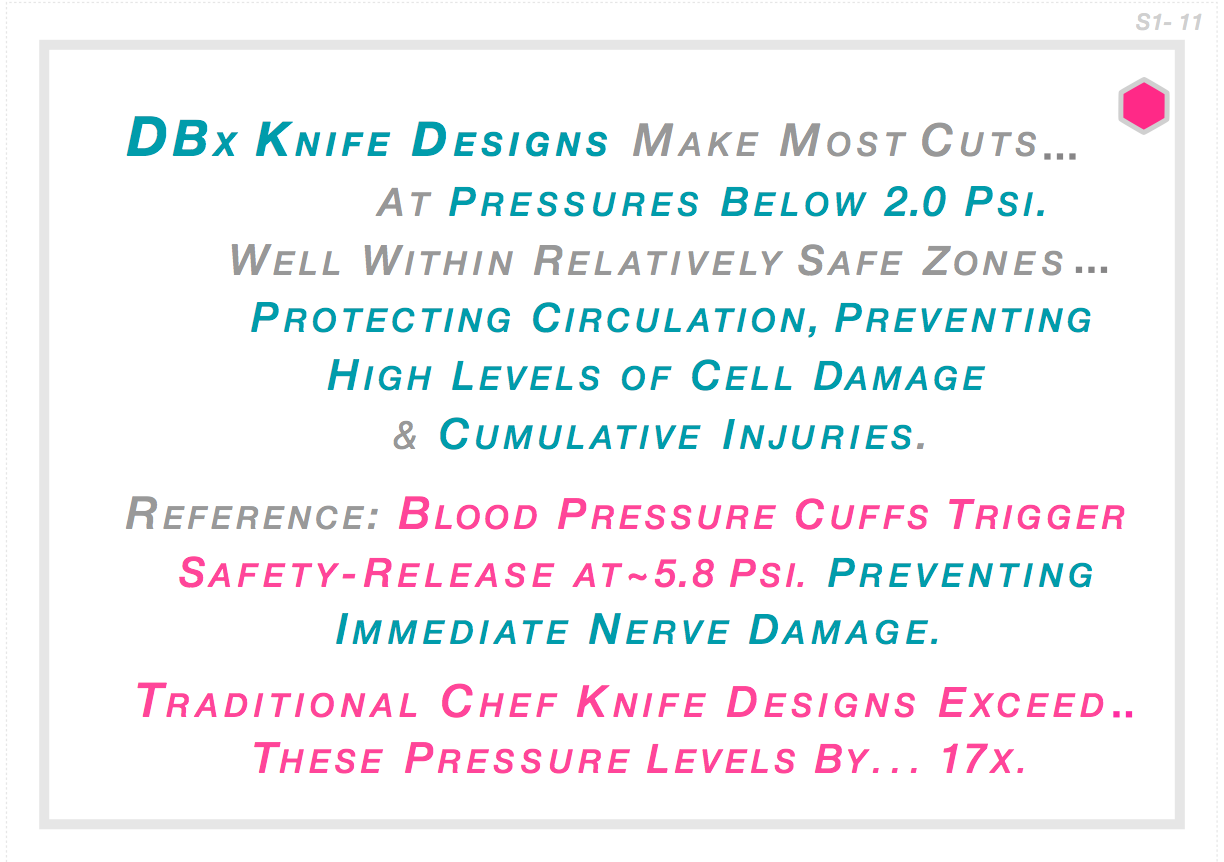
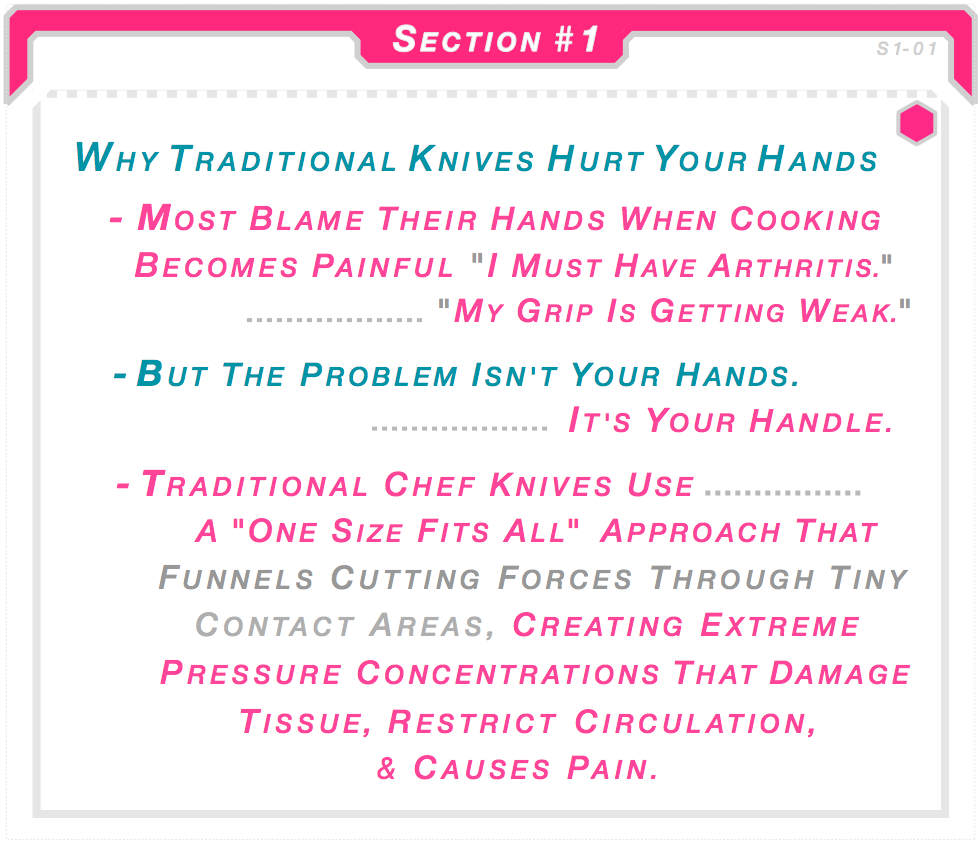
Traditional chef knives funnel cutting forces through small contact areas, creating extreme pressure concentrations that damage tissue, restrict circulation and cause pain. The problem isn't your hands — it's your handle.
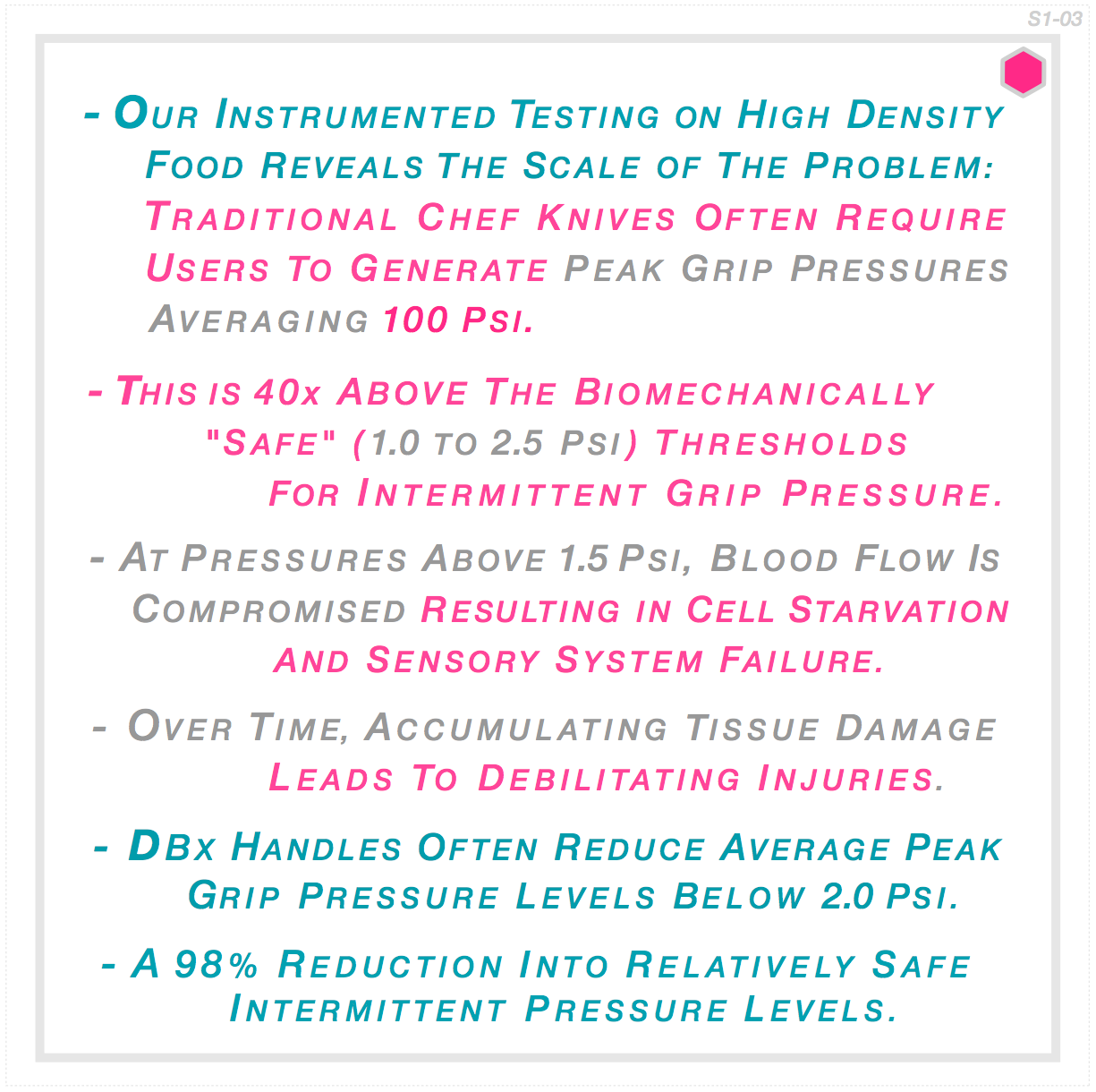
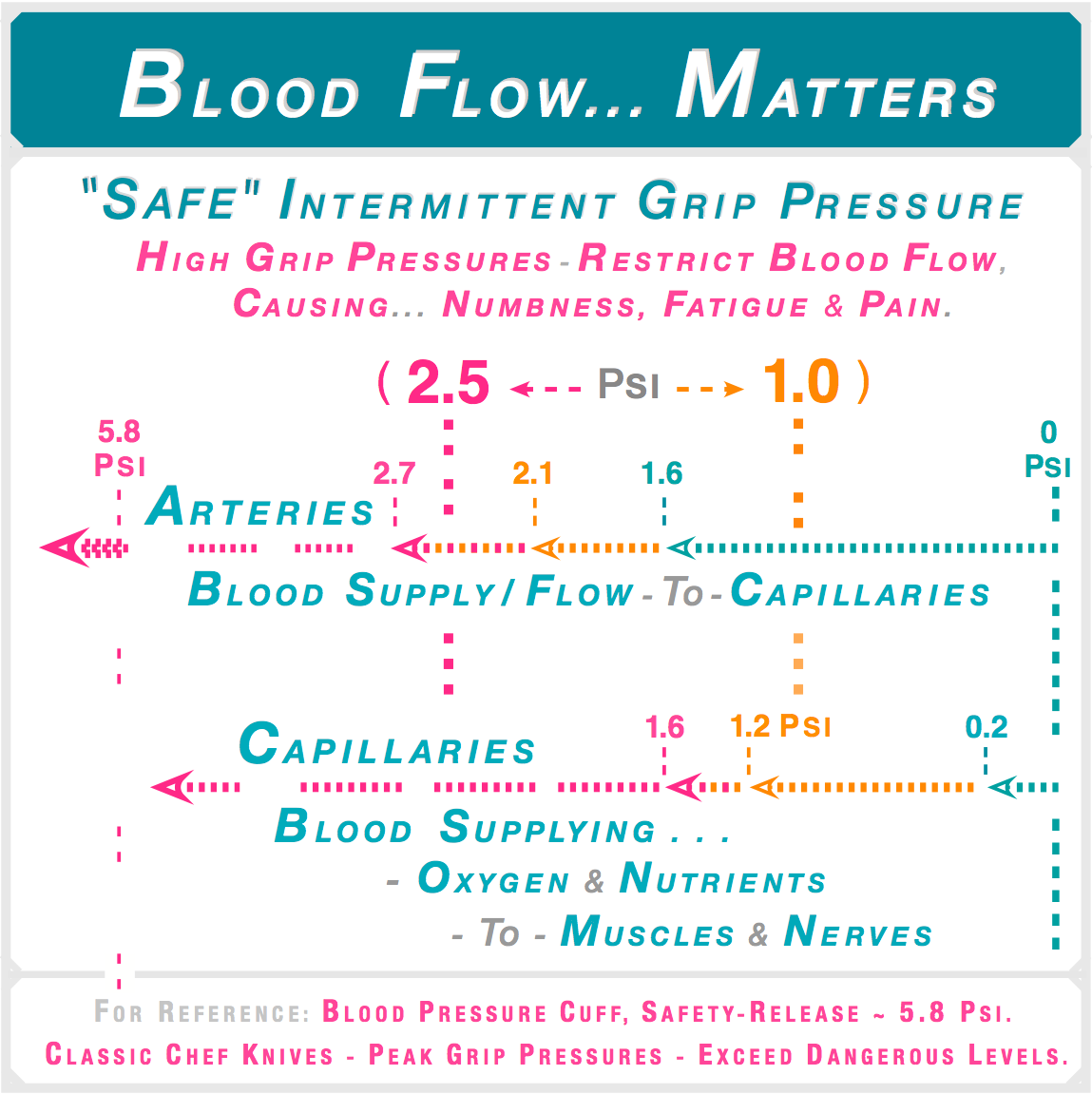
ABx instrumented testing: traditional chef knives 100 PSI average peak grip pressure — 40x above the safe intermittent grip threshold of 1.0 to 2.5 PSI. Above 1.5 PSI blood flow is compromised, causing tissue damage and cumulative injury over time.
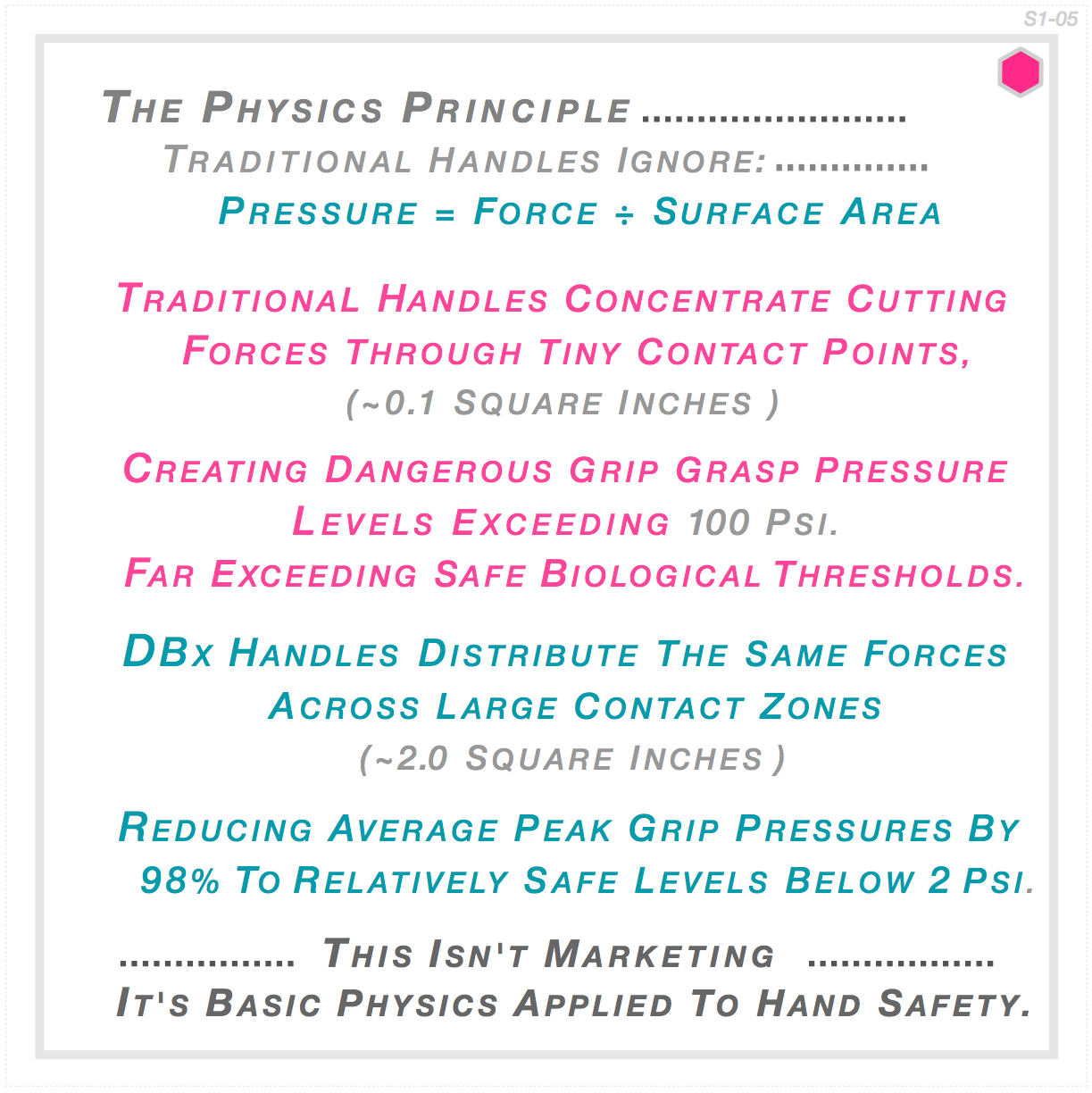
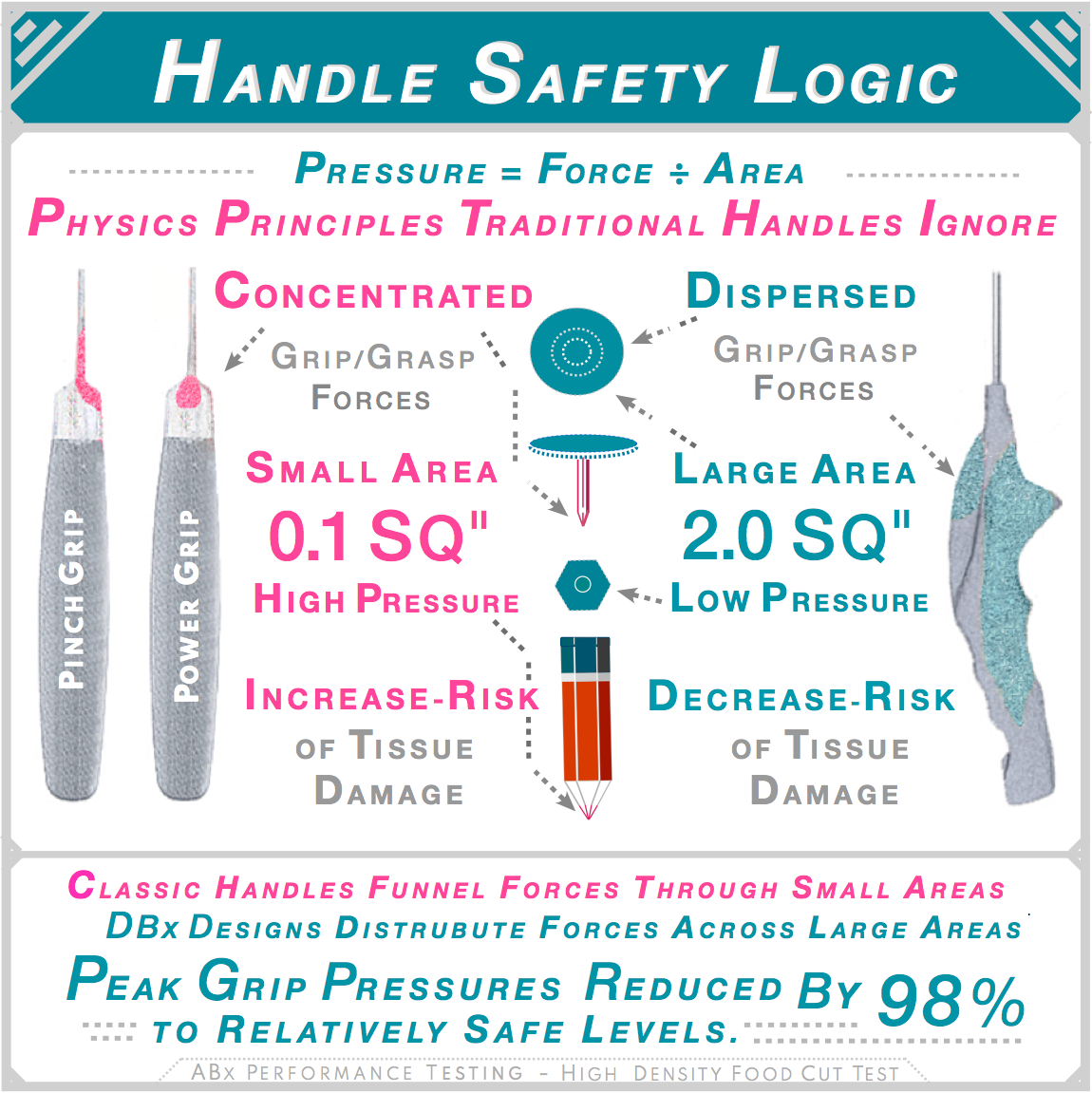
Pressure equals force divided by surface area — the physics principle traditional handles ignore. DBx distributes forces across 2.0 sq inches versus 0.1 sq inches, reducing peak grip pressure 98% below 2.0 PSI. Basic physics applied to hand safety.
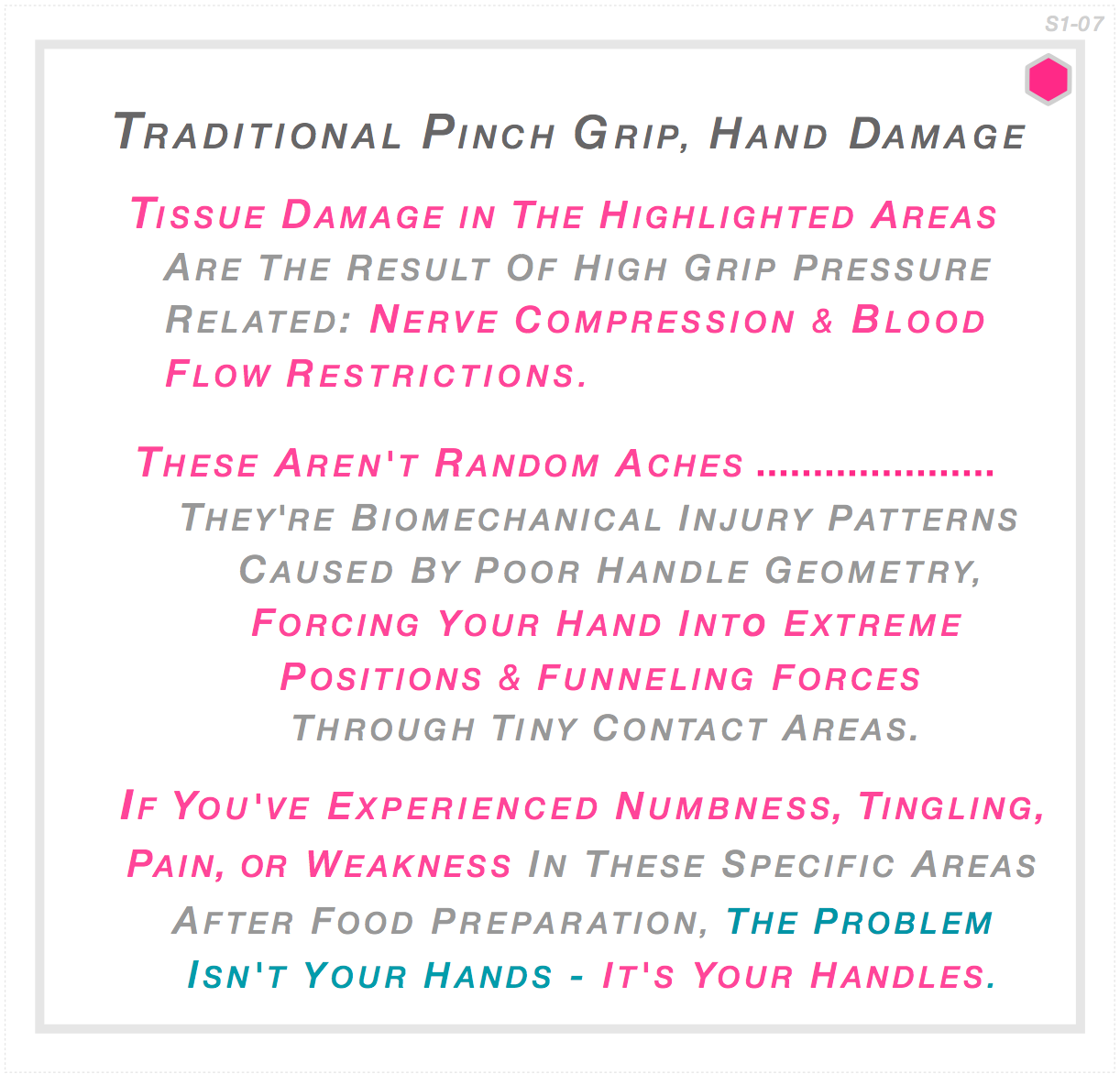
ditional pinch-grip handles funnel forces through tiny contact areas causing nerve compression and blood flow restriction. Numbness, tingling and pain after food prep are biomechanical injury patterns - not arthritis or weak hands. It's your handle.
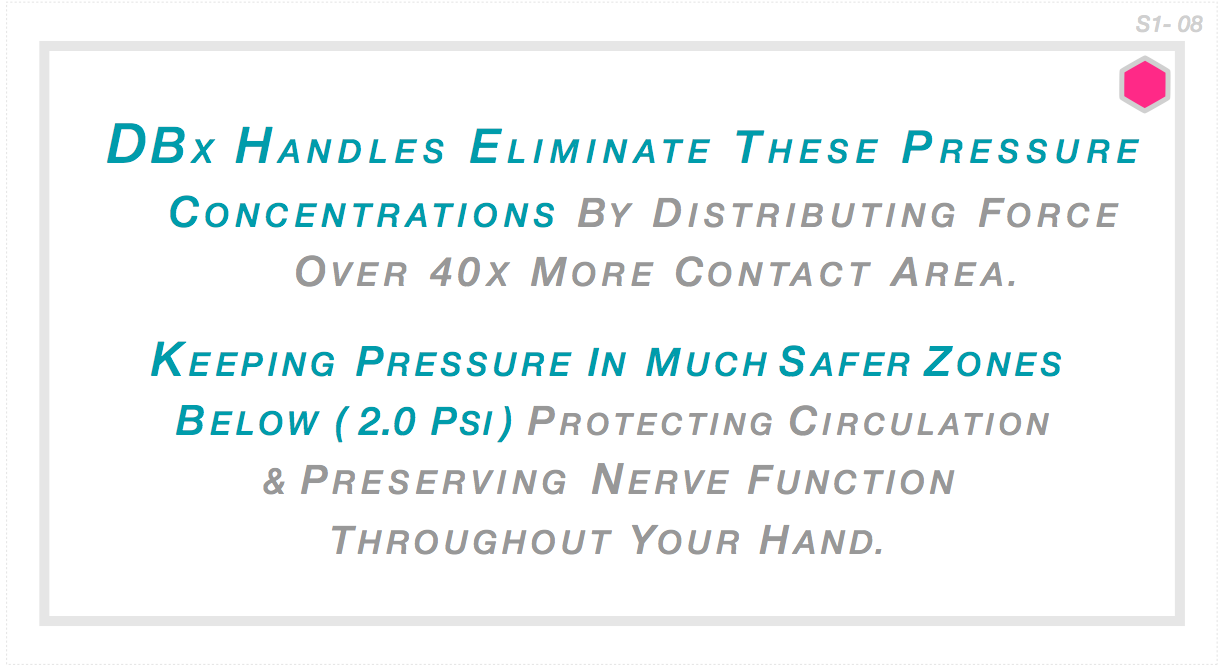
DBx handles eliminate dangerous pressure concentrations by distributing force across 40x more contact area than traditional handles — keeping grip pressures below 2.0 PSI, protecting circulation and preserving nerve function throughout the hand.
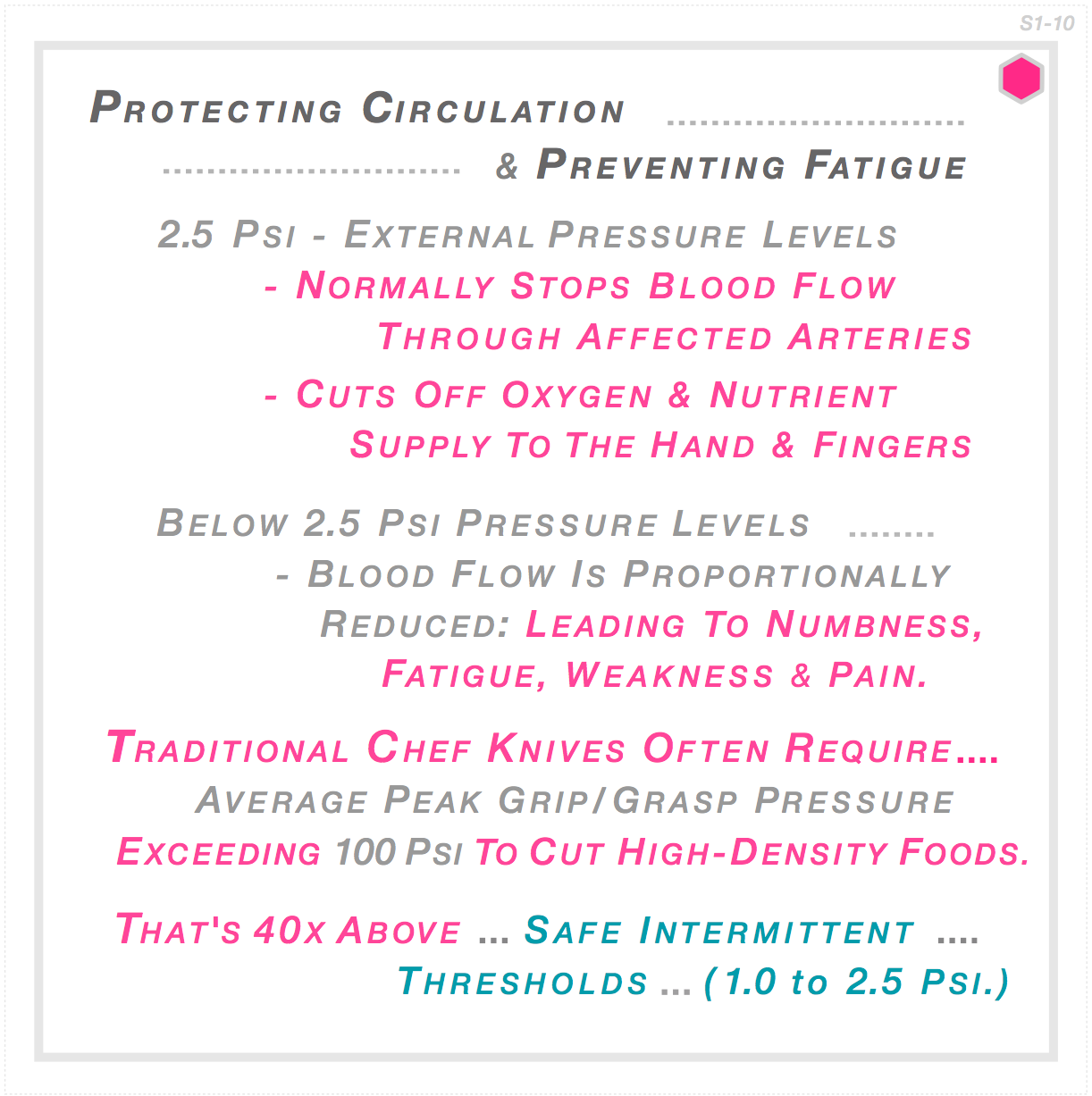
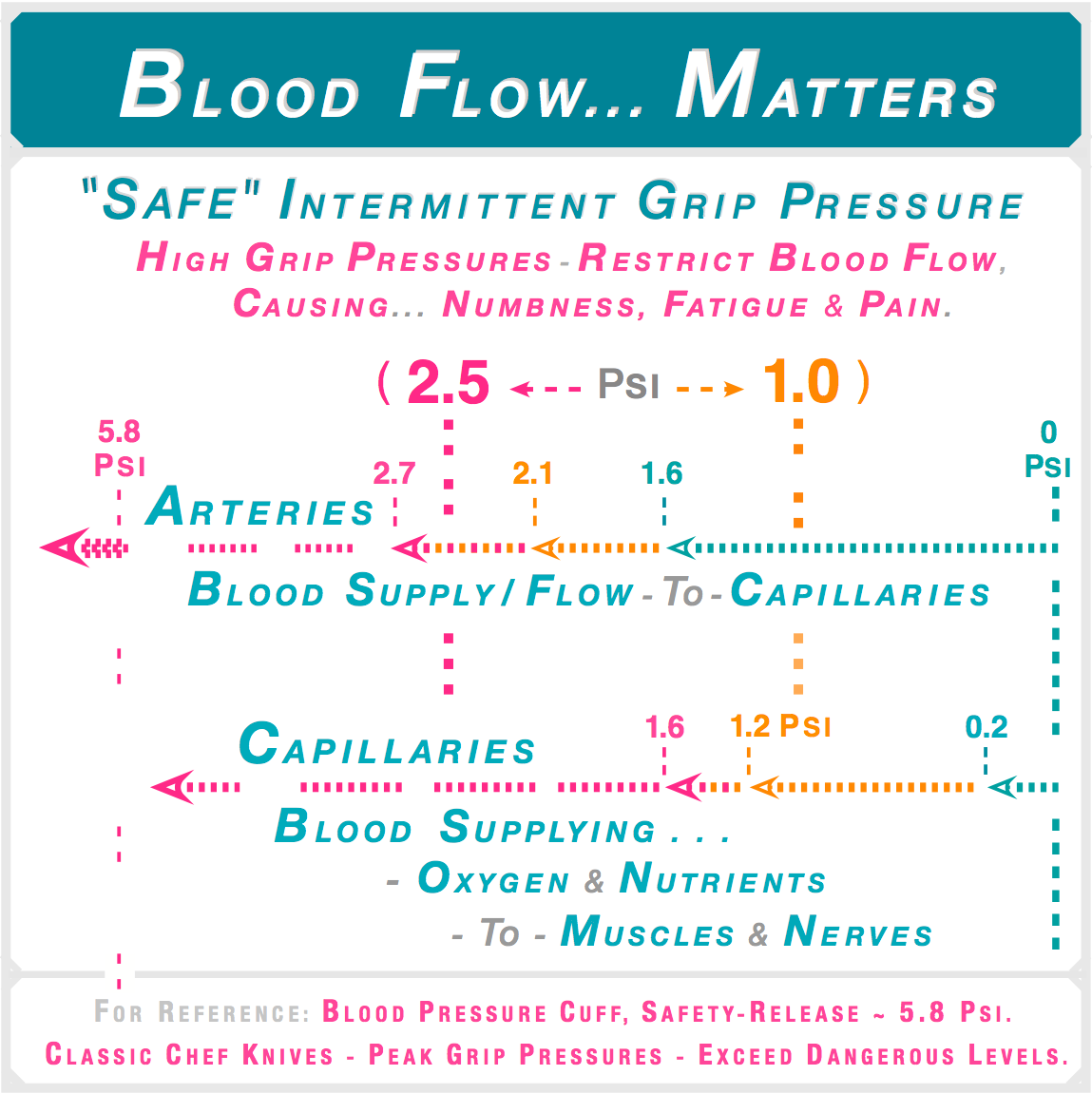
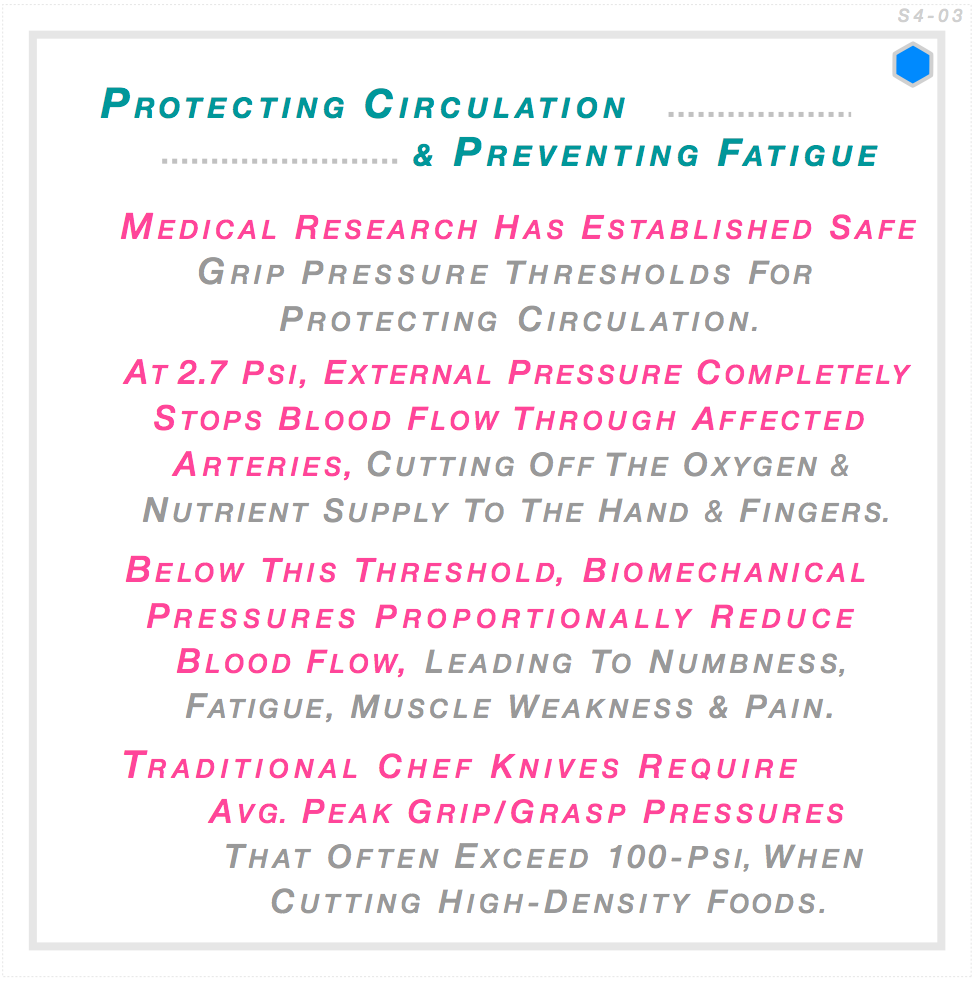
At 2.5 PSI external pressure blood flow through affected arteries stops, cutting oxygen and nutrient supply to hand and fingers. Traditional chef knives require 100 PSI peak grip pressure — 40x above safe intermittent thresholds of 1.0 to 2.5 PSI.
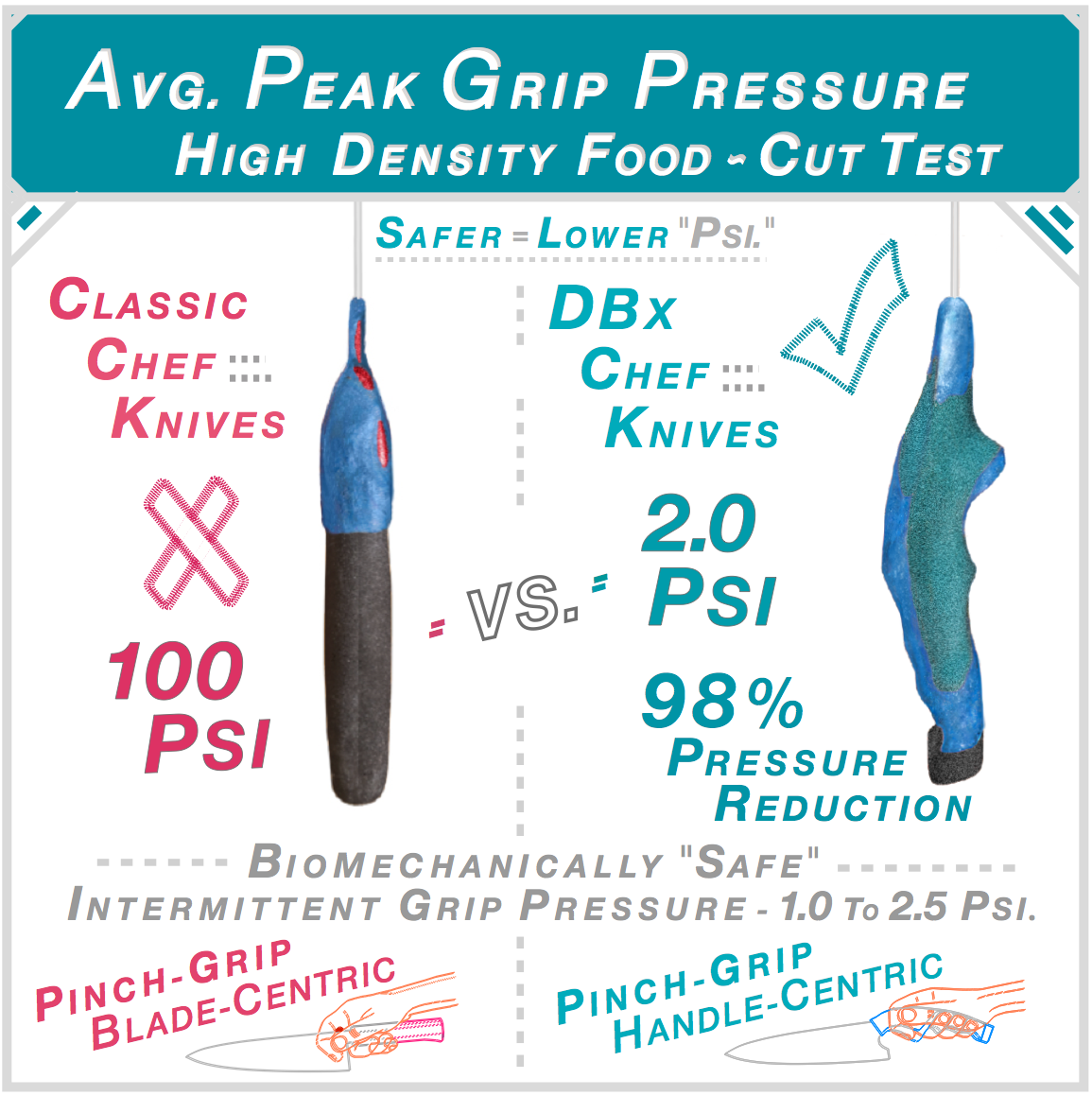
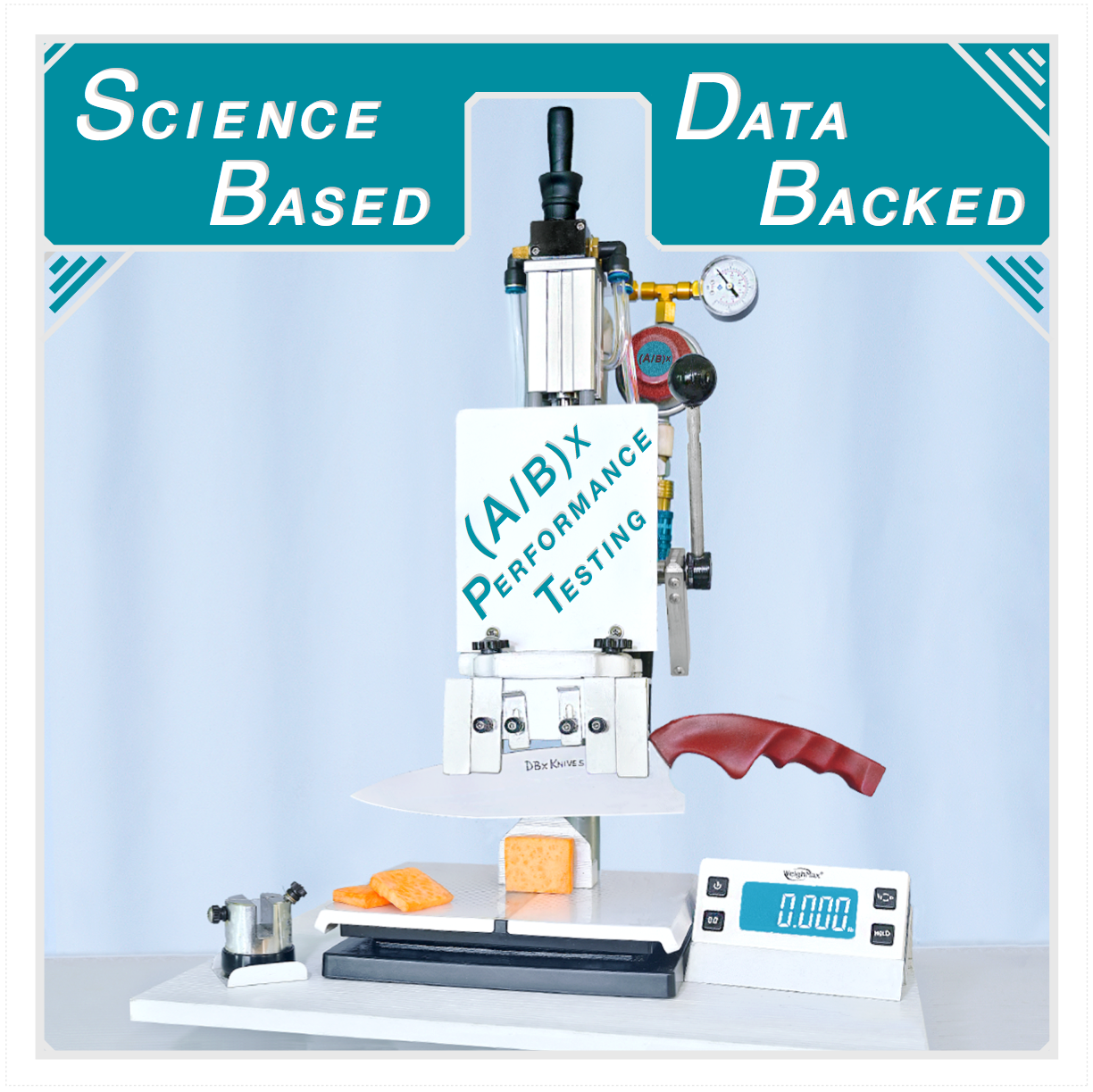
ABx Performance Testing high-density food-cut test: Classic Chef Knife blade-centric pinch-grip averages 100 PSI versus DBx Chef Knife handle-centric pinch-grip at 2.0 PSI — a 98% reduction into biomechanically safe intermittent grip pressure range.
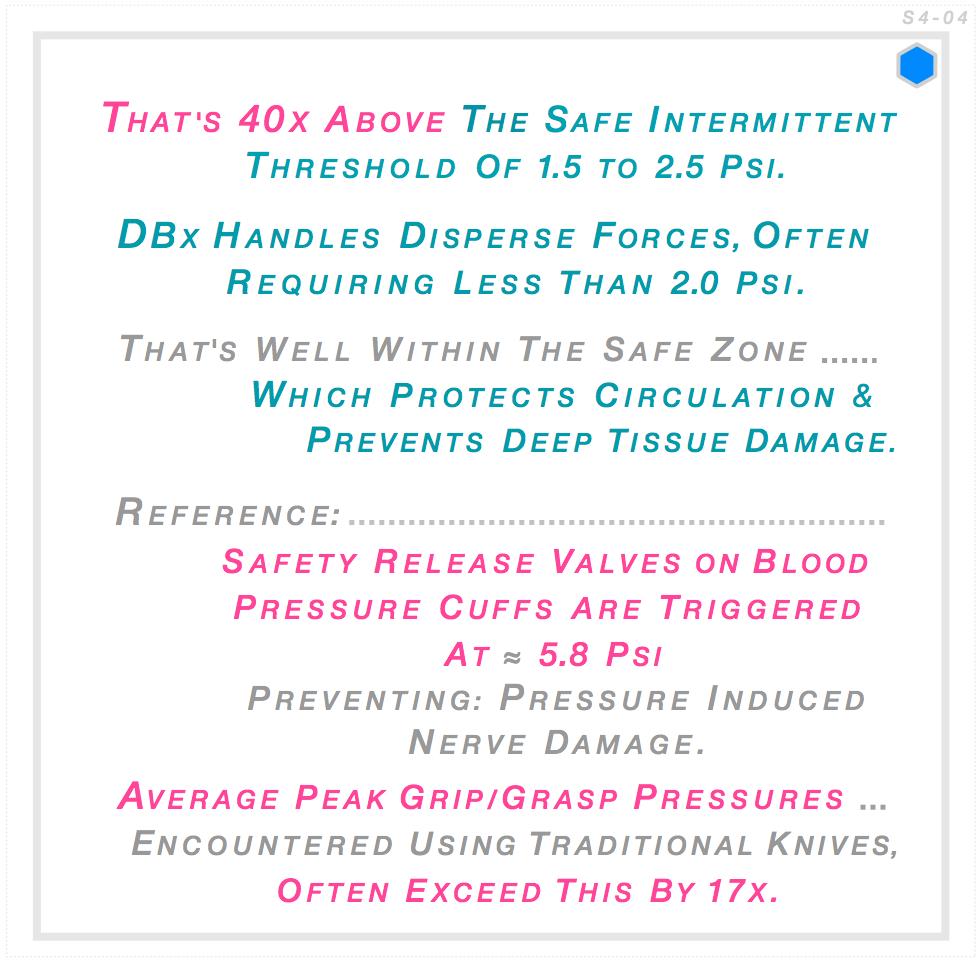
DBx knife designs make most cuts below 2.0 PSI — protecting circulation and preventing cumulative cell damage. Traditional chef knife designs exceed blood pressure cuff safety-release pressure of 5.8 PSI by 17x. ABx Performance Testing.
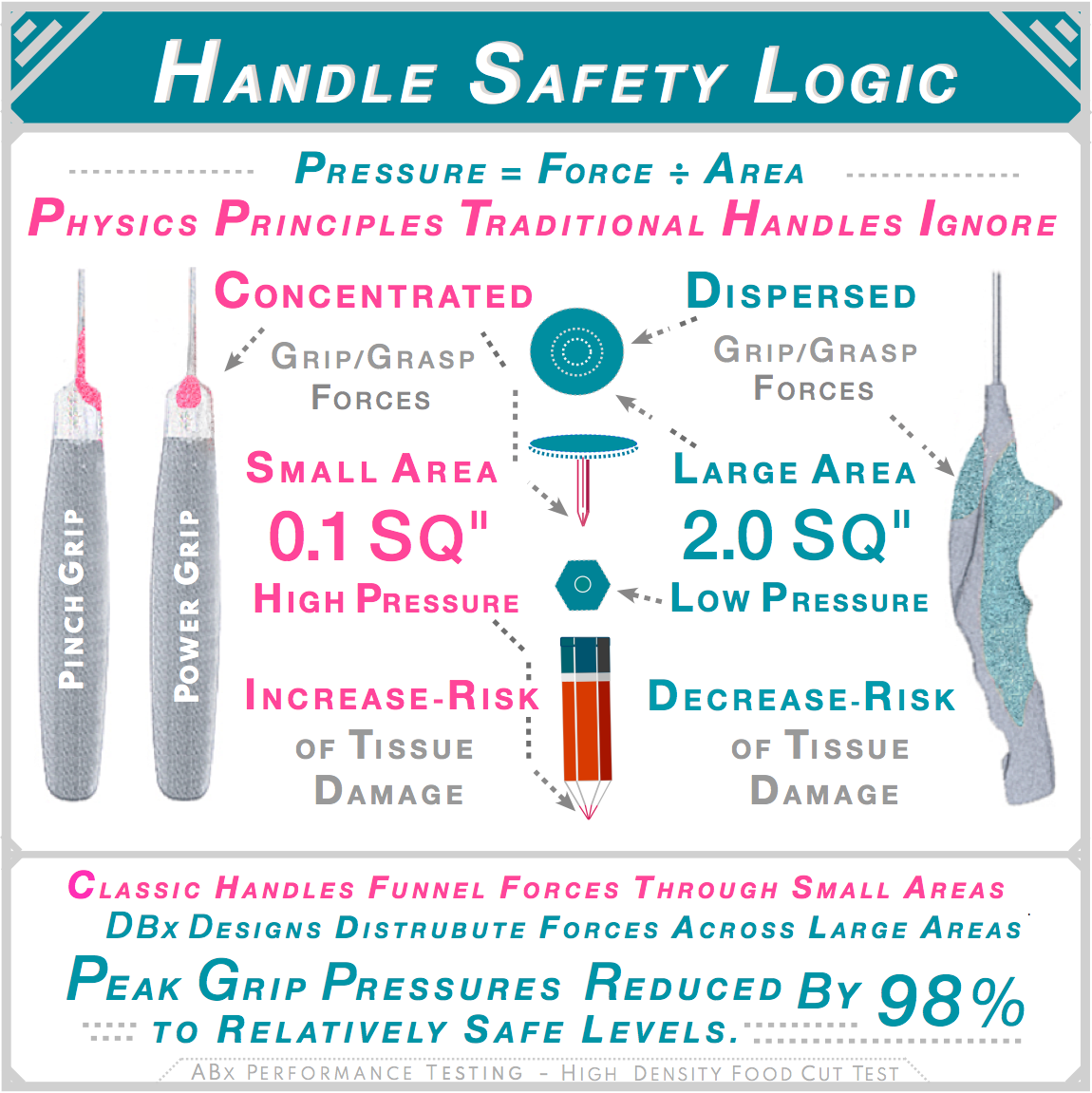
Handle Safety Logic — Pressure = Force ÷ Area. Classic handles concentrate forces through 0.1 sq inch generating dangerous pressure. DBx handles distribute forces across 2.0 sq inches — reducing peak grip pressure 98%. ABx Performance Testing.
High grip pressures restrict blood flow to hand capillaries causing numbness, fatigue and pain. Safe intermittent grip pressure: 1.0 to 2.5 PSI. Classic chef knives exceed dangerous thresholds — blood pressure cuff safety-release reference: 5.8 PSI.
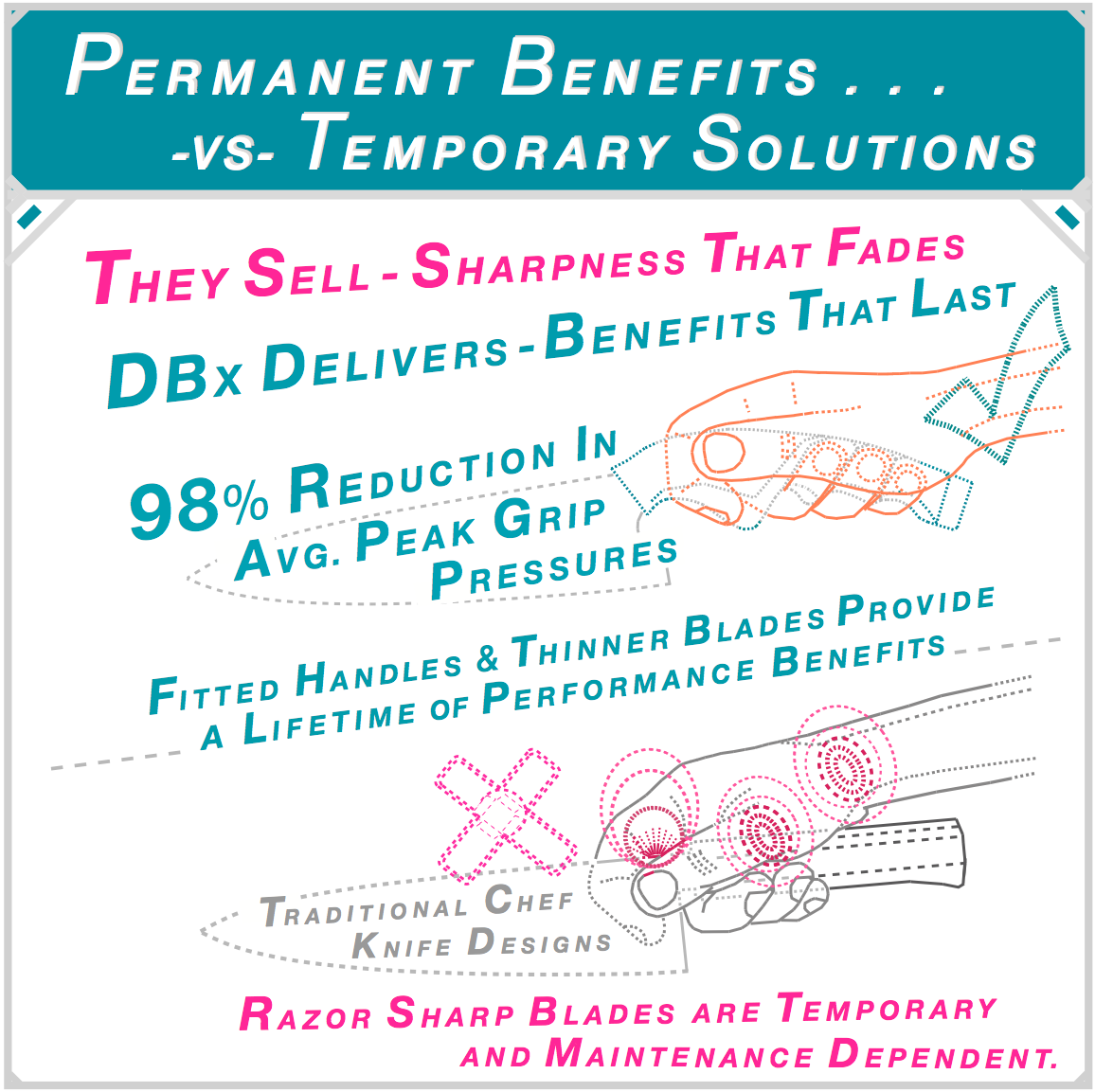
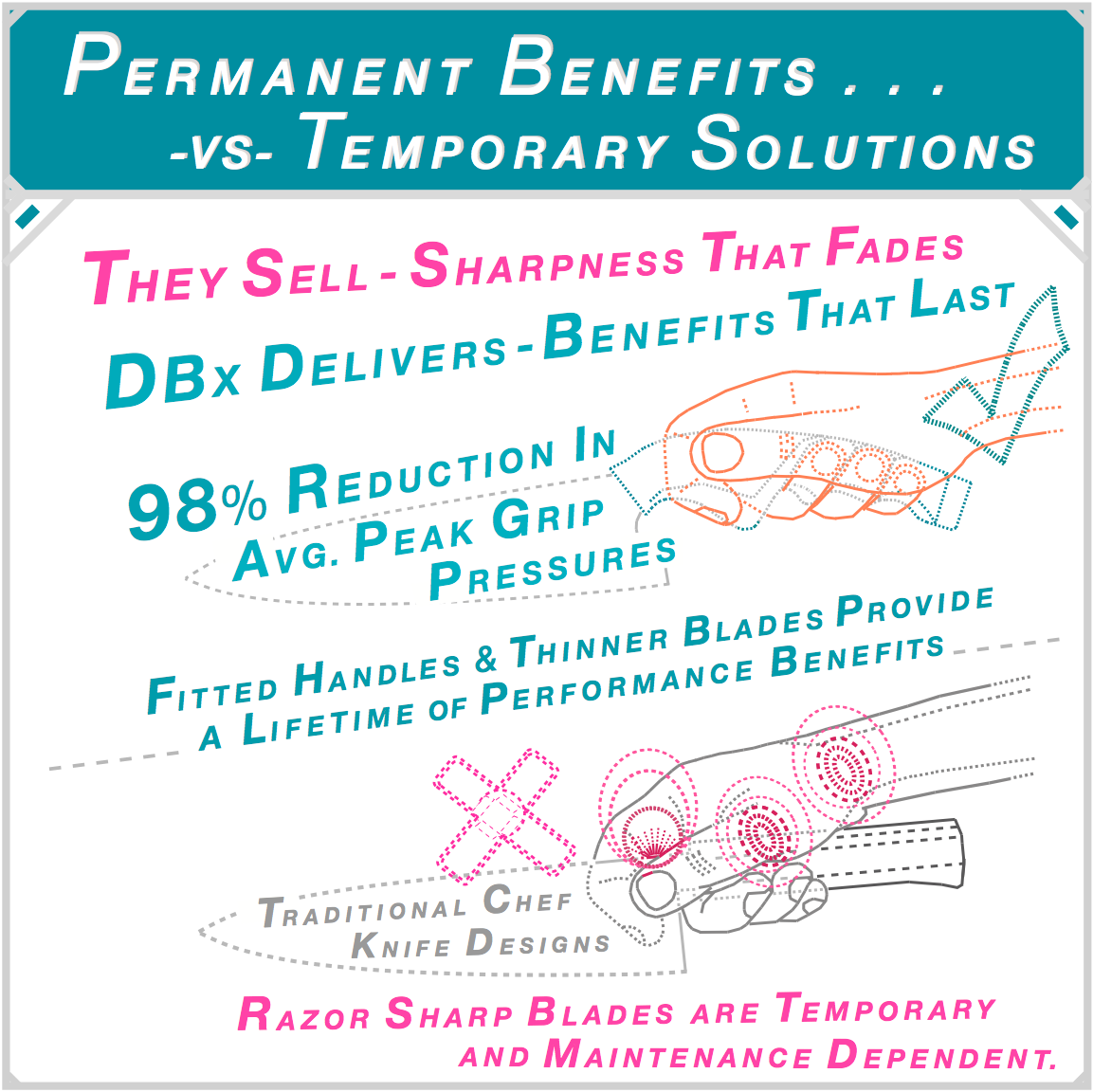
Razor-sharp blades are temporary and maintenance dependent. DBx fitted handles and thinner blades deliver a lifetime of performance benefits — including 98% reduction in average peak grip pressures. ABx Performance Testing.
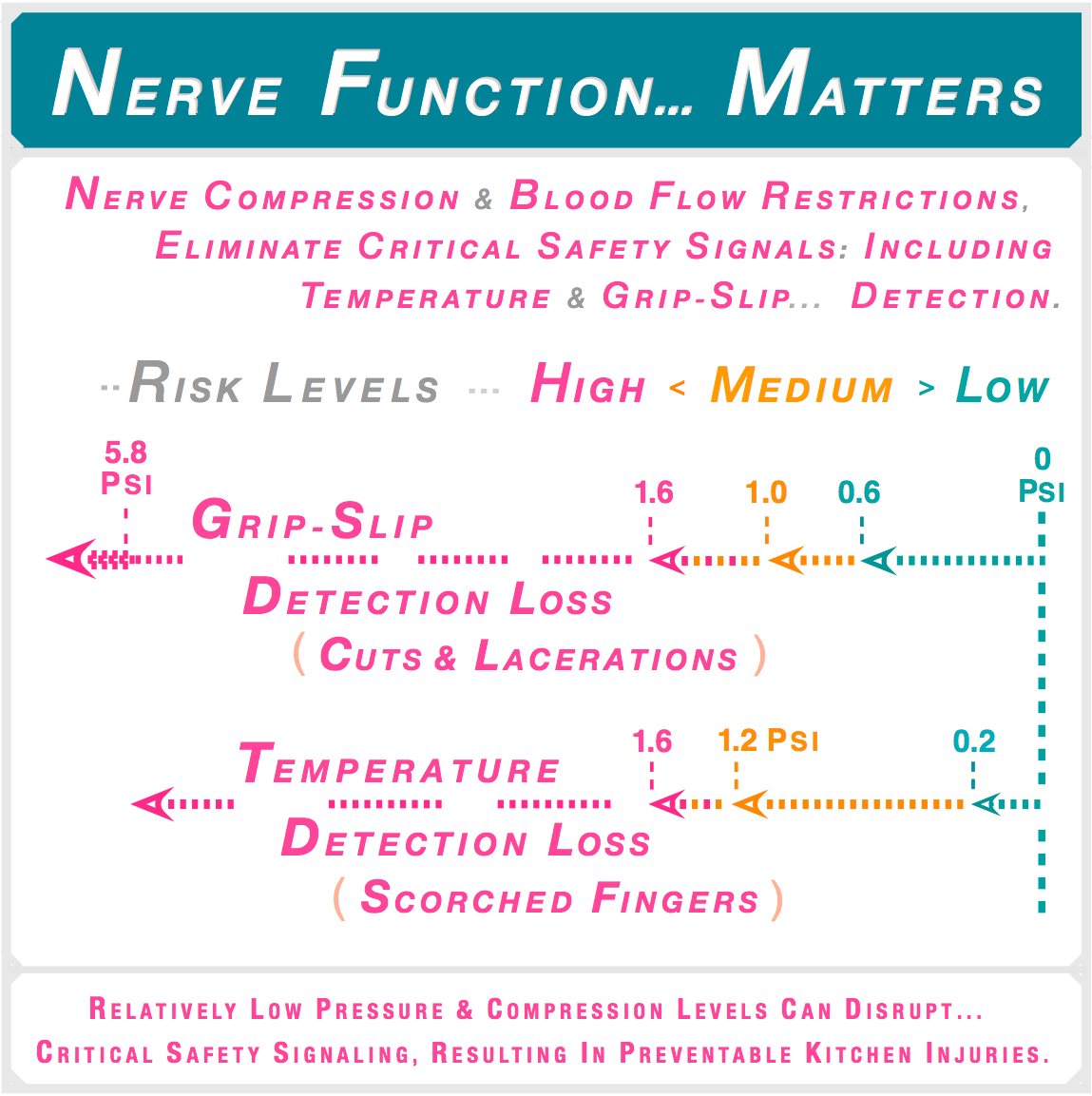
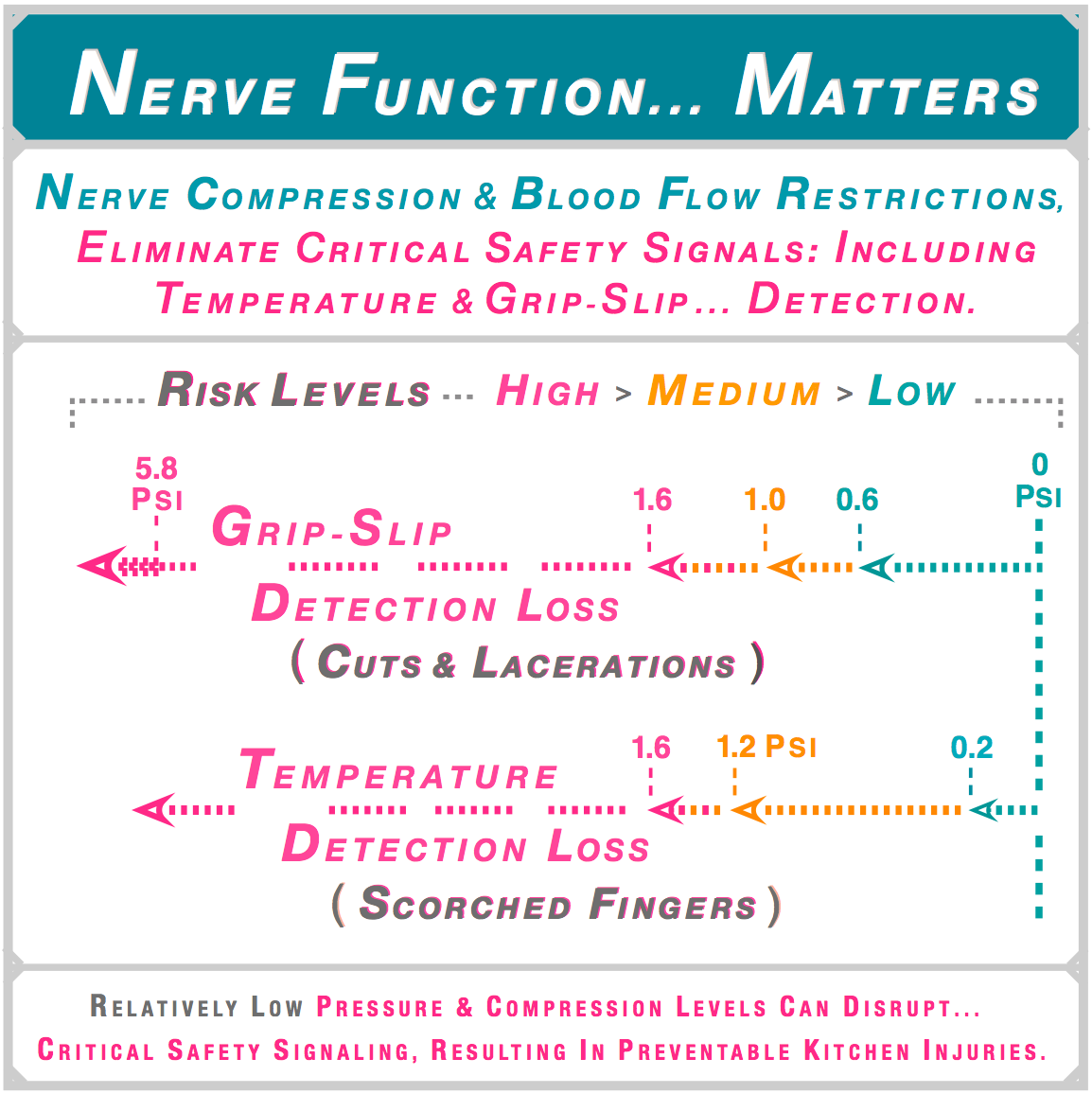
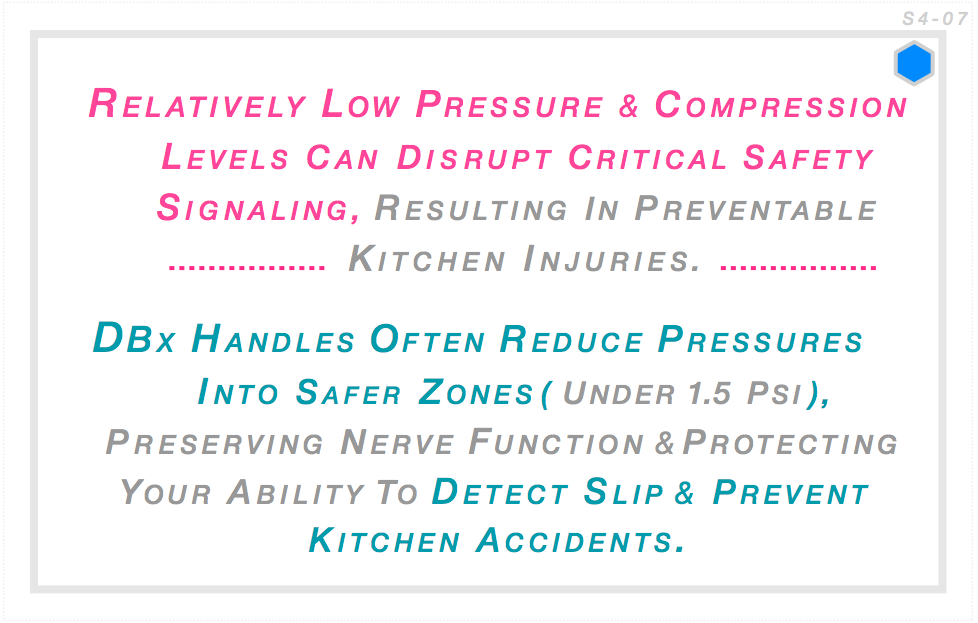
Nerve compression from high grip pressures eliminates critical hand safety signals, grip-slip detection loss risks cuts & lacerations, temperature detection loss risks scorched fingers. DBx handles preserve nerve function preventing kitchen accidents
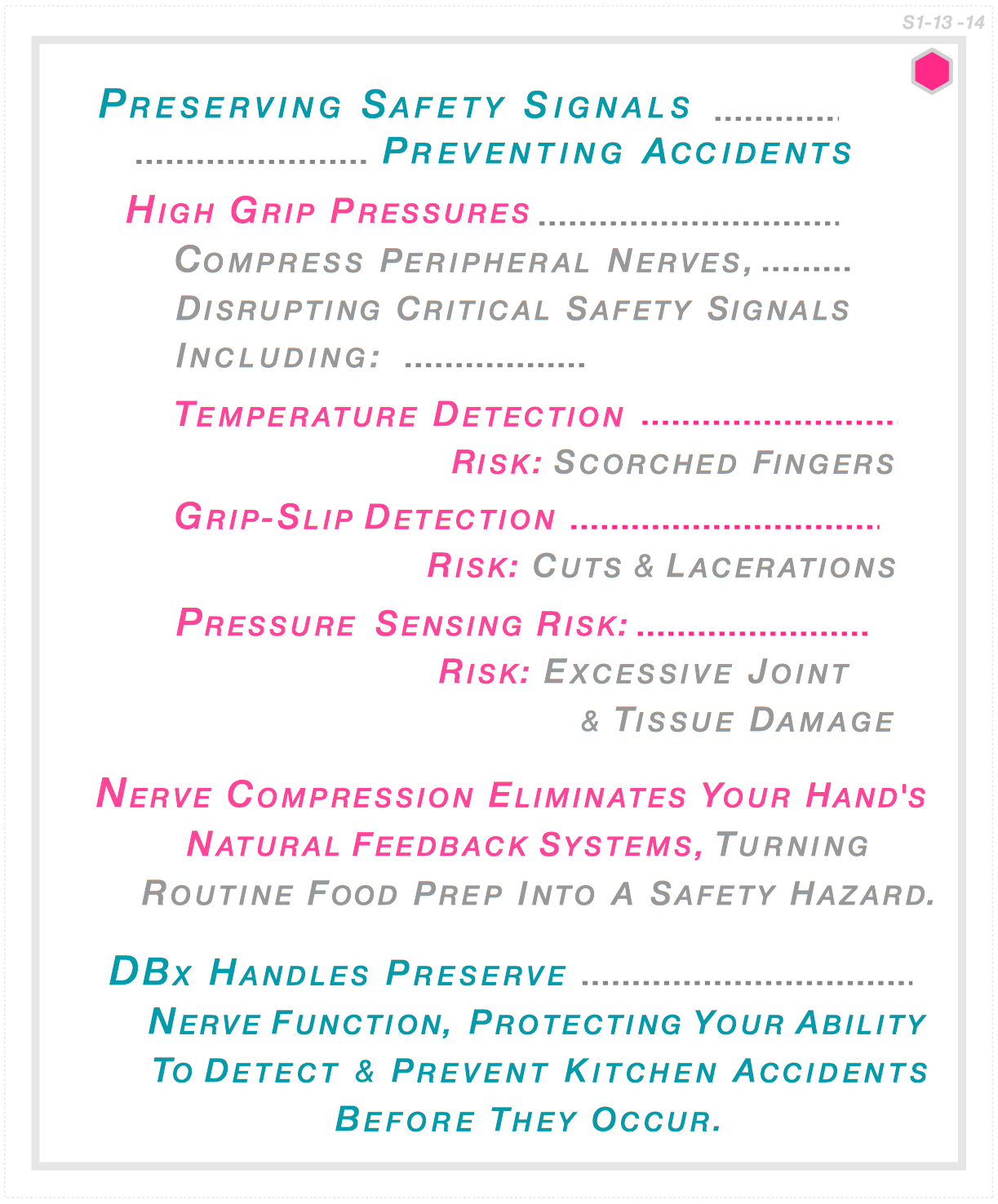
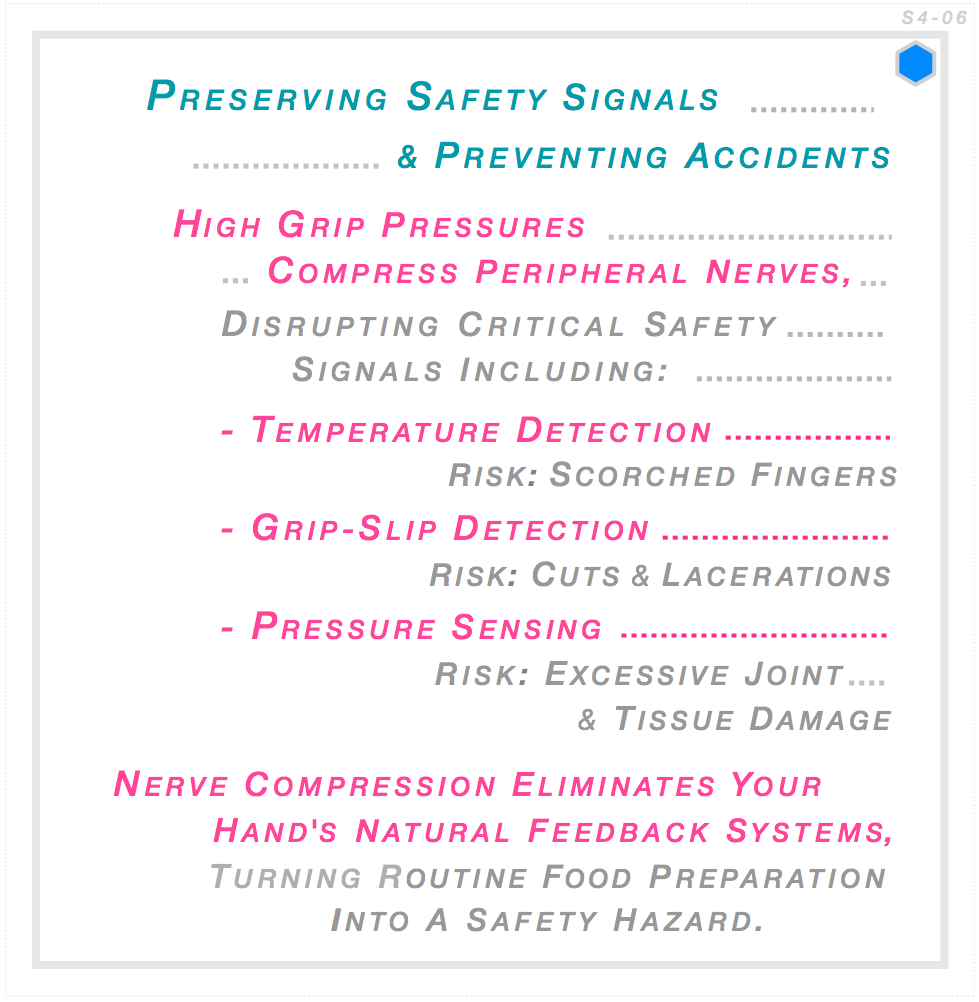
High grip pressures compress peripheral nerves disrupting critical safety signals including grip-slip and temperature detection. DBx handles preserve nerve function — protecting against cuts, scorched fingers and cumulative joint damage.

Why Sharpening 

Is Not the Answer

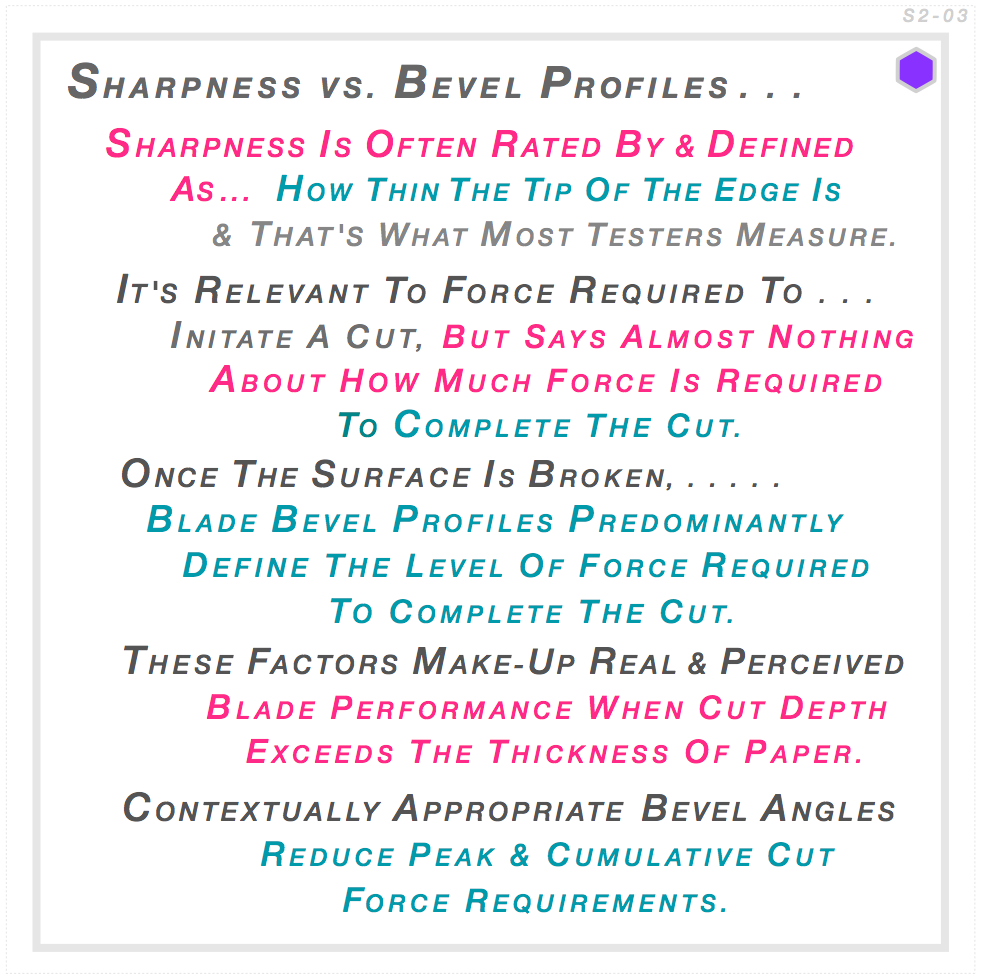
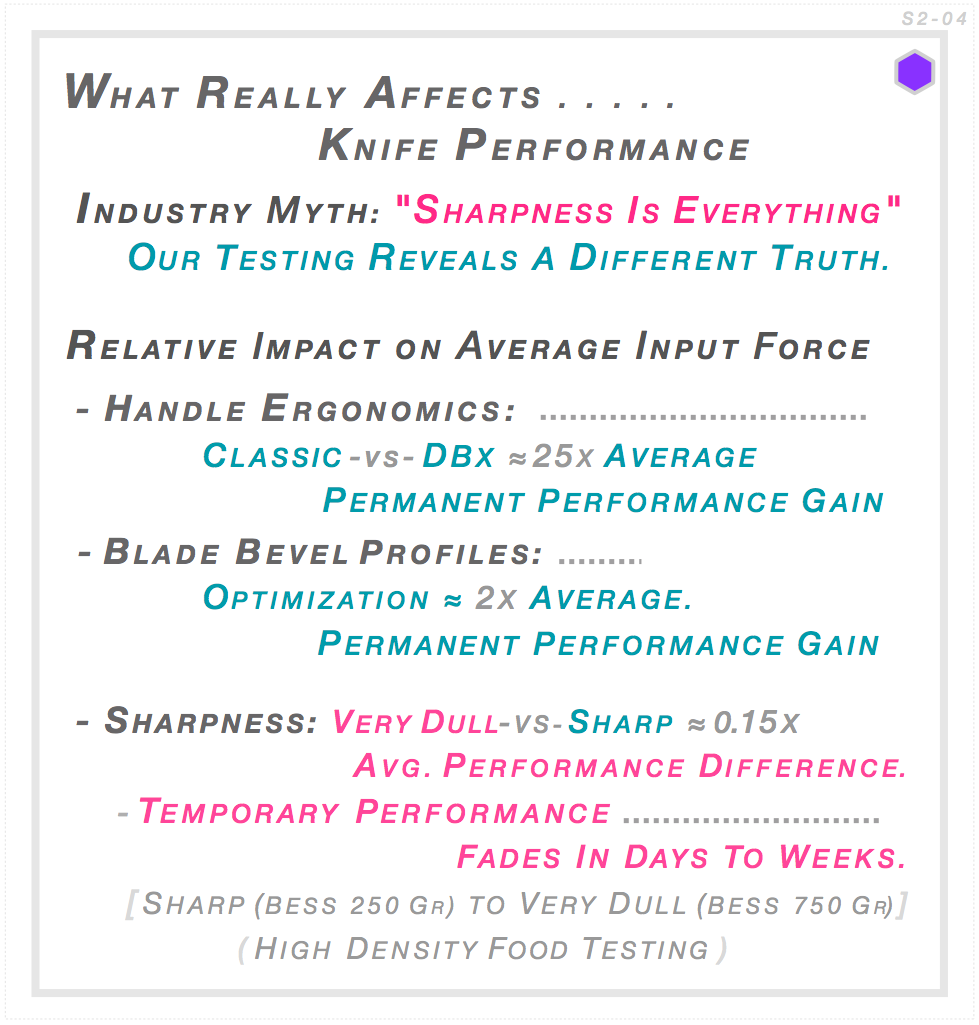
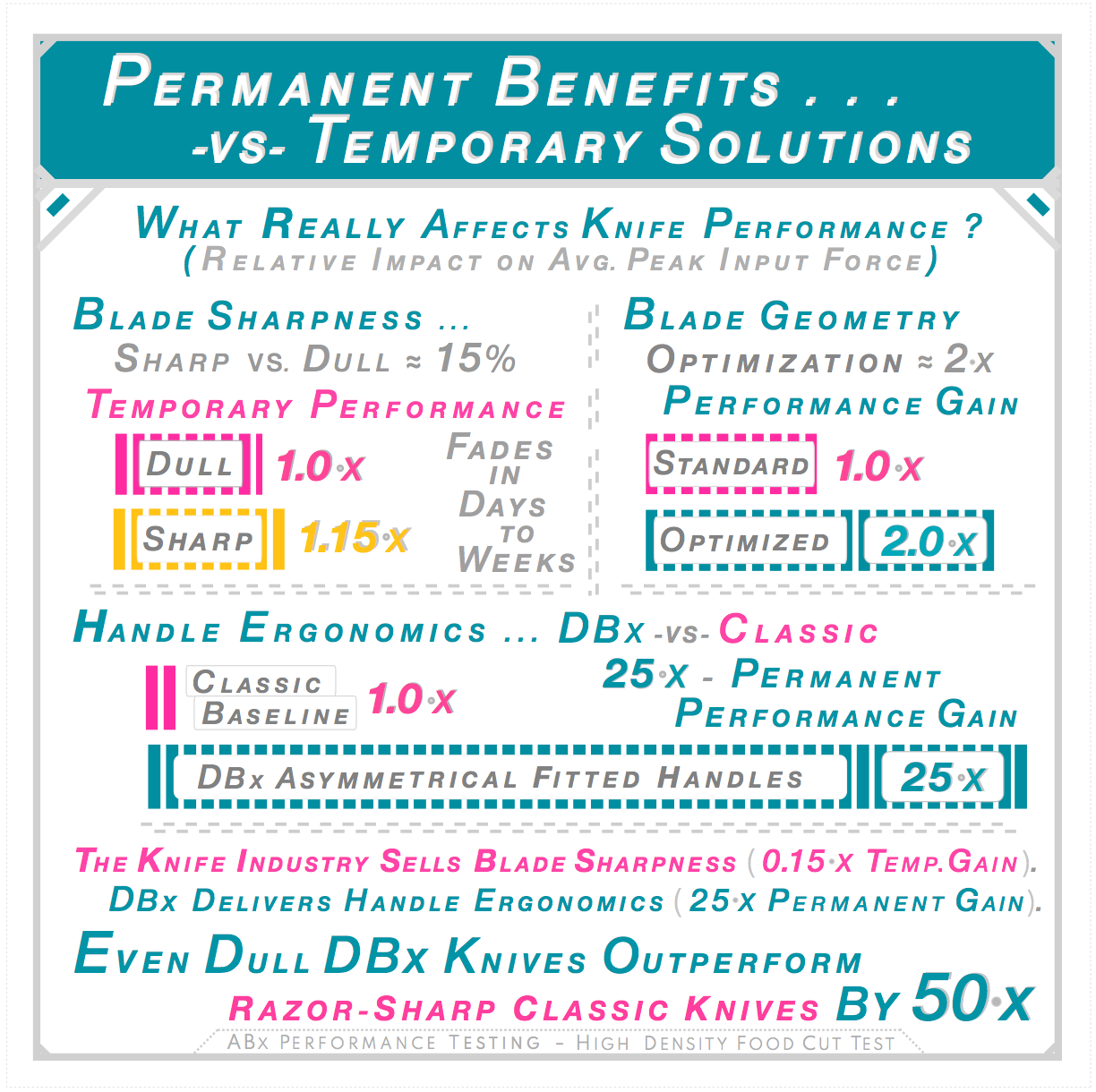
Knife performance factors ranked by impact on average peak input force: sharp vs dull blade BESS 250 vs 750gr equals 15% temporary gain. Blade geometry equals 2x permanent gain. DBx handle ergonomics equals 25x permanent gain. ABx Performance Testing
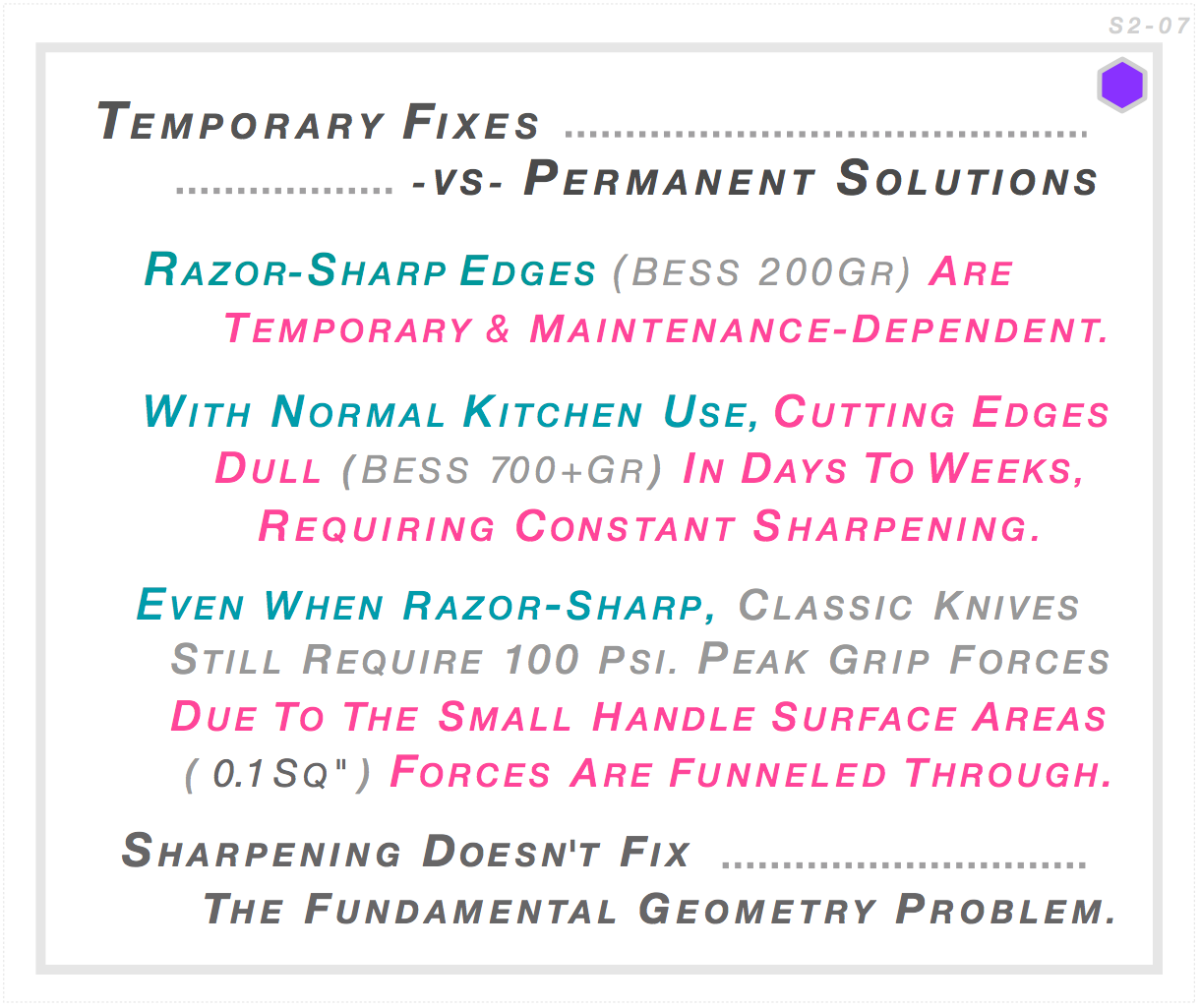
Razor-sharp edges BESS 200gr dull to BESS 700gr with normal kitchen use in days to weeks. Even razor-sharp classic knives require 100 PSI avg. peak grip forces due to 0.1 sq inch contact area. Sharpening doesn't fix the fundamental geometry problem.
Handle Safety Logic: Pressure equals force divided by area. Pinch-grip concentrates forces through 0.1 sq inch — high tissue damage risk. DBx power-grip distributes across 2.0 sq inches — 98% grip pressure reduction. ABx Performance Testing.
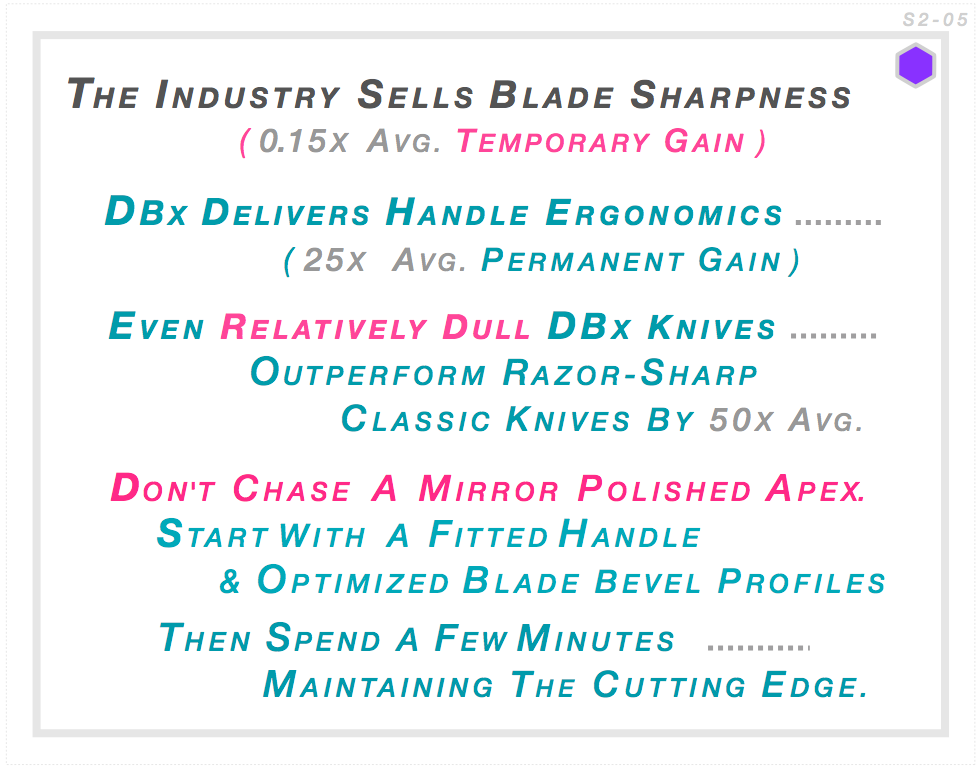
Blade sharpness delivers 0.15x temporary gain fading in days. DBx blade geometry delivers 2x permanent gain. DBx handle ergonomics deliver 25x permanent gain. Dull DBx outperforms razor-sharp classic knives by 50x. ABx Performance Testing.
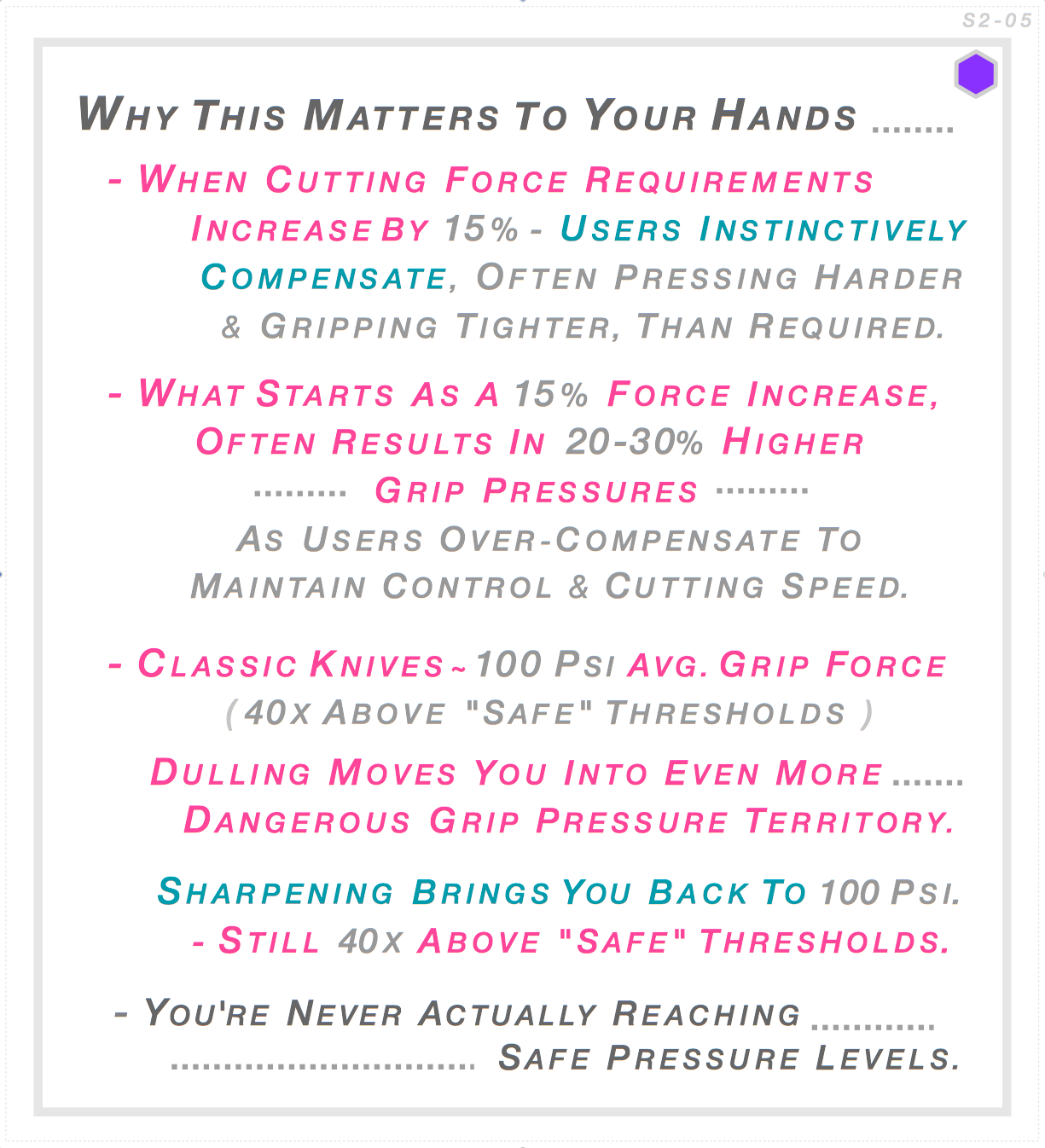
Blade dulling causes users to over-compensate - gripping 20-30% harder than required. Classic knives average peak grip force 100 PSI - 40x above relatively safe thresholds whether sharp or dull. Sharpening never actually reaches safe pressure levels.
Razor-sharp blades temporary & maintenance dependent. DBx fitted handles & thinner blades deliver a lifetime of performance benefits - 98% reduction in avg. peak grip pressures. Sharpness fades in days. DBx handle benefits last forever. ABx Testing.
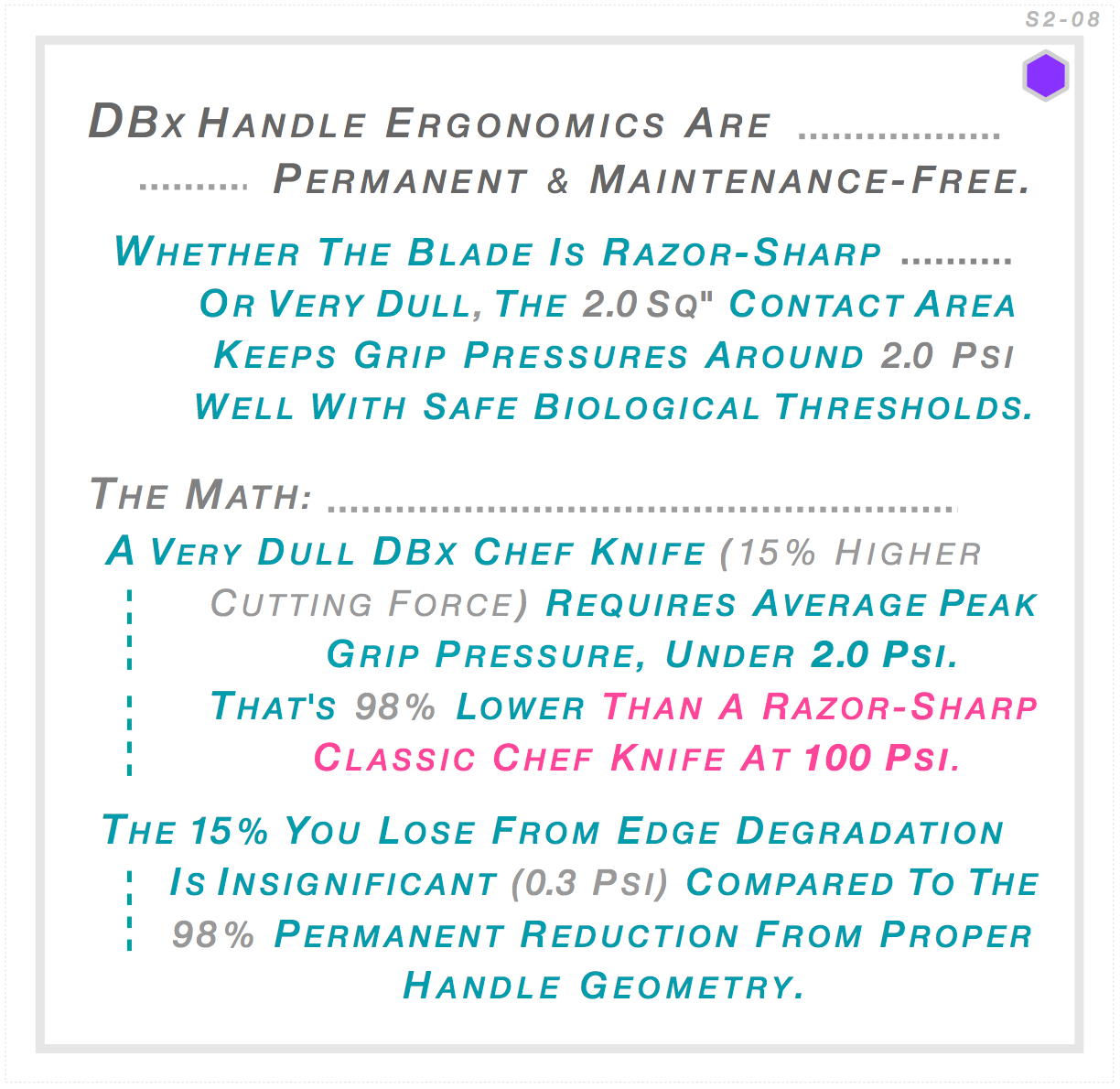
DBx handle ergonomics permanent and maintenance-free. Whether sharp or dull, 2.0 sq. inch contact area keeps average peak grip pressure around 2.0 PSI — 98% lower than classic knives at 100 PSI. Edge degradation adds only 0.3 PSI. ABx Testing.
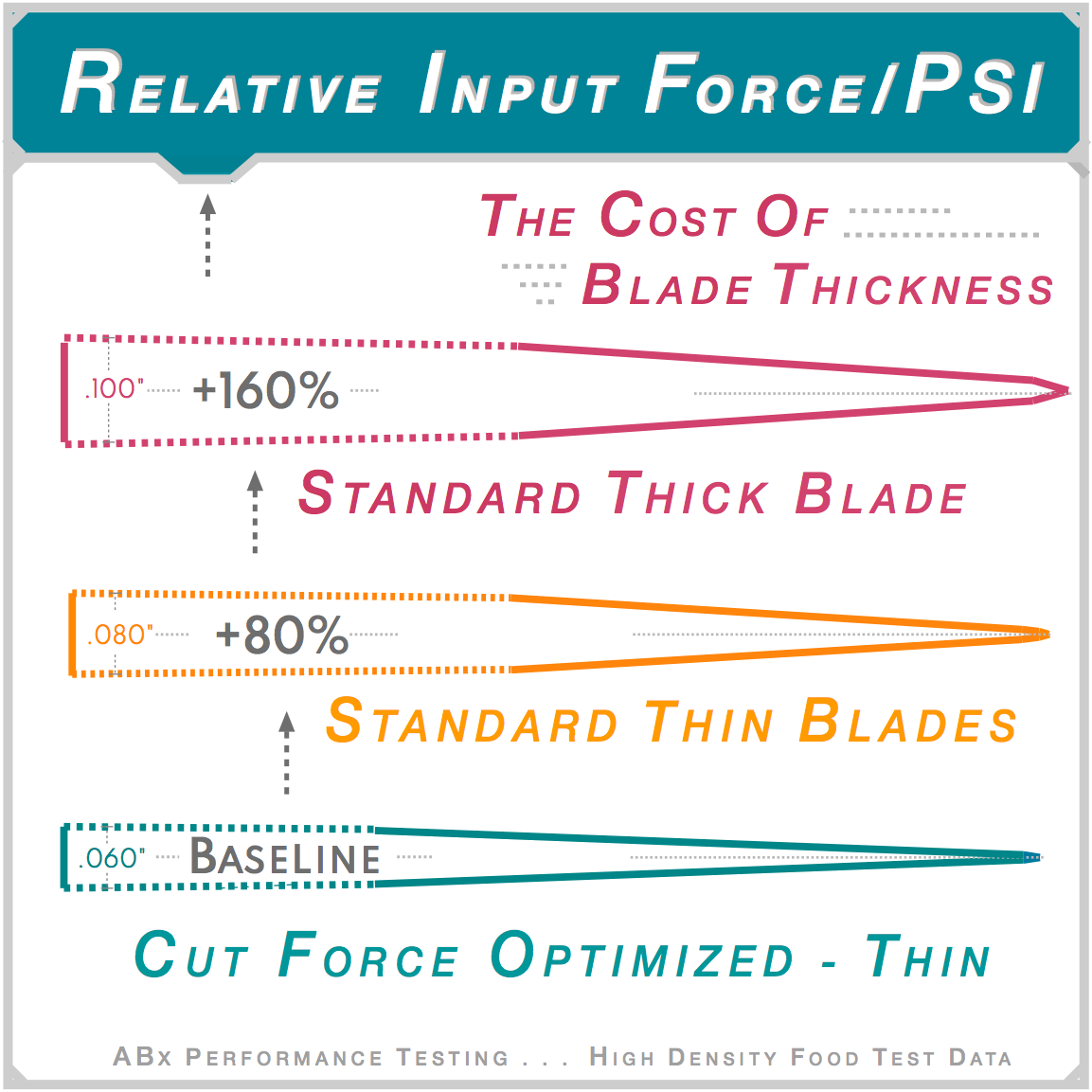
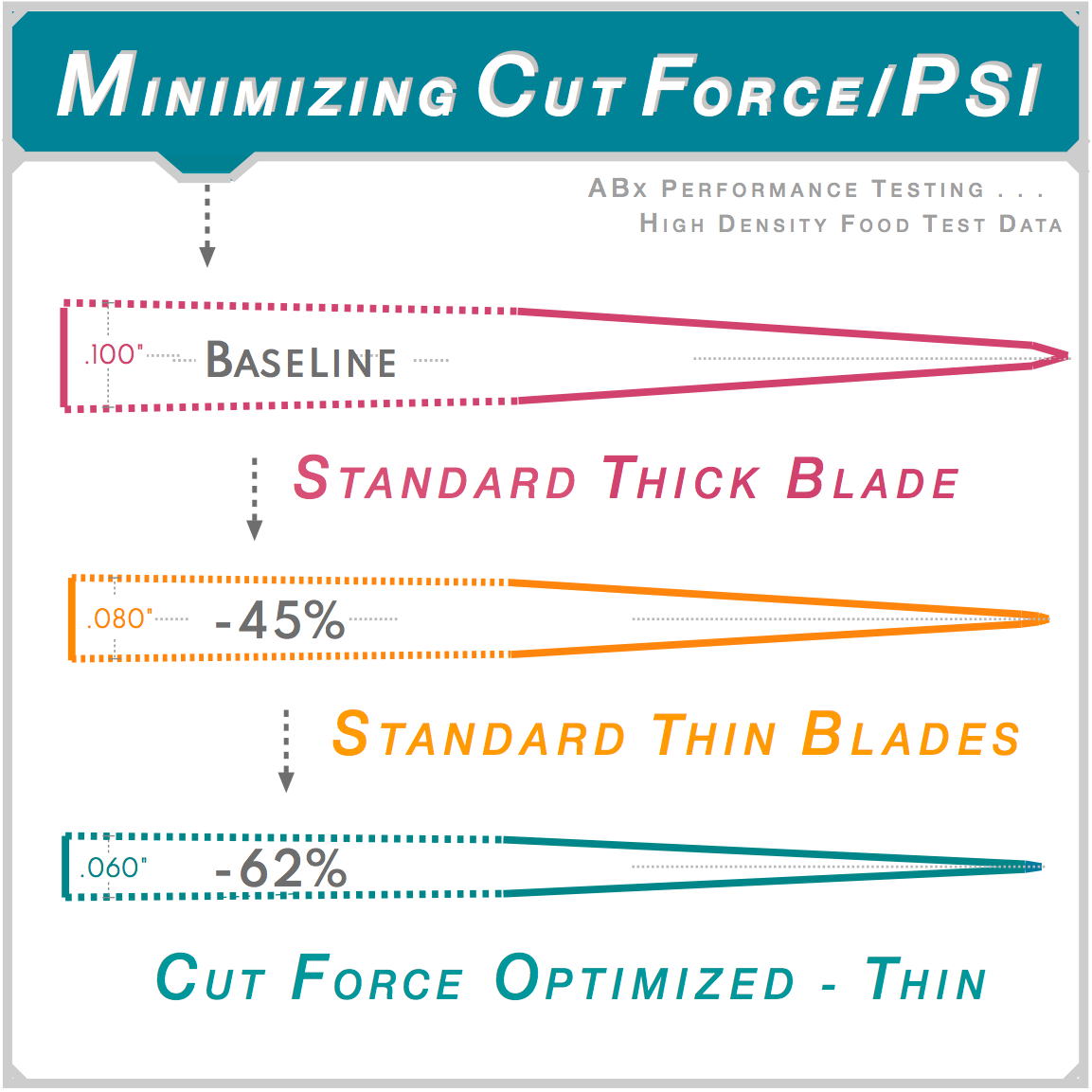
Cost of blade thickness — ABx high density food test. Standard thick blade 0.100 inch requires 160% more input force than optimized baseline. Standard thin 0.080 inch requires 80% more. DBx 0.060 inch, cut-force-optimized blade is baseline.
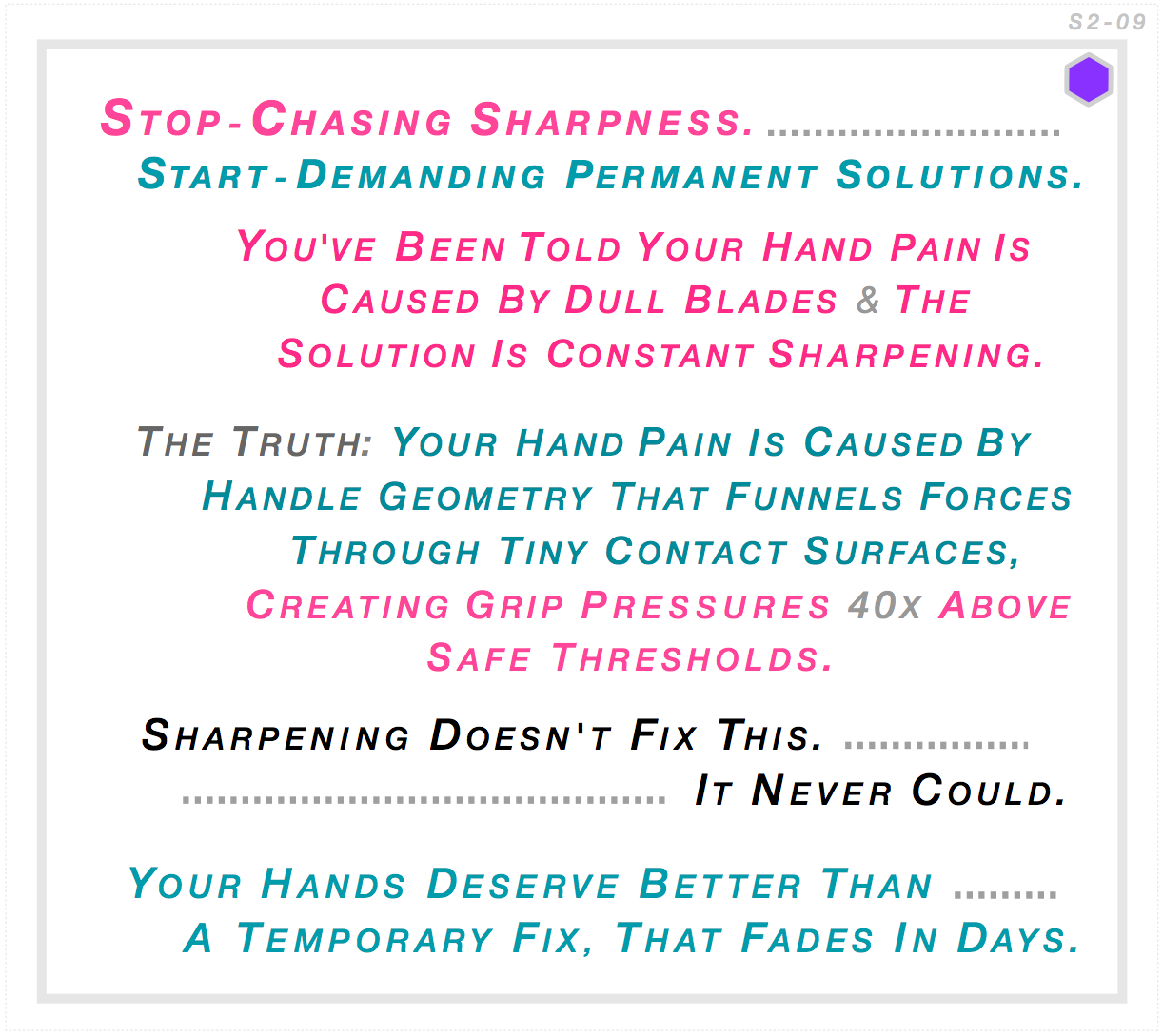
Hand pain from knife use is caused by handle geometry funneling forces through tiny contact surfaces — creating grip pressures 40x above safe thresholds. Sharpening never fixes fundamental geometry. DBx fitted handles deliver permanent solutions.

How DBx Eliminates

The root causes
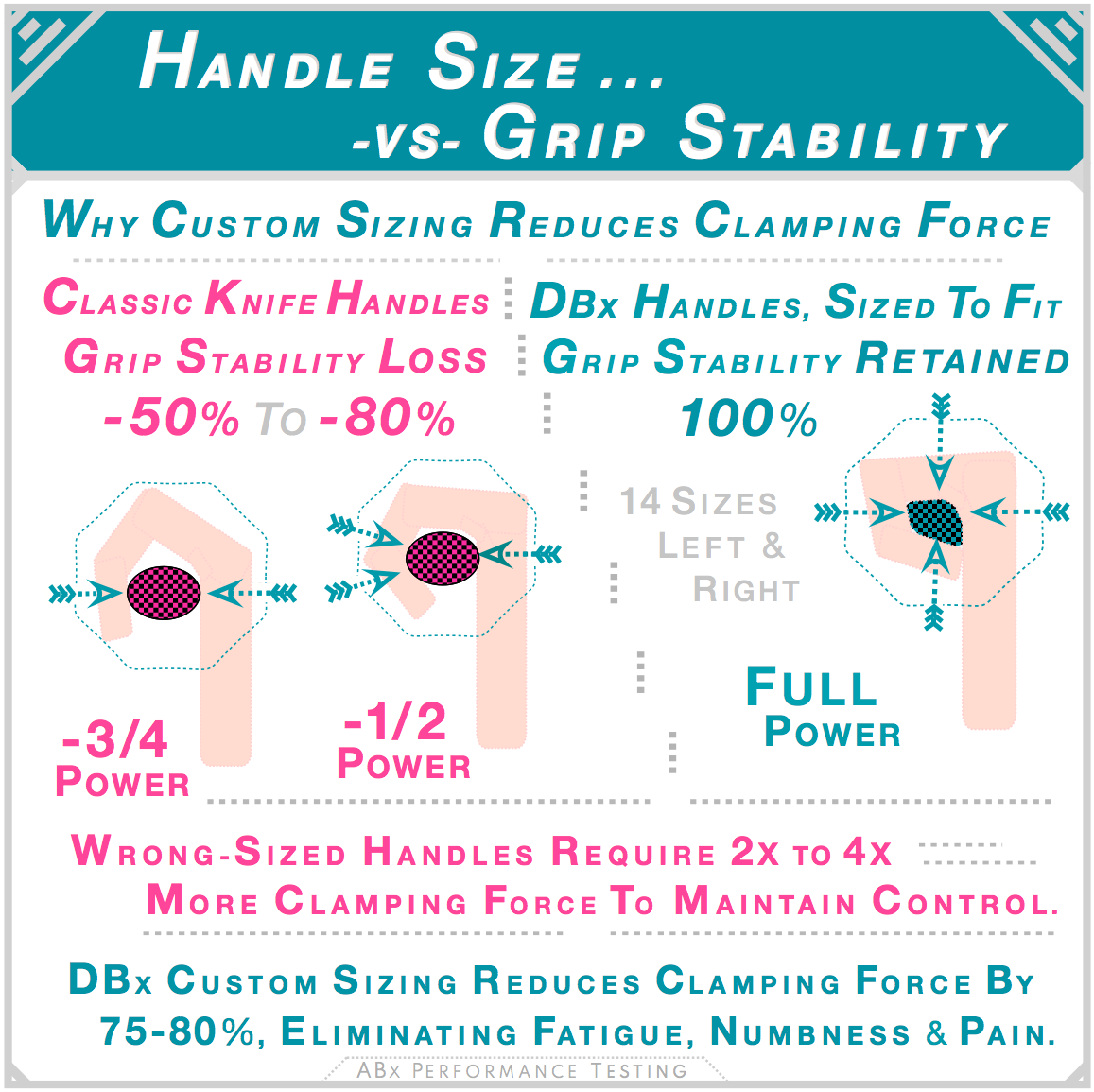
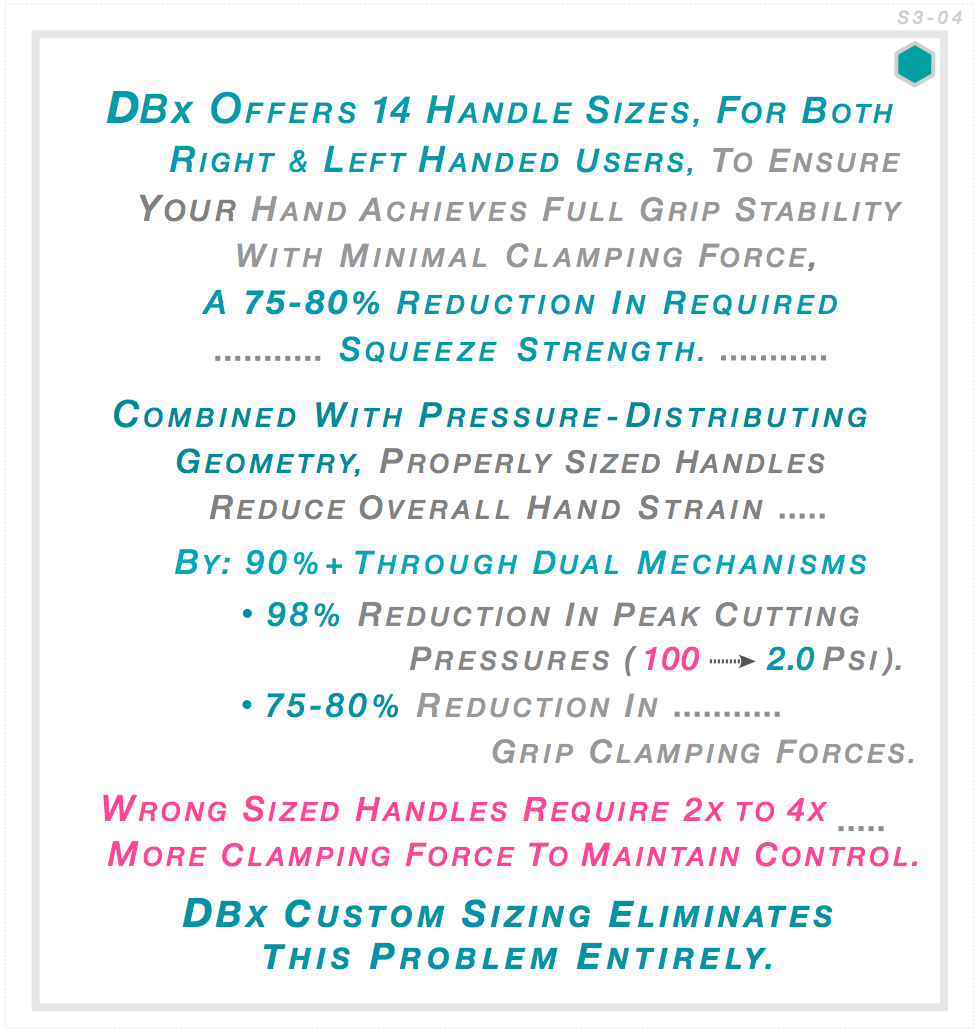
Handle size versus grip stability — classic knife handles cause 50-80% grip stability loss requiring 2-4x clamping force. DBx sized-to-fit handles across 14 left and right-hand sizes retain 100% grip stability at full power. ABx Performance Testing.
How DBx Eliminates The Root Causes: complete engineering solution addressing hand fatigue, pain and injury through systematic biomechanical handle and blade design. DBx Knives More Info page.
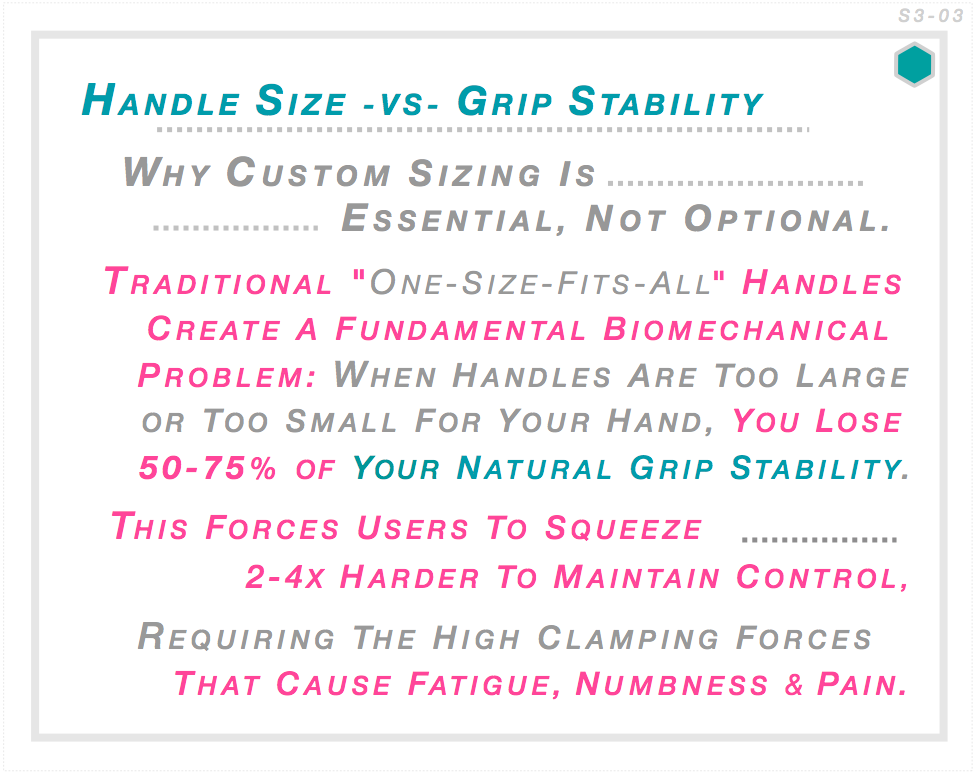
Wrong-sized handles cause 50-75% grip stability loss — forcing users to squeeze 2-4x harder to maintain control. This clamping force requirement is the root cause of fatigue, numbness and pain. DBx custom sizing eliminates this entirely. ABx Testing.
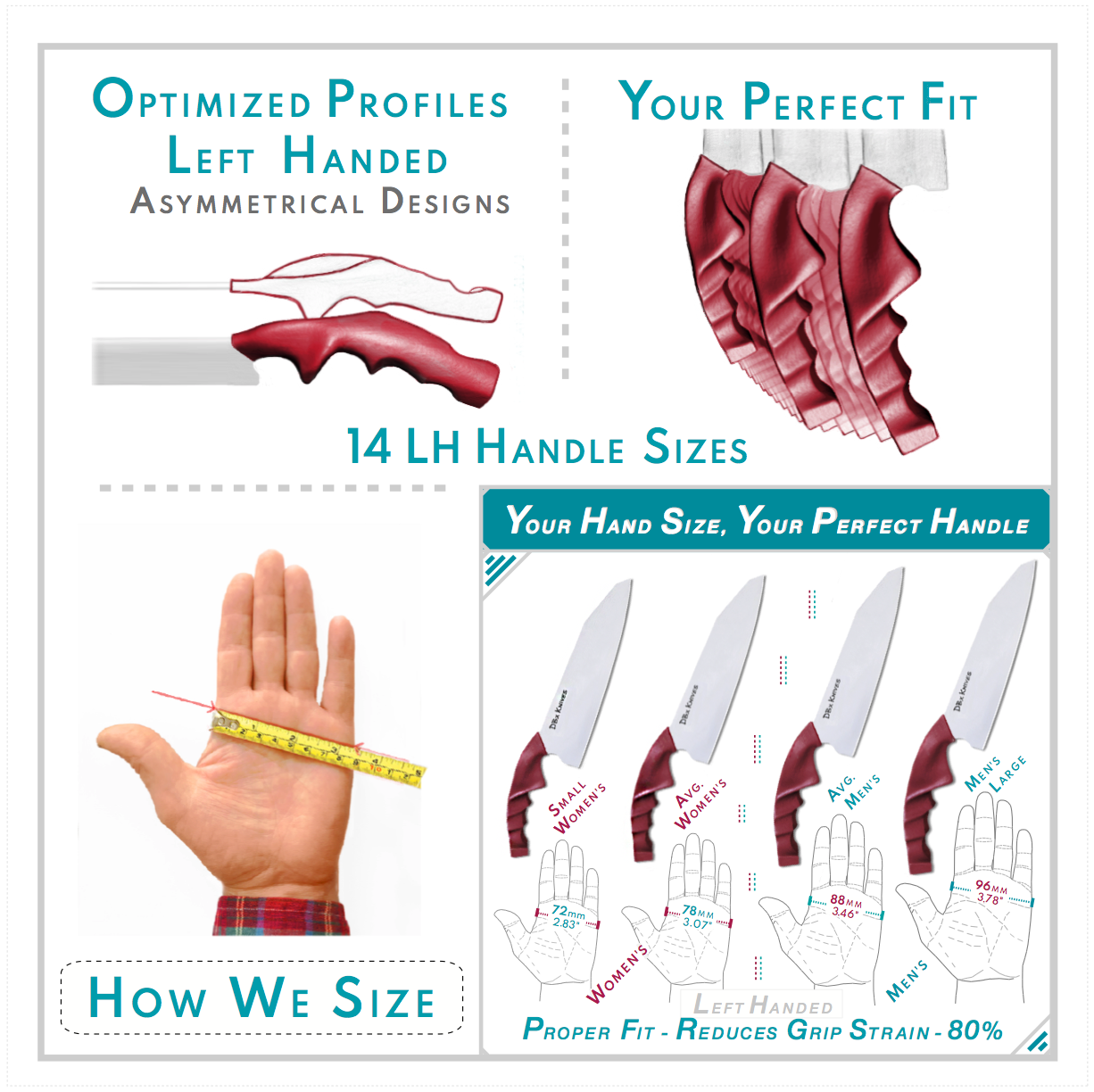
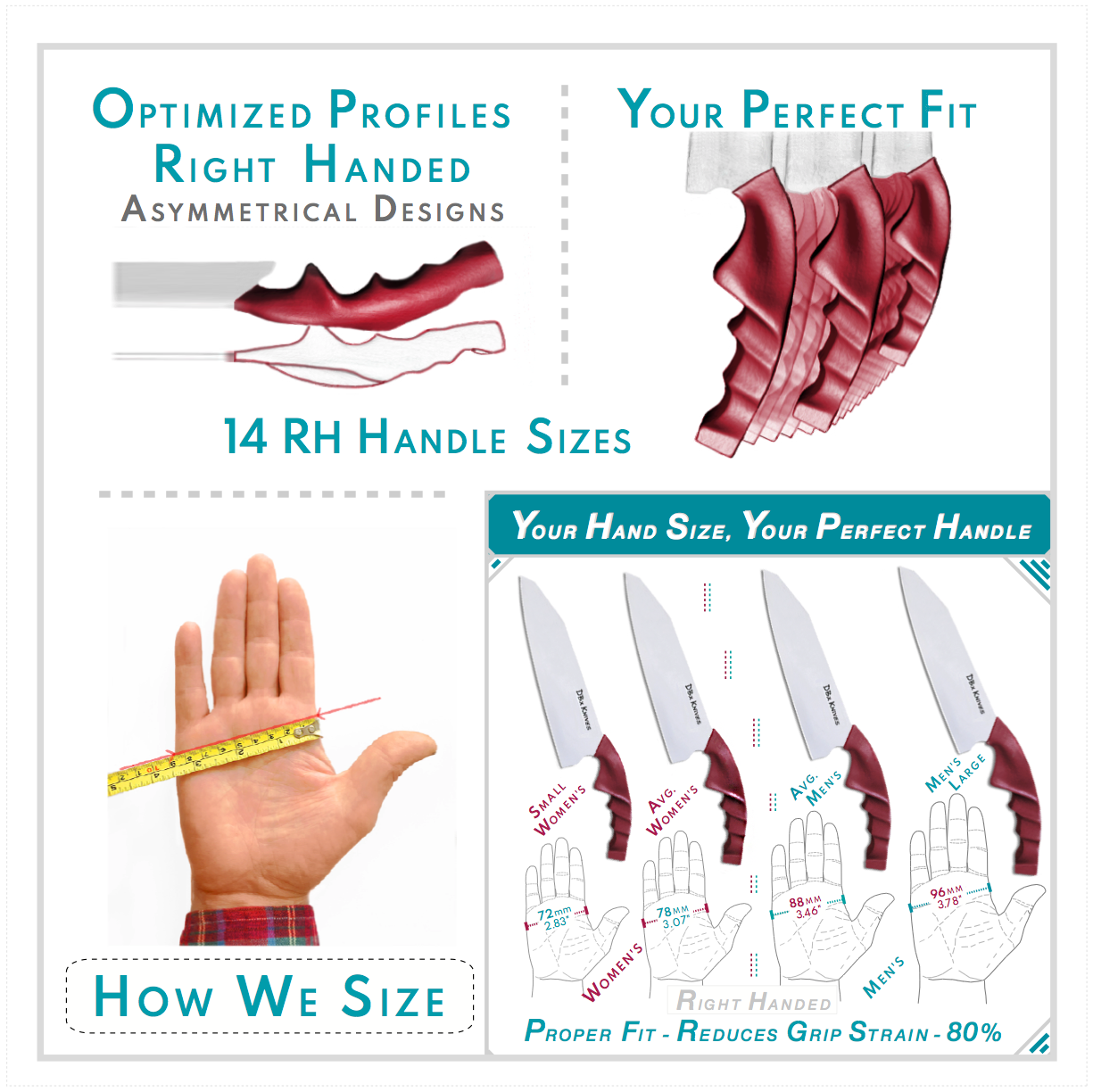
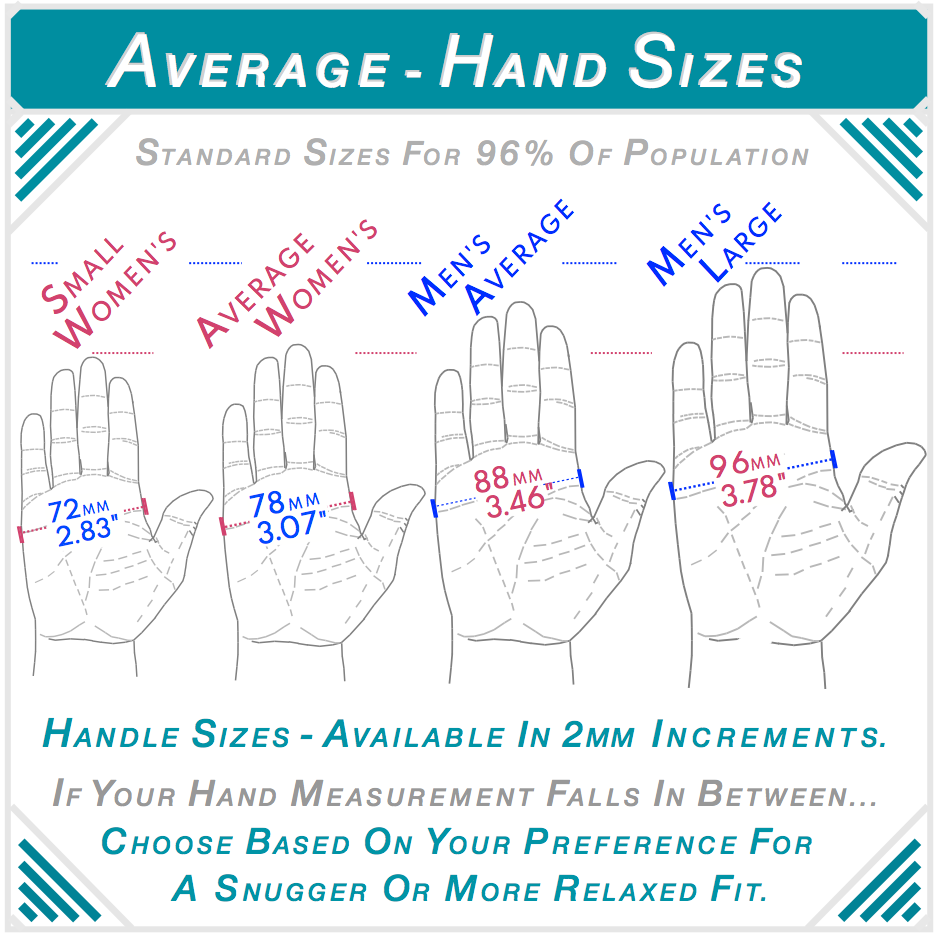
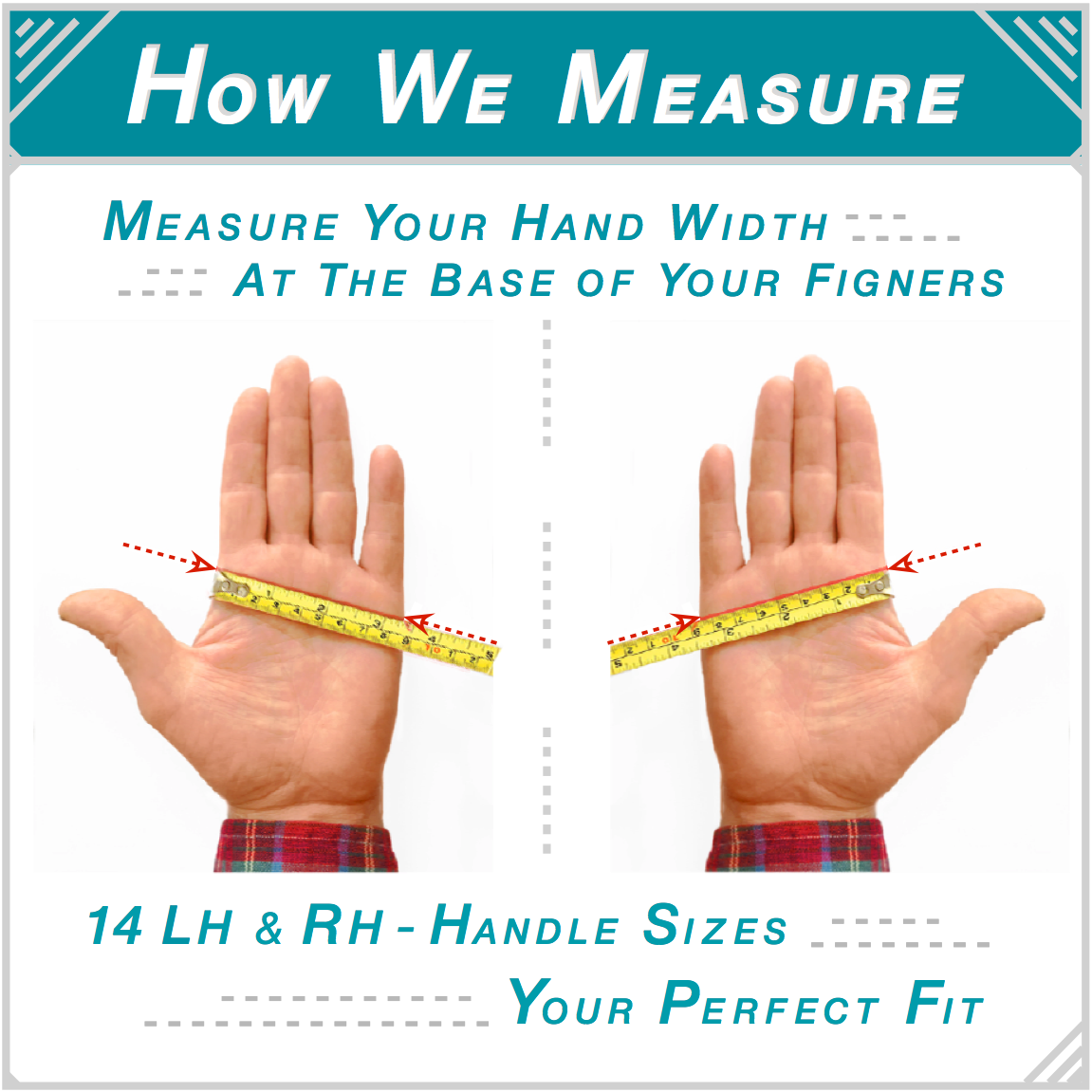
DBx left-handed optimized asymmetrical handle profiles — your perfect fit from 14 sizes spanning small women's 72mm to men's large 96mm. Measure hand width at base of fingers. Proper fit reduces grip strain 80%. ABx Performance Testing.
DBx 14 handle sizes for left and right-handed users achieve 90%+ hand strain reduction through dual mechanisms — 98% peak pressure reduction from 100 to 2.0 PSI plus 75-80% reduction in grip clamping forces. ABx Performance Testing.
DBx right-handed optimized asymmetrical handle profiles — your perfect fit from 14 sizes spanning small women's 72mm to men's large 96mm. Measure hand width at base of fingers. Proper fit reduces grip strain 80%. ABx Performance Testing.
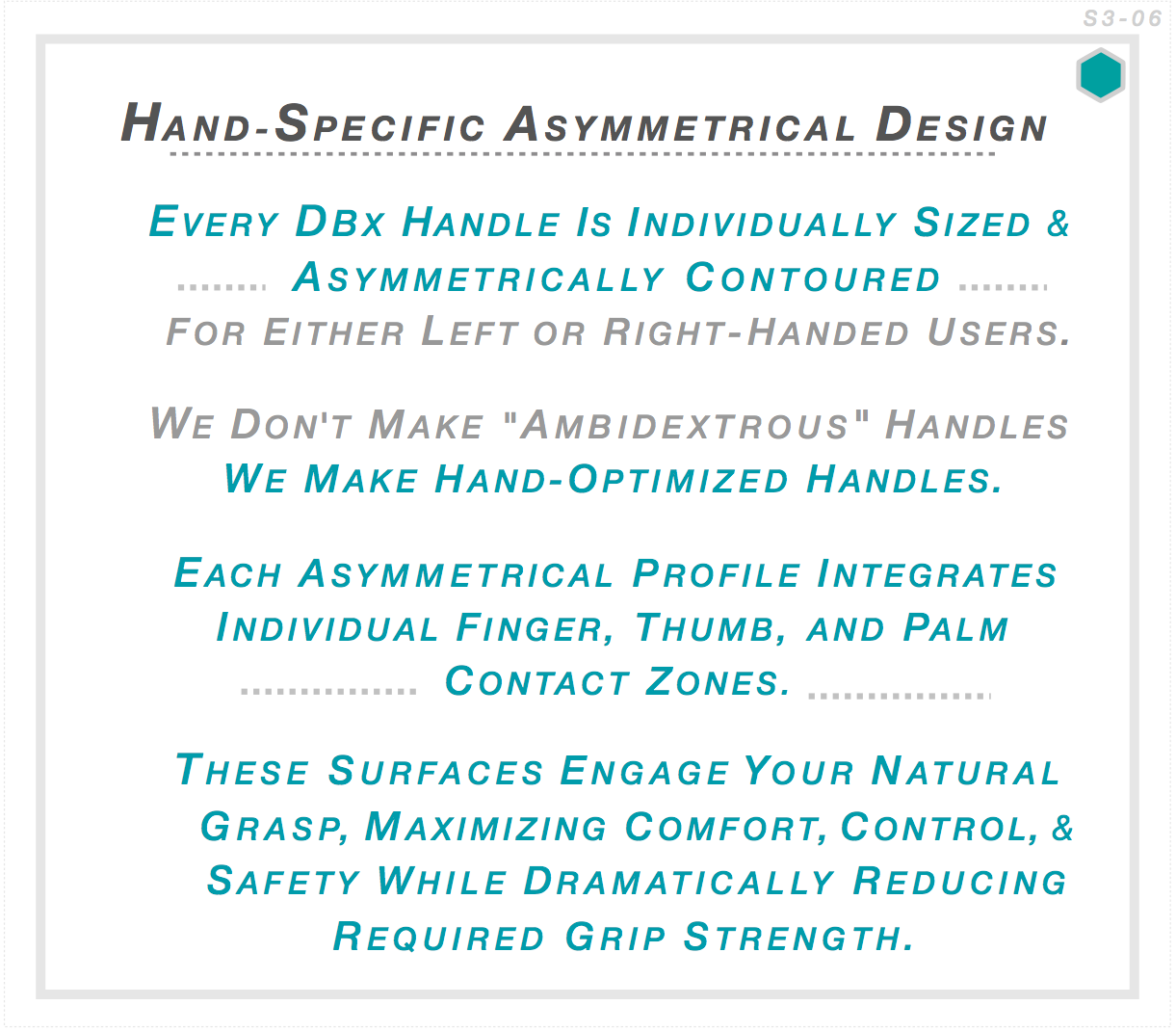
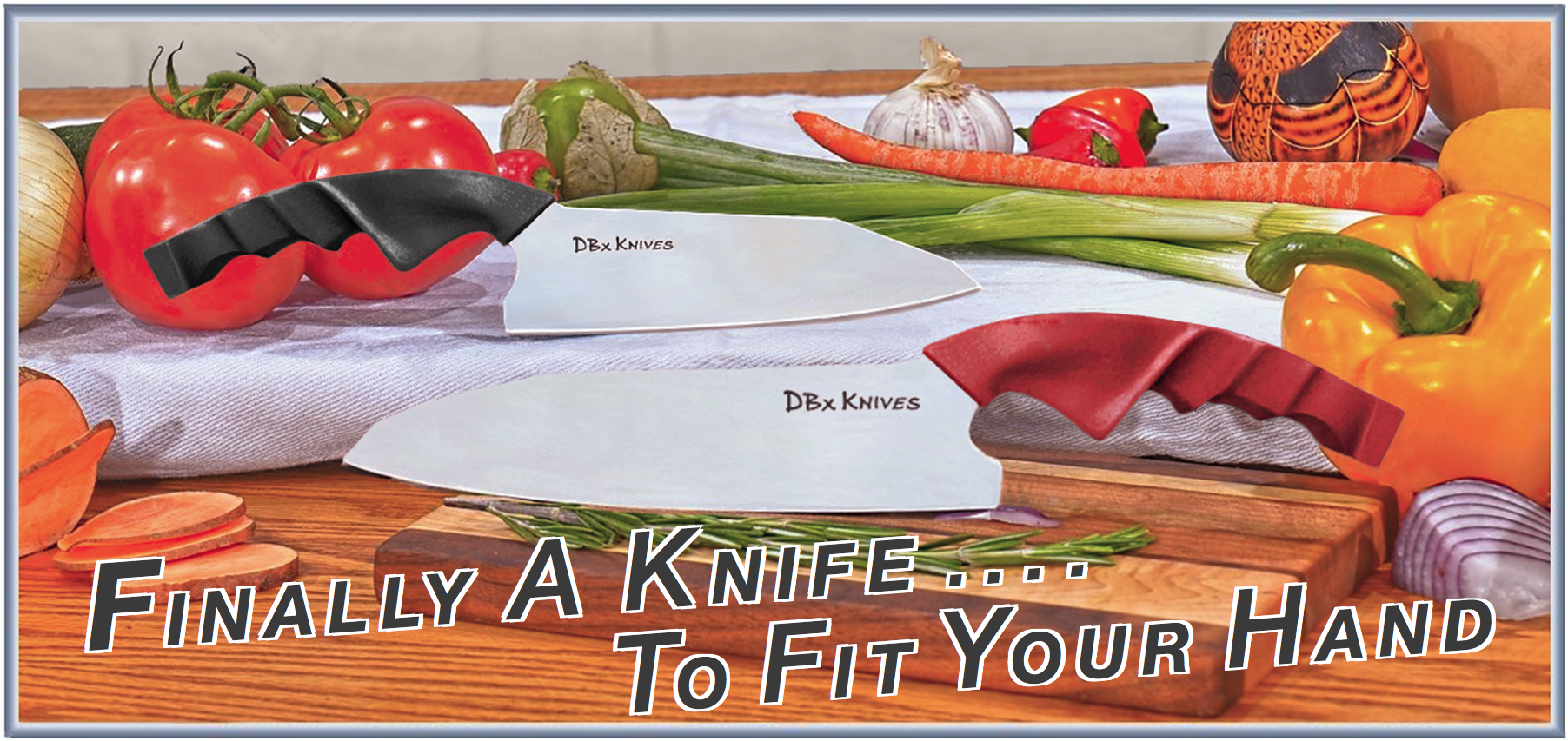
Every DBx handle individually sized and asymmetrically contoured for left or right-handed users — not ambidextrous, hand-optimized. Each profile integrates finger, thumb and palm contact zones maximizing comfort, control and safety.
Average hand sizes based on anthropometric population data covering 96% of population. Small women's 72mm, average women's 78mm, men's average 88mm, men's large 96mm. DBx handles available in 2mm increments — choose snugger or relaxed fit preference.
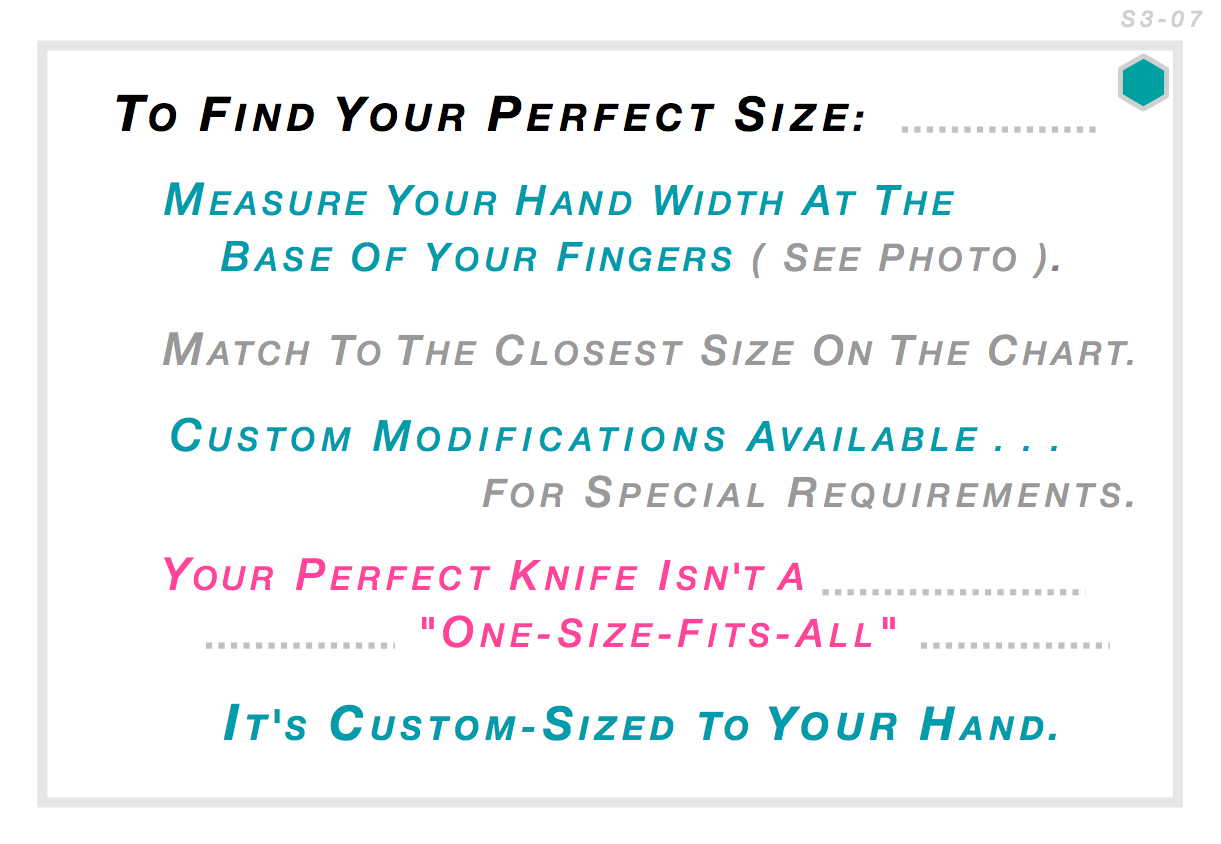
Find your perfect DBx handle size — measure hand width at the base of your fingers and match to the chart. Custom modifications available for special requirements. Your knife is custom-sized to your hand, not one-size-fits-all.
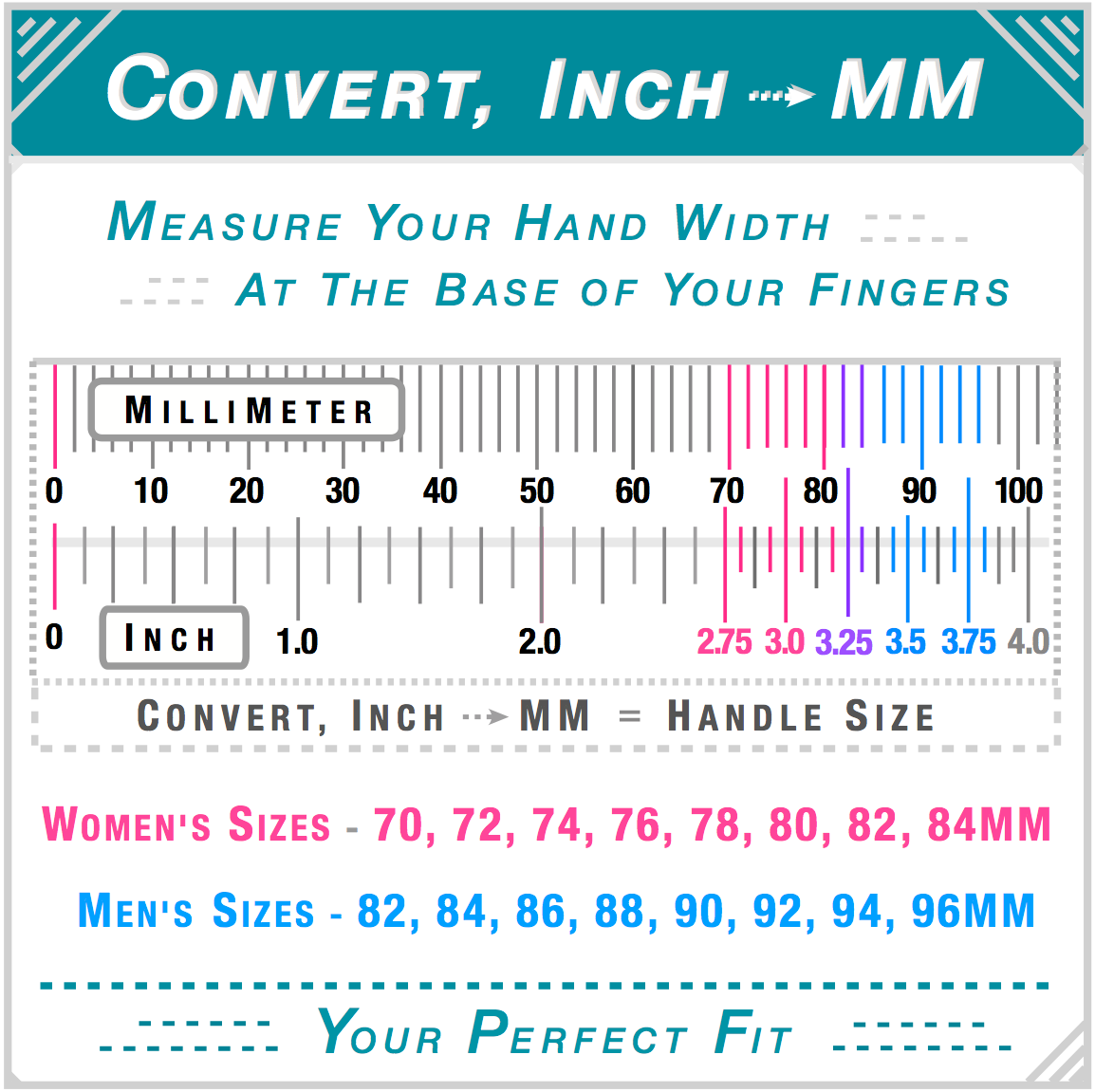
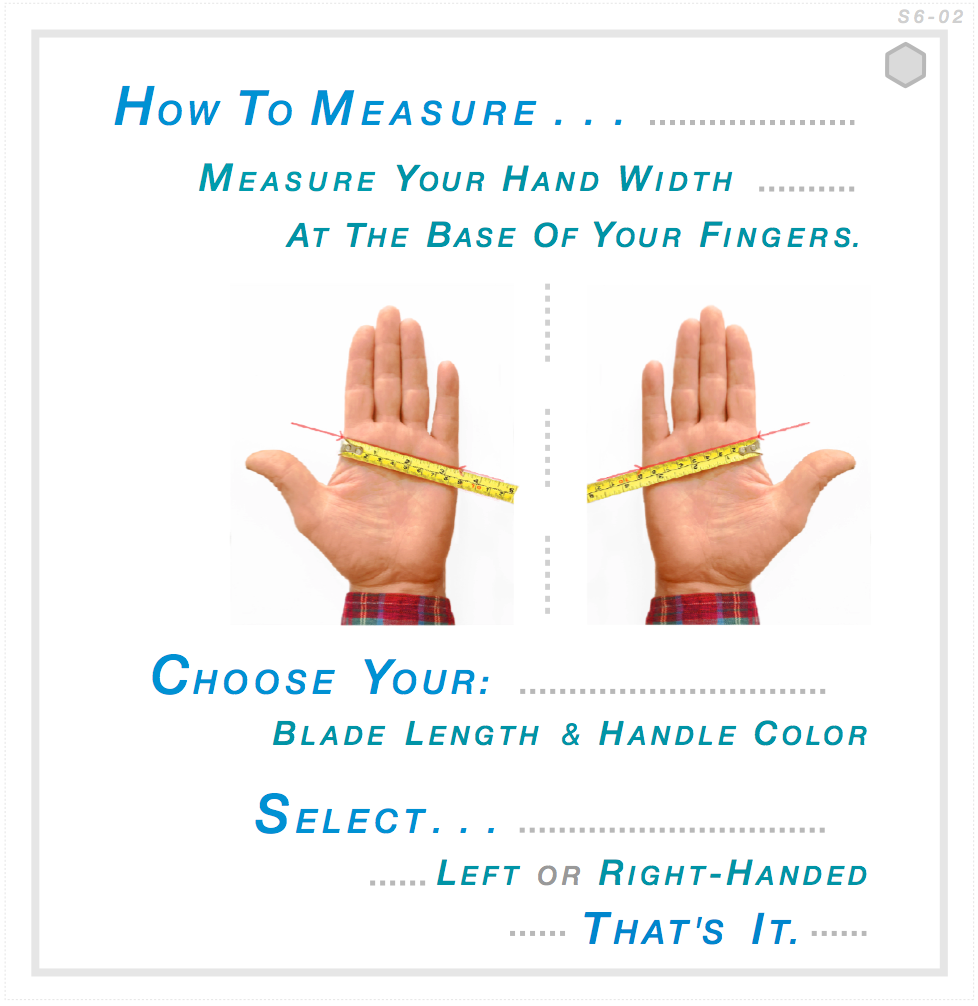
How to measure for your DBx handle size — measure hand width at base of fingers. Convert inches to millimeters: 2.75 inch equals 70mm, 3.0 equals 76mm, 3.5 equals 88mm, 3.75 equals 96mm. 14 left and right-hand sizes. Women's 70-84mm, men's 82-96mm.
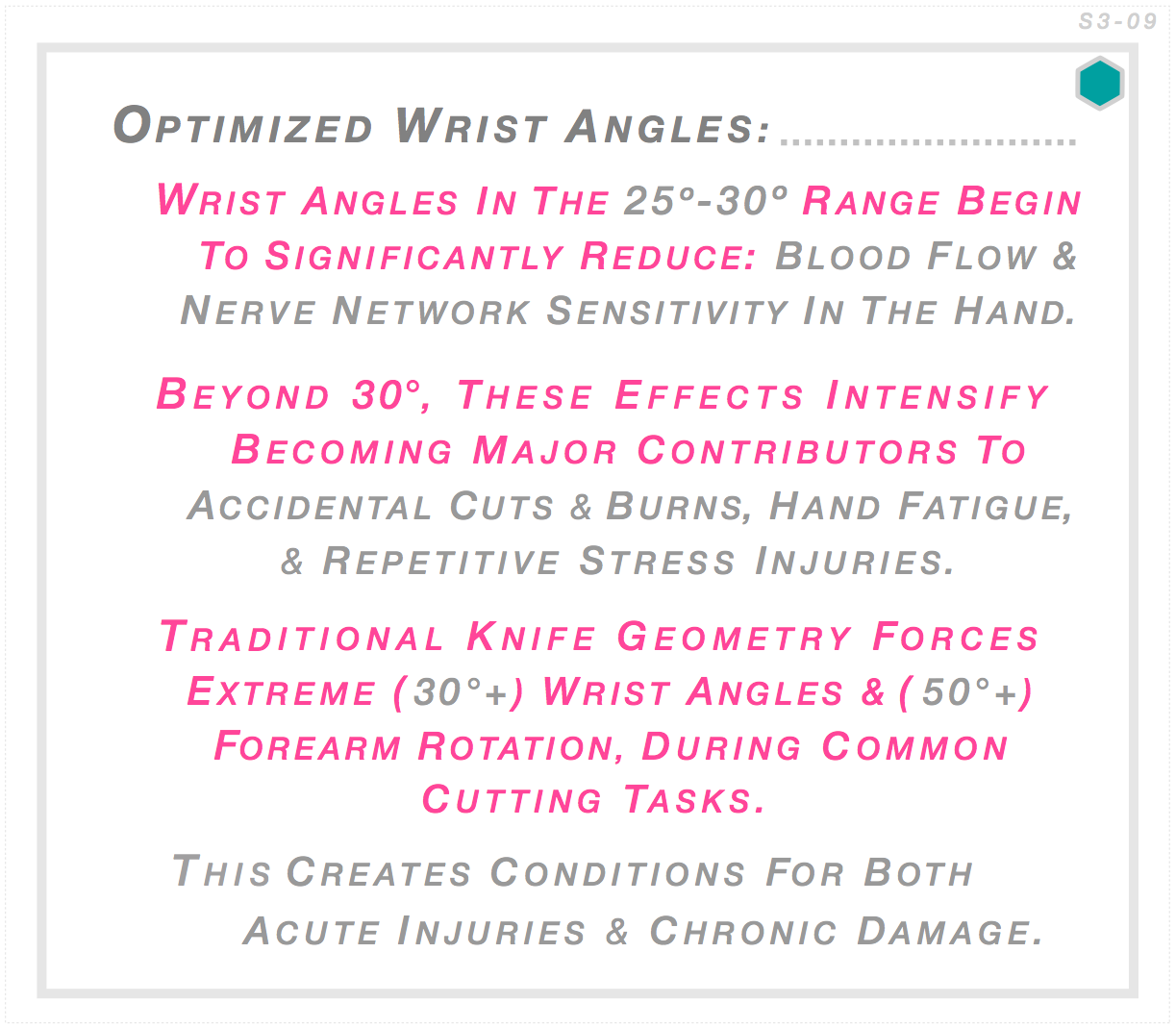
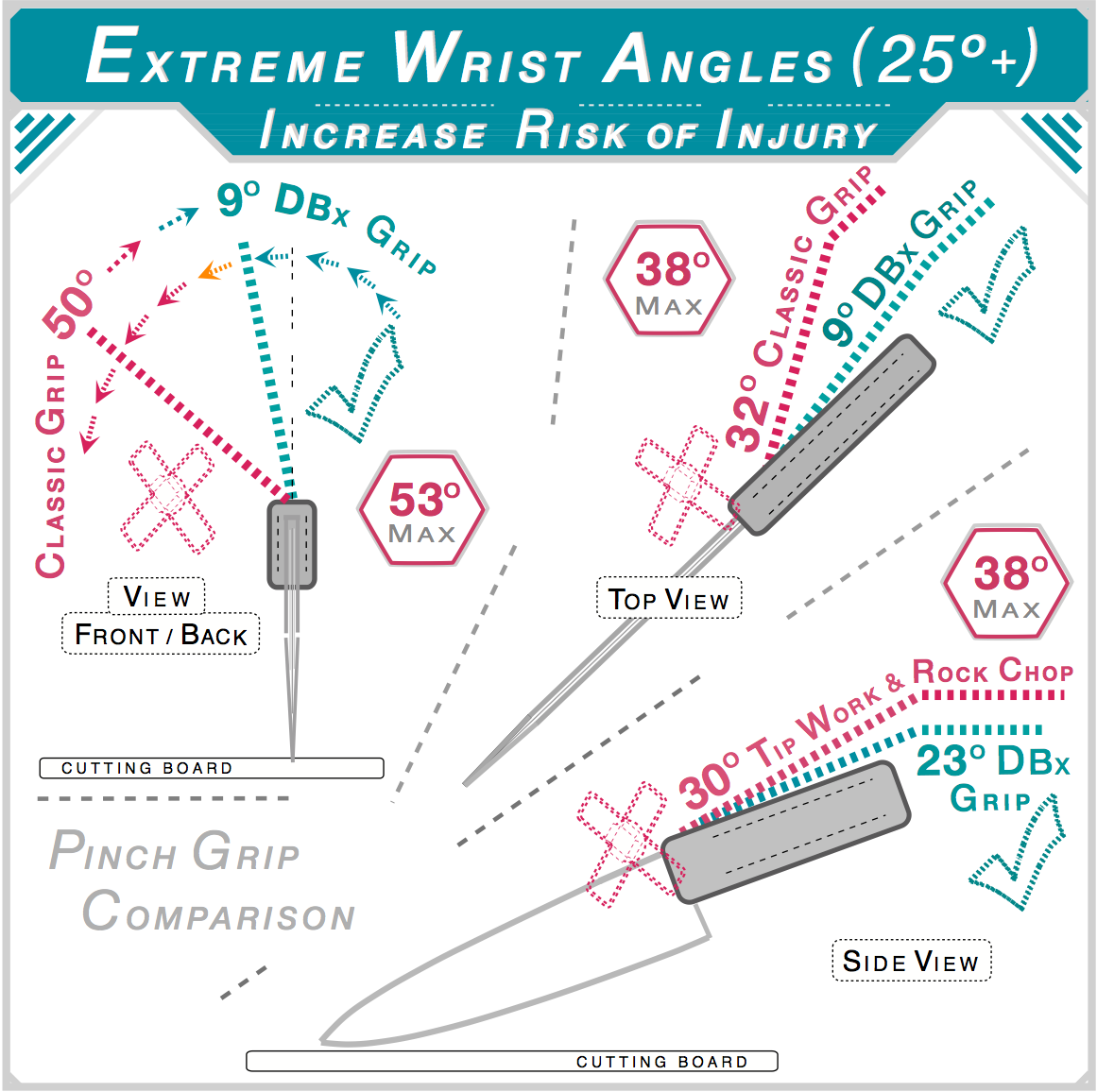
Wrist angles beyond 25-30° reduce blood flow and nerve sensitivity — occupational biomechanics research. Traditional knife geometry forces 30-50° wrist angles during cutting tasks, creating conditions for acute injuries and chronic damage.
Classic grip wrist angles reach 50-53° versus DBx 9° front view, 32-38° versus 9° top view, 30° versus 23° side view. DBx geometry keeps wrist angles below the 25° injury risk threshold across cutting tasks. ABx Performance Testing.
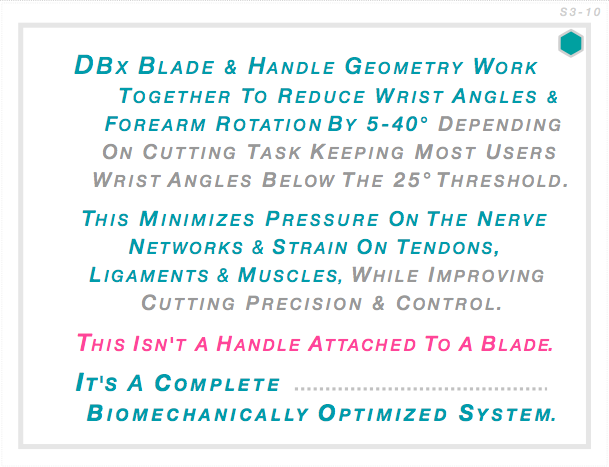
DBx blade and handle geometry reduce wrist angles 5-40° depending on cutting task — keeping most users below the critical 25° threshold, minimizing nerve and tendon strain while improving cutting precision and control. ABx Performance Testing.

The Science Behind the design

Section 4 — The Science Behind The Design: every DBx design claim is data-backed, research-validated and instrumented science-based. DBx Knives More Info page.
Medical research establishes safe grip pressure thresholds — at 2.7 PSI blood flow through affected arteries stops. Traditional chef knives require 100 PSI average peak grip pressure — 40x above the safe intermittent threshold of 1.0 to 2.5 PSI.
Traditional knife grip pressures 100 PSI — 40x above safe threshold 1.5 to 2.5 PSI. DBx handles require less than 2.0 PSI protecting circulation and tissue integrity. Traditional knives exceed blood pressure cuff safety-release 5.8 PSI by 17x.
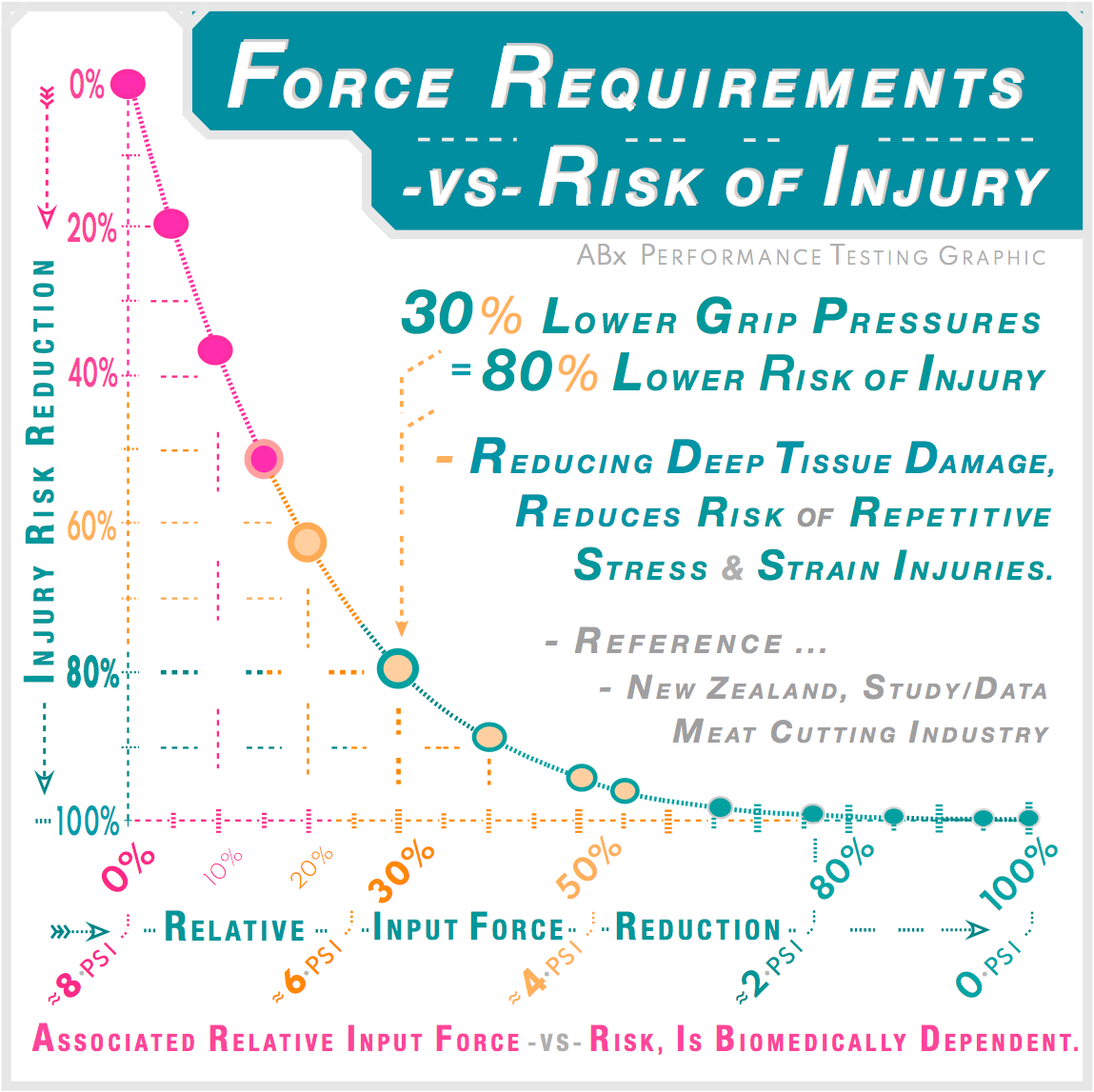
DBx handles below 1.5 PSI preserve nerve function and grip-slip detection. New Zealand research confirms exponential relationship — 30% grip force reduction yields 80% injury risk reduction. DBx achieves 98% reduction. ABx Performance Testing.
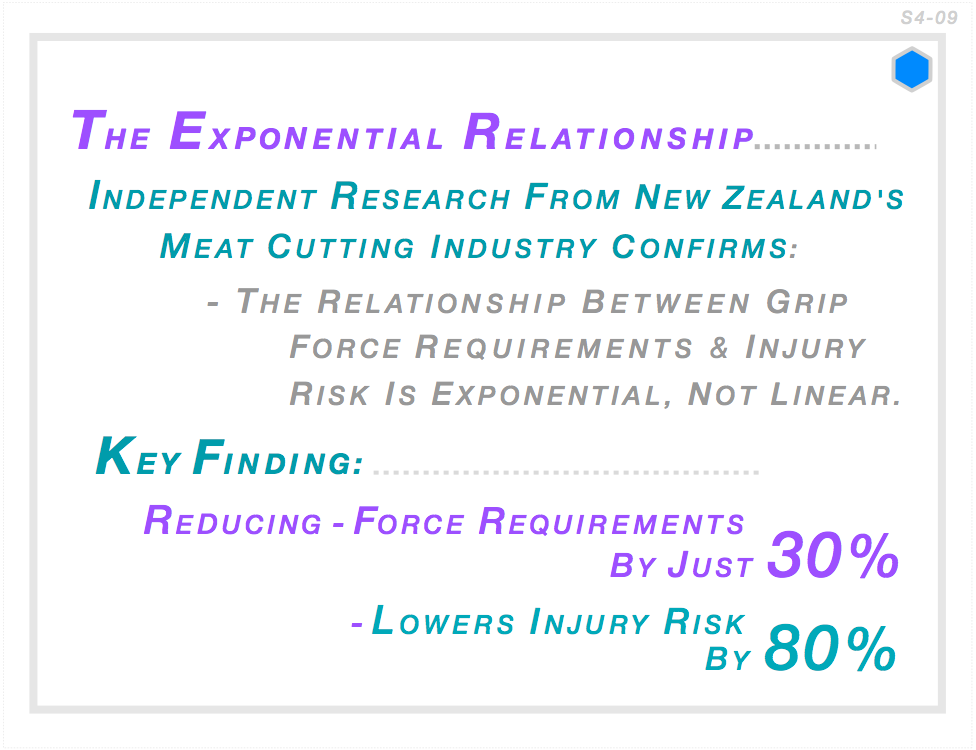
New Zealand meat cutting industry research confirms grip force to injury risk relationship is exponential not linear. Key finding: reducing force requirements by 30% lowers injury risk by 80%. Massey University ergonomics research.
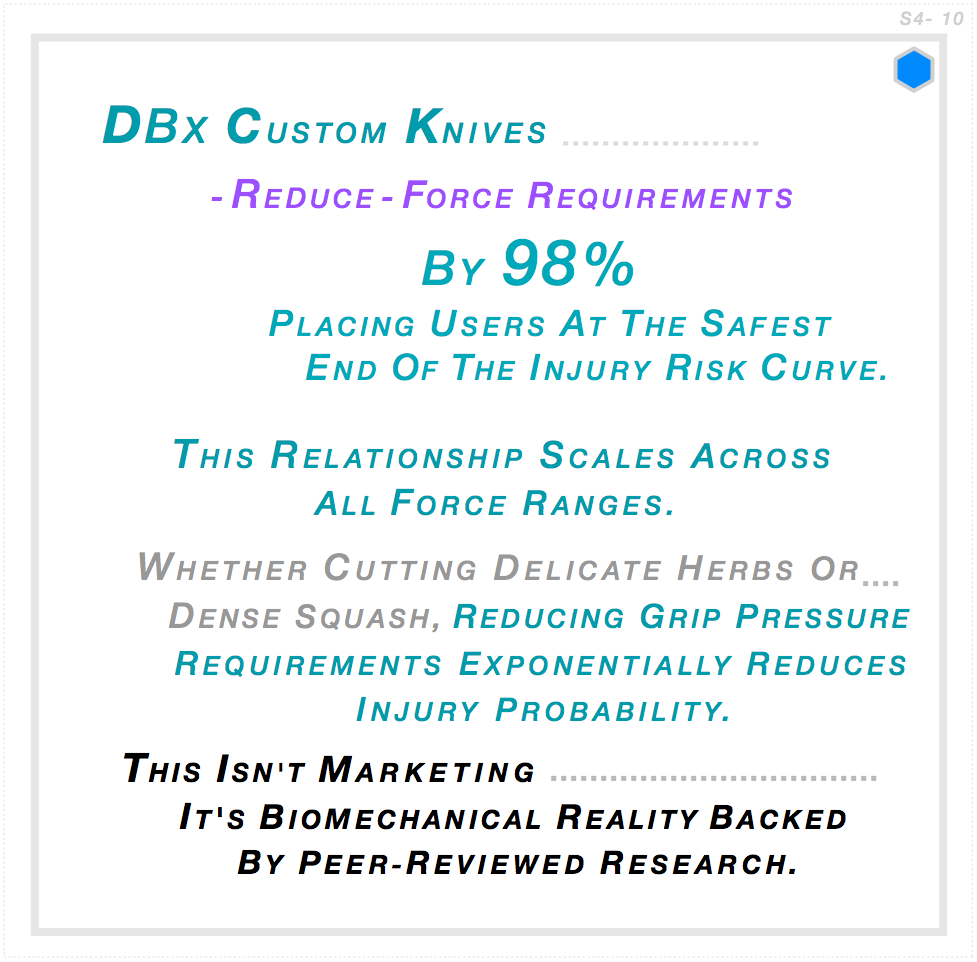
DBx custom knives reduce force requirements 98% — placing users at the safest end of the injury risk curve across all food densities. Not marketing — biomechanical reality backed by peer-reviewed research. ABx Performance Testing.
High grip pressures restrict blood flow causing numbness, fatigue and pain. Safe intermittent range 1.0 to 2.5 PSI. Arterial flow affected from 2.7 PSI. Capillary flow affected from 1.6 PSI. Blood pressure cuff safety-release reference 5.8 PSI.
Nerve compression eliminates critical safety signals — grip-slip detection loss risks cuts and lacerations, temperature detection loss risks scorched fingers. Low pressure levels disrupt safety signaling causing preventable kitchen injuries.
New Zealand meat cutting research confirms 30% lower grip pressure equals 80% lower injury risk — non-linear exponential relationship. DBx achieves 98% grip pressure reduction placing users at the safest end of the injury risk curve. ABx Testing.
Minimizing cut force PSI — ABx high density food test. Standard thin 0.080 inch reduces cutting force 45% versus thick baseline. DBx cut-force-optimized 0.060 inch blade reduces cutting force 62% — permanently lowering grip pressure requirements.
Every DBx design claim validated through ABx instrumented testing on high-density foods under real-world cutting conditions. We don't guess — we measure and publish the data. Competitors sell marketing. DBx sells engineering backed by data.

Is DBx Right For You ?
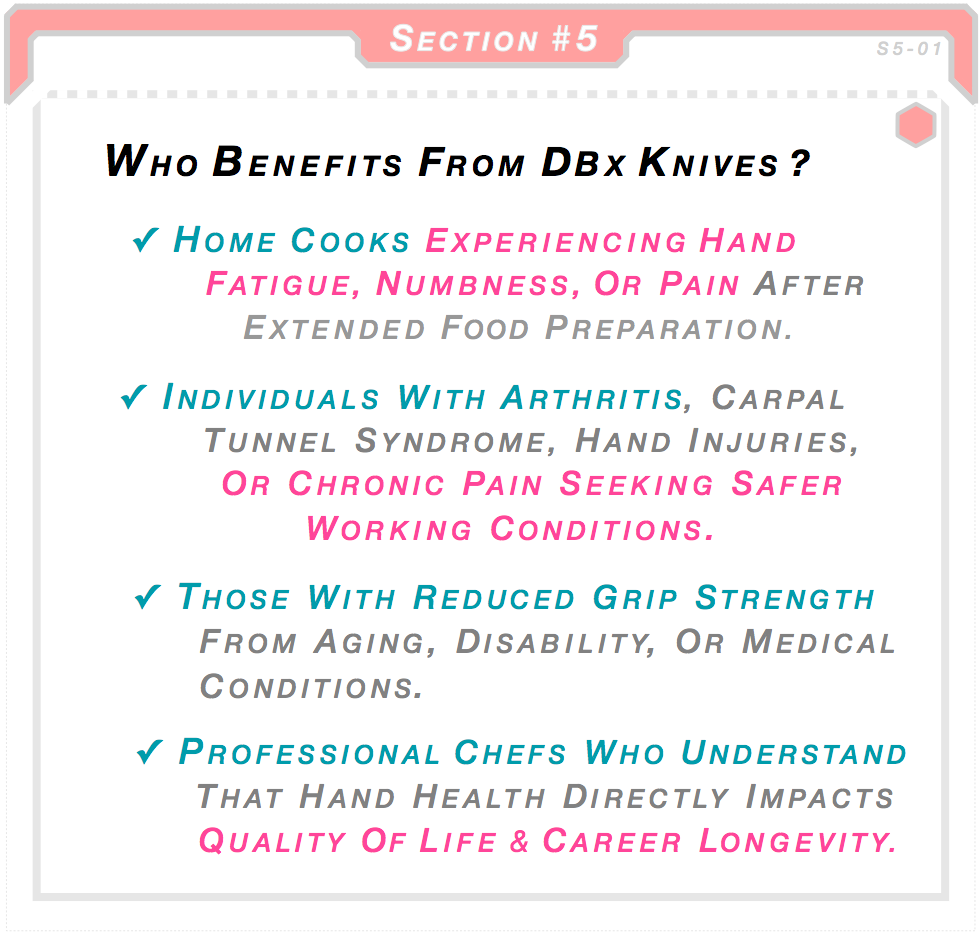
Who benefits from DBx Knives — home cooks with hand fatigue or pain, individuals with arthritis or carpal tunnel syndrome, those with reduced grip strength, and professional chefs prioritizing hand health and career longevity. Made in the USA.
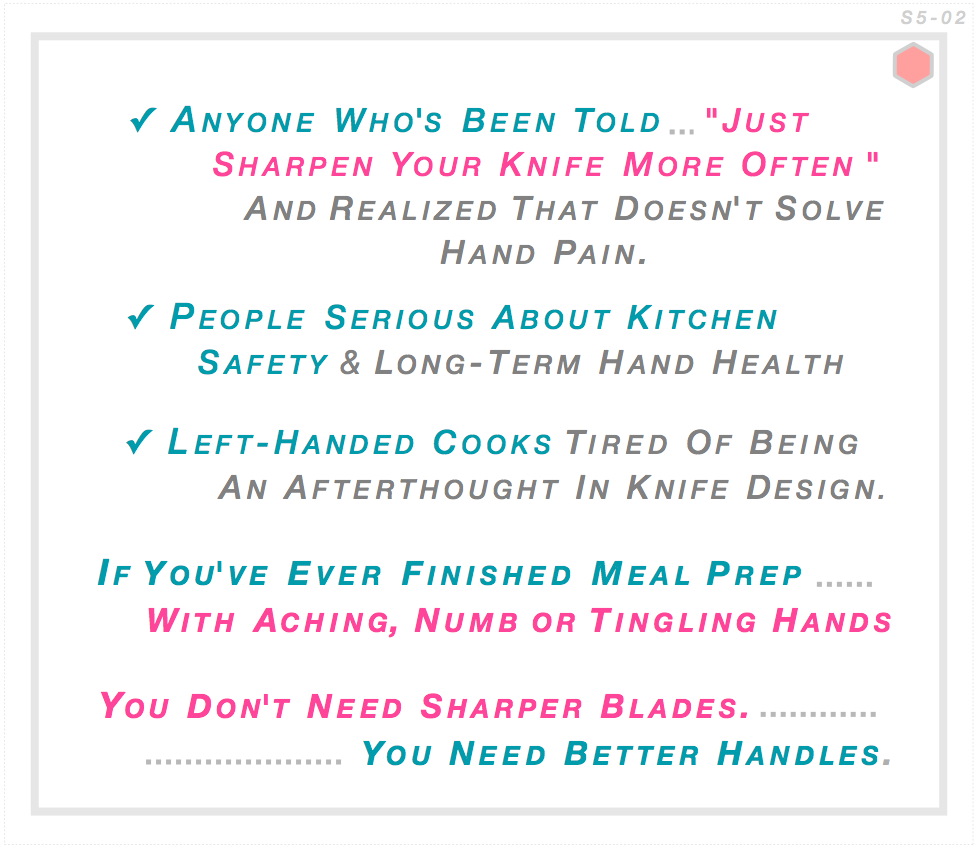
Finished meal prep with aching numb or tingling hands? You don't need sharper blades — you need better handles. DBx serves left-handed cooks tired of being an afterthought, and anyone serious about kitchen safety and long-term hand health.
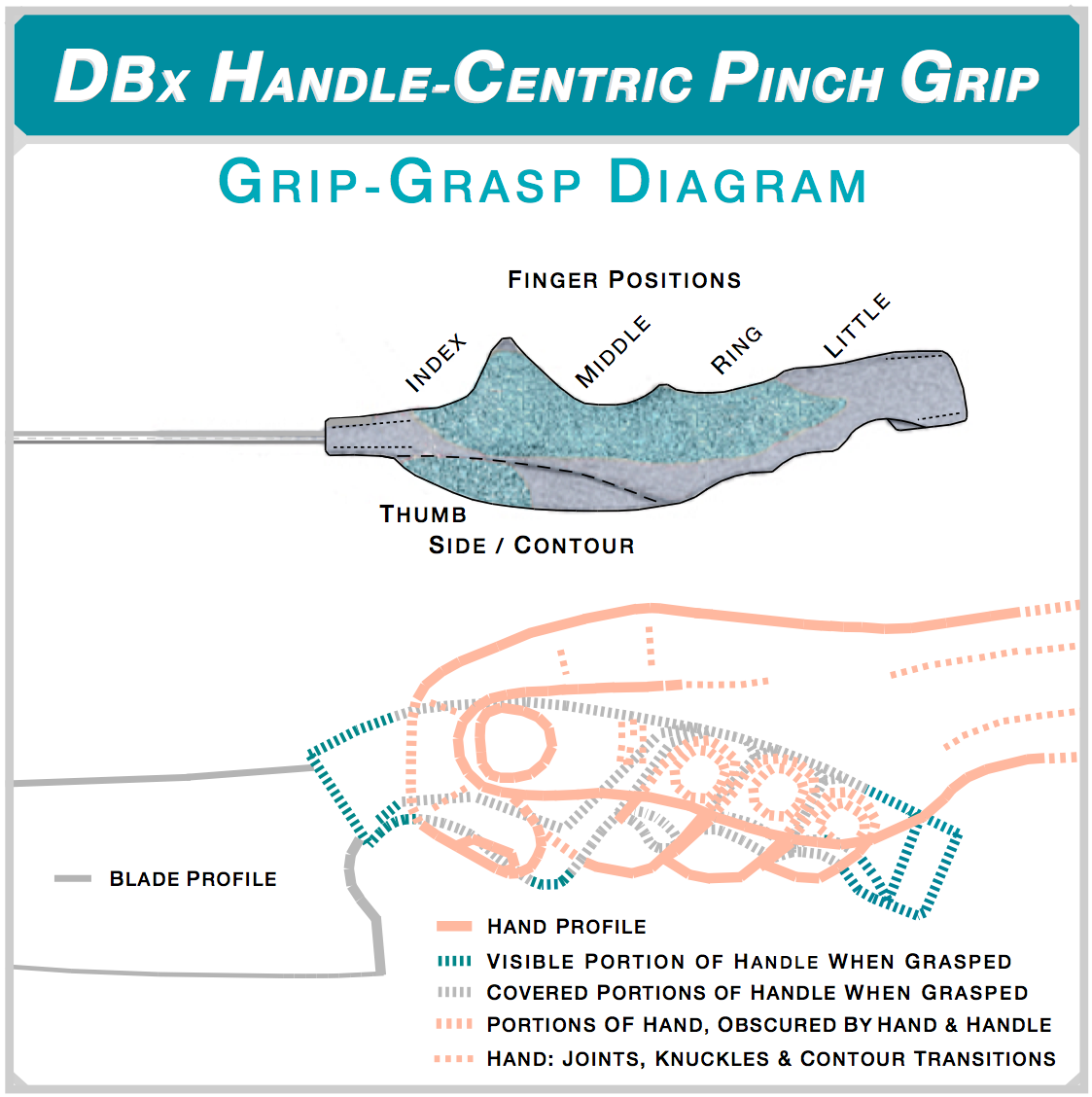
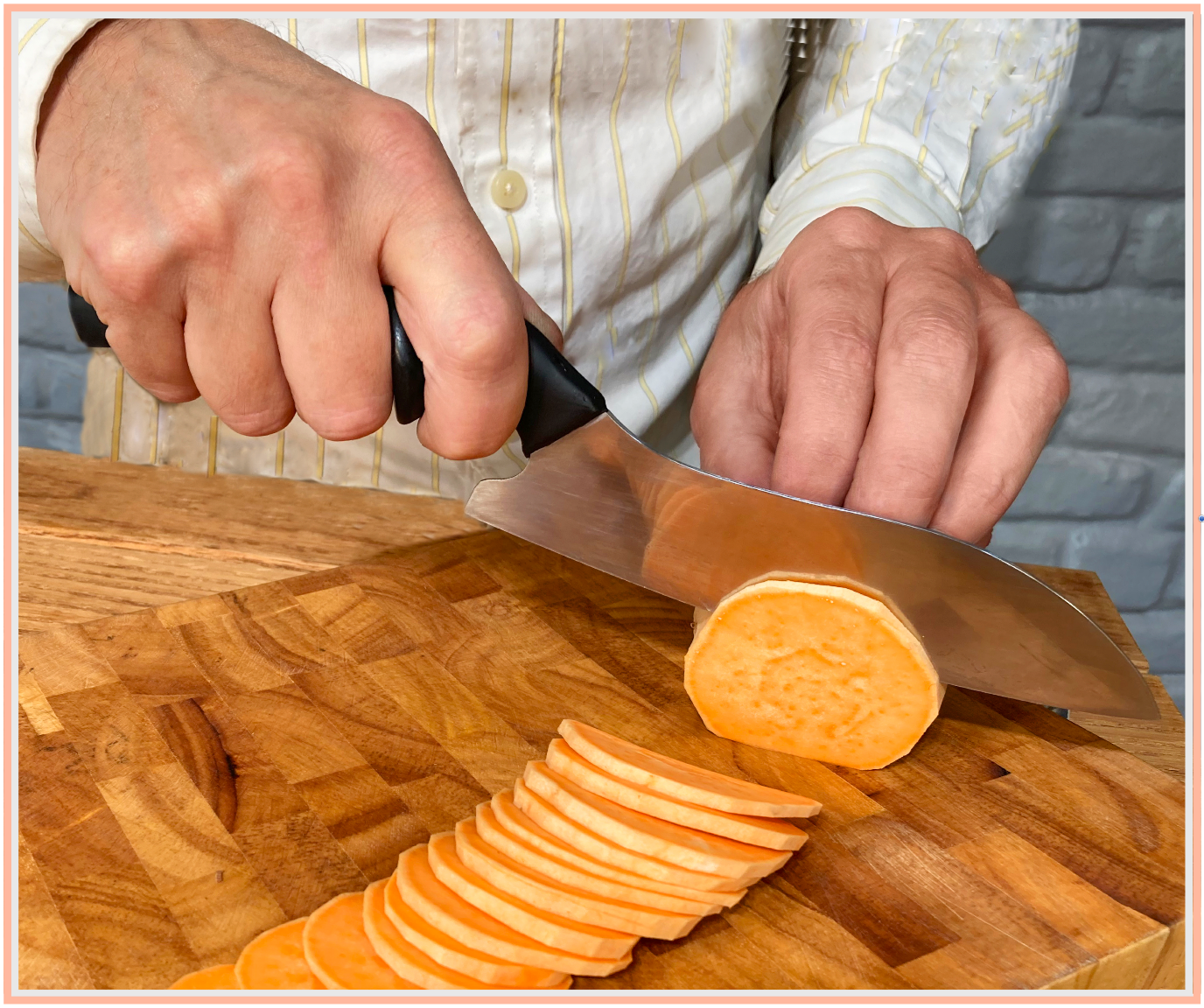
DBx Knives custom fitted chef knife in use — ergonomic hand-optimized handle showing natural grip position during food preparation. Sized-to-fit design eliminates hand fatigue, numbness and pain during extended cutting tasks. Made in the USA.
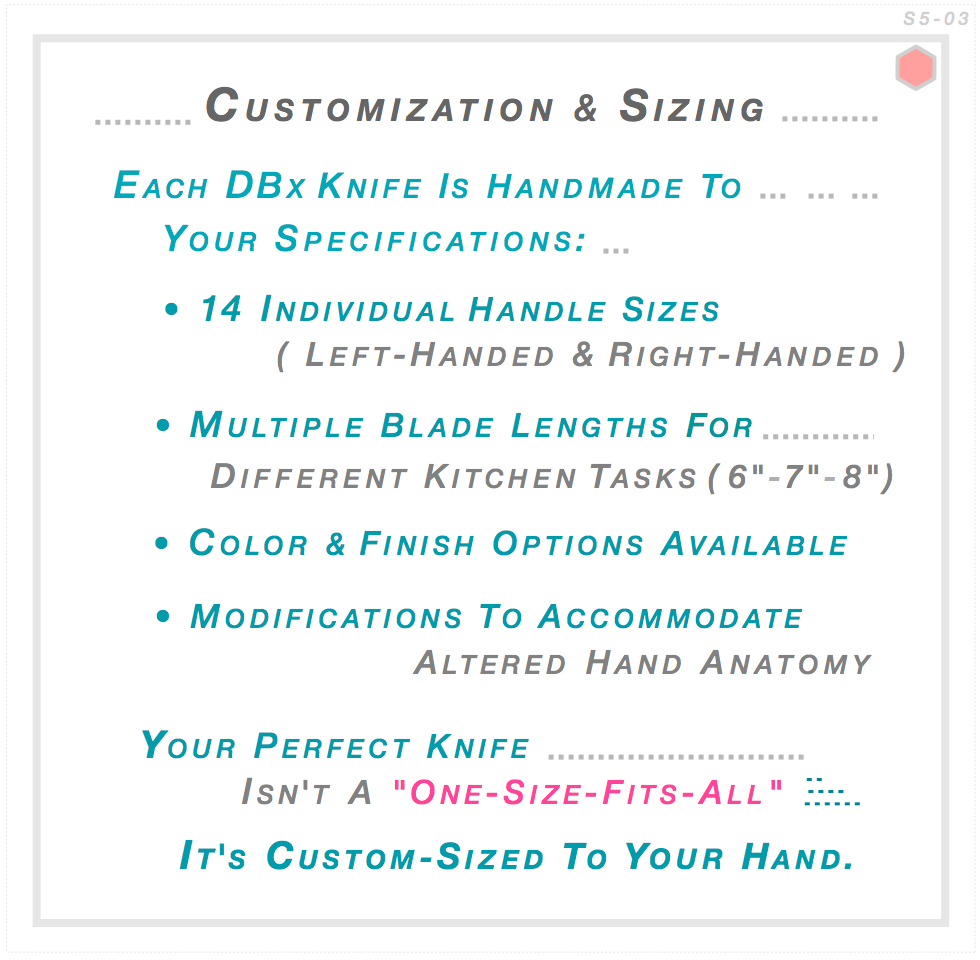
Each DBx knife handmade to your specifications — 14 handle sizes left and right-handed, blade lengths 6-7-8 inches, color and finish options, custom modifications for special requirements. Your perfect knife custom-sized to your hand.

Specifications

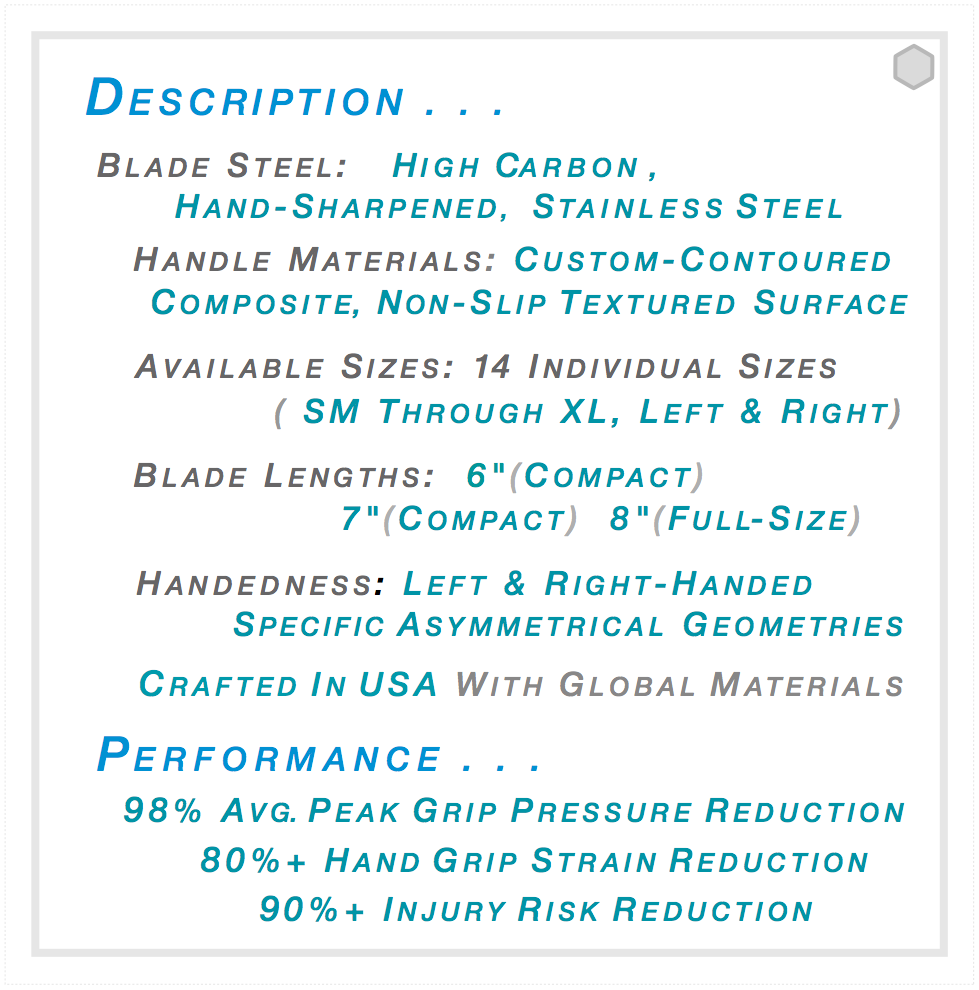
DBx Knives — German steel 58 HRC hand-sharpened, composite non-slip handle, 14 sizes left and right-handed asymmetrical geometries, 6-7-8 inch blades, handcrafted USA. 98% grip pressure reduction, 80%+ strain reduction, 90%+ injury risk reduction.

How To Order

How to order DBx Knives — measure hand width at base of fingers, choose blade length 6-7-8 inch and handle color, select left or right-handed. That's it. Custom sized-to-fit chef knives handcrafted in the USA to your exact hand specifications.